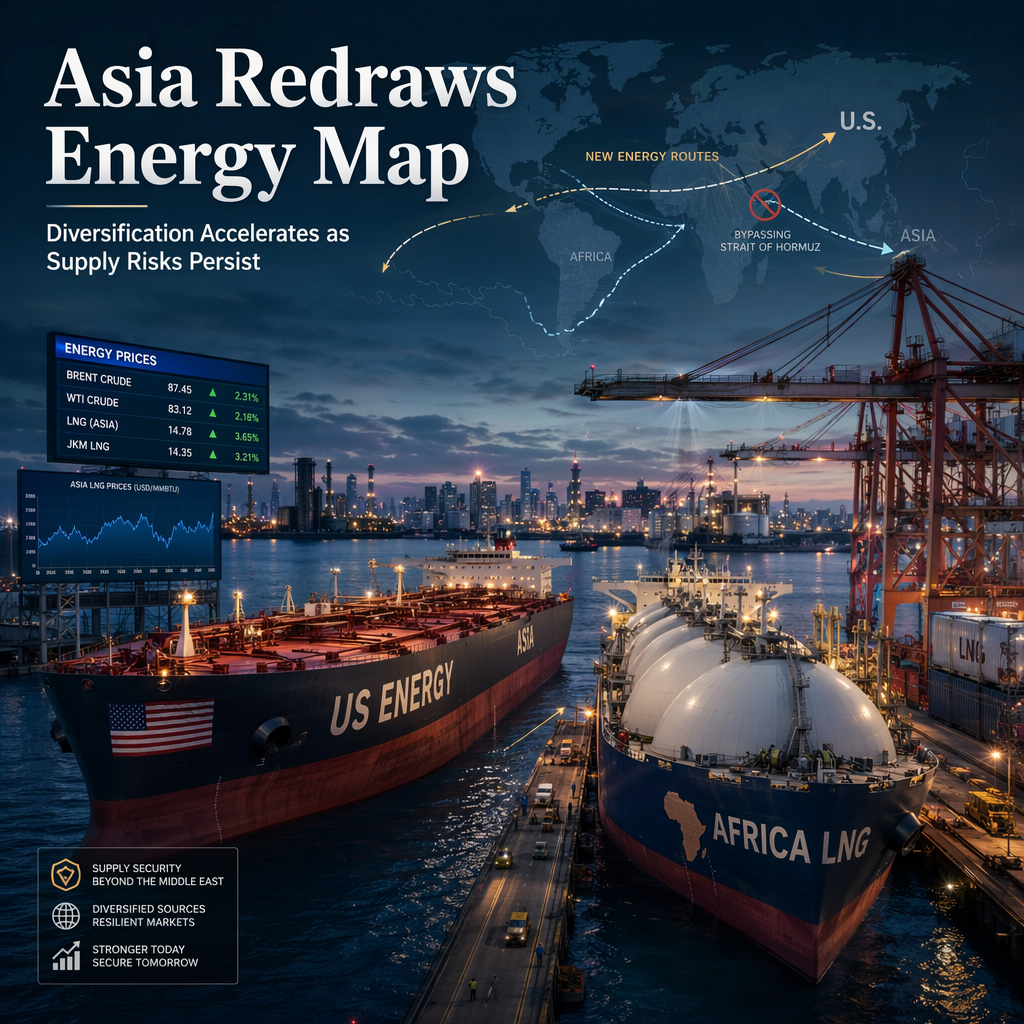
Asian energy markets are undergoing significant changes in response to recent geopolitical events and supply disruptions. Despite crude oil prices returning to pre-U.S.-Iran conflict levels, Asian importers, including Japan, are actively diversifying their oil supply sources to mitigate risks associated with Middle Eastern routes. The Japanese government announced it expects to source 100% of its oil imports through routes other than the Strait of Hormuz starting in July, marking a notable shift in procurement strategy due to ongoing geopolitical uncertainties [1]. Market analysts emphasize that this trend toward diversification is likely to persist, with reliability and risk management now taking precedence over price considerations for Asian buyers [1].
The Middle East's share in Asia's energy mix is expected to decline further as buyers turn to the U.S., Africa, and other regions for alternative supplies. This structural change is anticipated to have long-term implications for global shipping routes and trading patterns, potentially affecting tanker markets and logistics providers [1]. Technical analysis indicates that unless there is a major price spike, the move away from Middle Eastern oil will continue, with many importers securing contracts from diverse sources to hedge against future disruptions [1].
Meanwhile, the liquefied natural gas (LNG) market remains tight. Although previously stalled tankers around the Persian Gulf are moving again and satellite images suggest Qatari LNG facilities are restarting, LNG prices have not normalized. Damage from strikes during the war has delayed repairs and full production restarts, prolonging supply constraints [2]. Market analysts note that the normalization of LNG prices is slow due to these lingering bottlenecks and uncertainty about the pace of facility repairs [2].
Extreme summer weather in Asia is expected to further increase demand, adding upward pressure on LNG prices. Traders and analysts maintain a bullish outlook, citing persistent supply risks and heightened seasonal demand. Technical analysis shows resistance at recent highs for LNG spot prices, with support levels just above last month's averages, and warns that continued supply constraints could trigger price spikes during peak summer usage [2].
CONCLUSION
Asian energy markets are experiencing a structural shift away from Middle Eastern oil, driven by geopolitical risks and a focus on supply reliability. At the same time, LNG prices remain elevated due to ongoing supply constraints and rising seasonal demand. The market outlook remains cautious and bullish, with diversification and risk management strategies expected to shape procurement decisions in the near term.