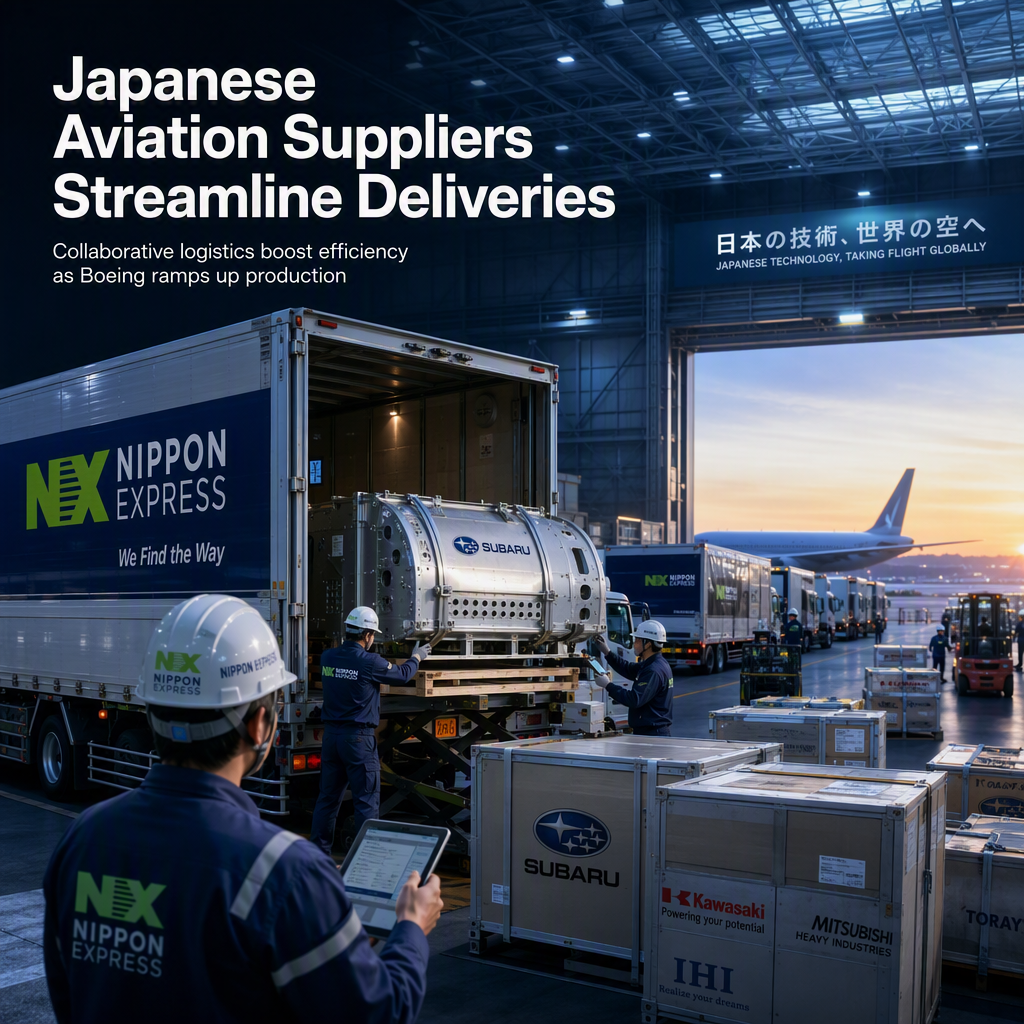
Subaru and other Japanese aviation parts manufacturers are collaborating to implement joint deliveries of components from subcontractors, a move aimed at reducing costs and easing workloads within the aircraft assembly supply chain [1]. This initiative is being launched in response to Boeing's decision to raise its aircraft output, which has increased the demand for timely and efficient delivery of parts [1].
The new framework will expand the use of 'milk runs'—streamlined transport routes that collect parts from multiple suppliers in a single trip—across Japan. This approach is expected to improve logistical efficiency and reduce transportation expenses for the participating companies [1]. Nippon Express will support the joint delivery network, which is designed to address labor shortages and enhance cost competitiveness amid rising global demand for aircraft [1].
By coordinating delivery operations, Japanese suppliers aim to optimize truck loads and schedules, which is anticipated to lower both labor and fuel costs [1]. The strategy reflects a broader industry trend toward strengthening supply chain resilience and operational efficiency in response to fluctuating global market conditions [1].
While the article does not disclose specific financial data or price levels, the joint delivery initiative is positioned as a cost-saving measure that could enhance the international competitiveness of Japan's aircraft parts industry [1].
CONCLUSION
Japanese aviation suppliers are proactively responding to Boeing's increased production by launching a joint delivery network to streamline logistics and reduce costs. This initiative is expected to strengthen supply chain resilience and improve the competitiveness of Japan's aircraft parts sector. No specific financial figures were provided, but the market implications are positive for operational efficiency.