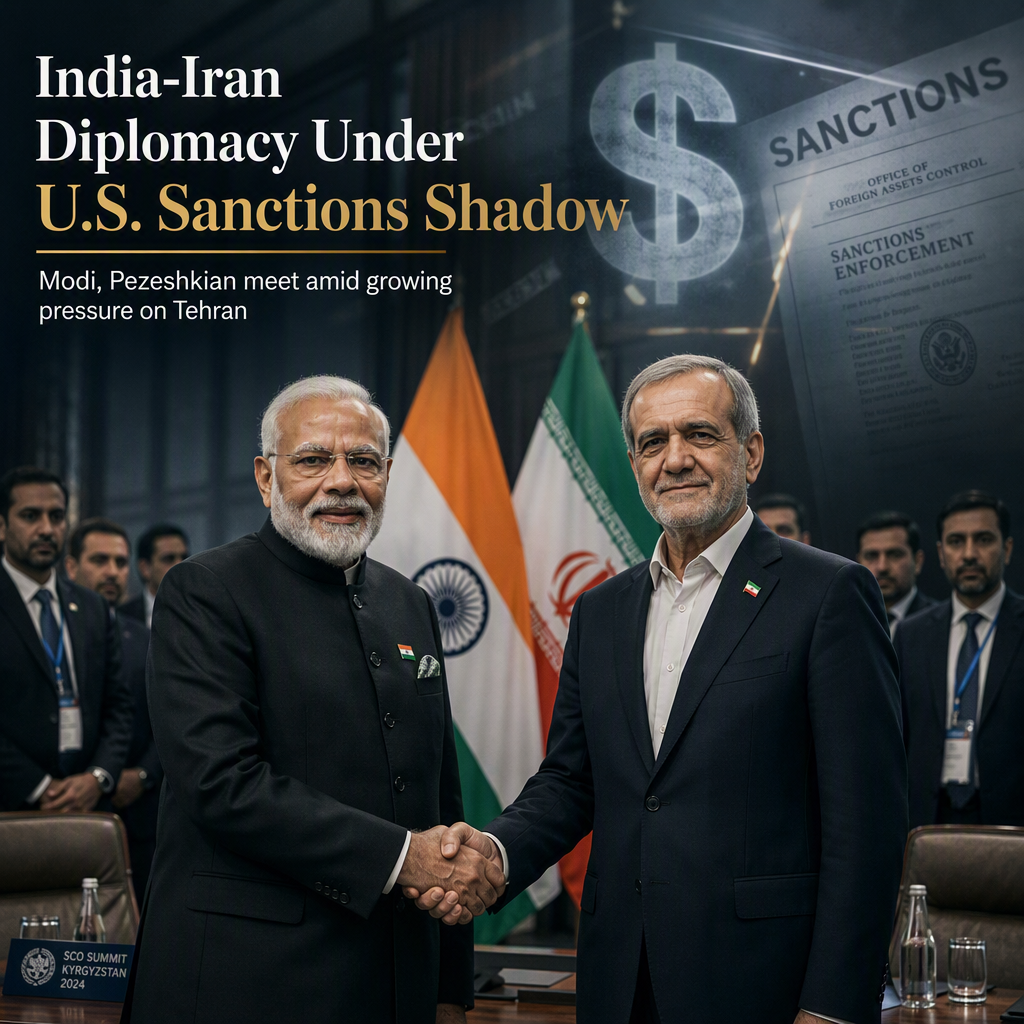
Indian Prime Minister Narendra Modi met with Iranian President Masoud Pezeshkian on the sidelines of the Shanghai Cooperation Organization summit in Kyrgyzstan, marking their first meeting since the war broke out six months ago [1]. This meeting occurred exactly one week after the Trump administration launched 'Operation Economic Outcast,' a new campaign of economic sanctions on Iran, and threatened secondary sanctions against countries continuing business with Tehran [1].
During the meeting, Pezeshkian asked Modi to leverage India's extensive contacts to help steer involved parties away from war and back toward dialogue, and thanked Modi for standing by Tehran [1]. Modi reiterated India's desire to strengthen its 'long-standing friendship' with Iran and to 'expand and diversify' the two countries’ trade basket [1].
Despite these diplomatic overtures, U.S. officials, including Secretary of State Marco Rubio, emphasized that no country should help Iran evade sanctions or create revenue mechanisms that could fund terrorism or nuclear ambitions, warning that such actions could result in sanctions against those countries as well [1]. A U.S. official stated that the administration continues to have positive discussions with economic partners to ensure Iran never possesses a nuclear weapon [1].
India has historically been among Iran’s top five trading partners, but bilateral trade has dropped dramatically since its 2018-19 peak [1]. Current Indian exports to Iran are mainly goods with humanitarian exemptions, such as pharmaceuticals, and Iran remains the second-largest overseas market for Indian rice, with over $383 million worth exported in the first six months of the year [1].
CONCLUSION
The meeting between Modi and Pezeshkian highlights India's balancing act between maintaining strategic ties with Iran and adhering to U.S. sanctions pressure. While trade has diminished, India continues limited humanitarian exports to Iran, and U.S. officials have reiterated the risk of secondary sanctions. The situation underscores ongoing geopolitical tensions and potential market uncertainty for stakeholders involved.