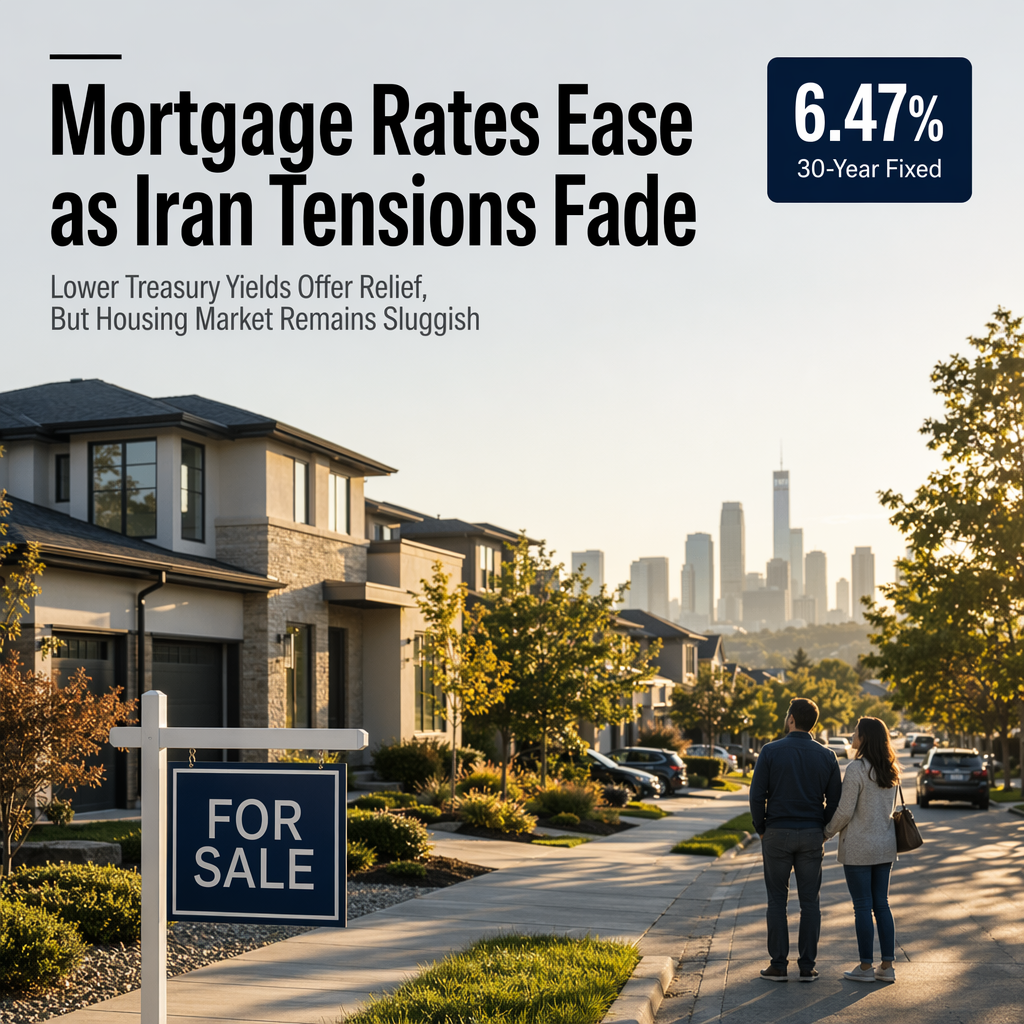
The average 30-year fixed-rate U.S. mortgage rate declined to 6.47% this week, down from 6.52% last week, according to mortgage buyer Freddie Mac. This marks a decrease from the 6.81% average rate recorded one year ago. The 15-year fixed-rate mortgage also fell, dropping to 5.81% from 5.84% last week, and down from 5.96% a year earlier [1].
The drop in mortgage rates follows a retreat in Treasury yields, which have fallen since the announcement of a deal to end the war with Iran. The yield on the U.S. 10-year Treasury note decreased from 4.53% last week to 4.44% on Thursday, compared to 3.97% in late February before the conflict began. The tentative agreement between the U.S. and Iran is expected to allow Iran to reopen the Strait of Hormuz and resume oil sales, which has contributed to the decline in yields [1].
Despite the recent dip, mortgage rates remain above pandemic-era lows and have generally trended higher since the U.S.-Iran conflict began in late February, which disrupted oil flows and drove up inflation, bond yields, and mortgage rates. The Federal Reserve, under new Chair Kevin Warsh, left its benchmark interest rate unchanged at its latest meeting, with several policymakers indicating a willingness to consider at least one rate hike this year due to inflation remaining above the Fed's 2% target [1].
The elevated mortgage rates have continued to weigh on the U.S. housing market. Sales of previously occupied homes declined in the first quarter compared to a year earlier, extending a slump that began in 2022. While sales were flat in April, they accelerated in May to their fastest pace since December, but still hover near a 4-million annual pace, well below the historic norm of 5.2 million [1].
CONCLUSION
The easing of the Iran conflict and subsequent drop in Treasury yields have led to a modest decline in U.S. mortgage rates. However, rates remain elevated compared to historical norms, continuing to dampen homebuying activity and keeping the housing market below its typical pace.