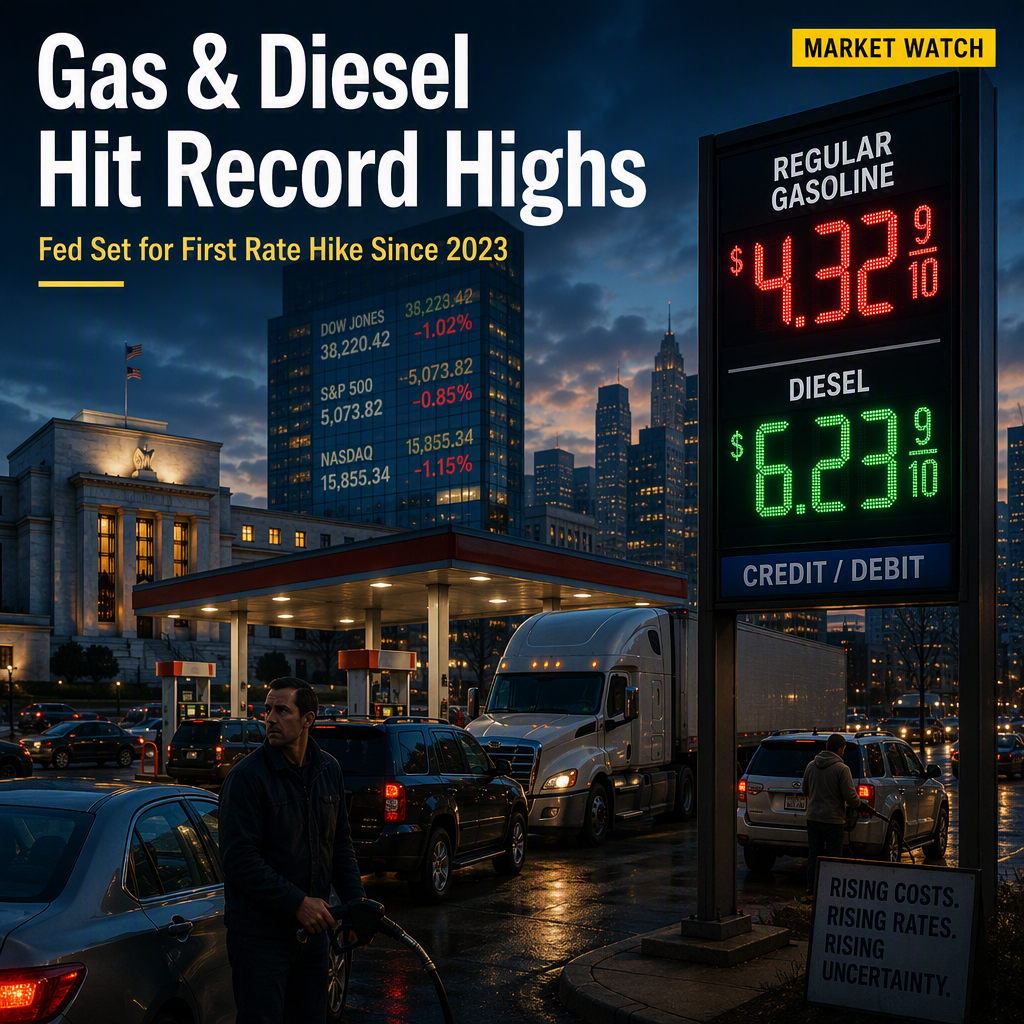
On September 14, 2026, the national average price for a gallon of gas in the United States surged to a record $4.32, while diesel prices soared to an unprecedented $6.23 per gallon, intensifying cost-of-living pressures for consumers nationwide [1]. Market analysts attribute these price spikes to a combination of supply constraints, ongoing geopolitical tensions, and increased seasonal demand [1]. Diesel, which is crucial for trucking and goods transport, has seen particularly sharp increases, further impacting logistics and supply chains [1].
In response to persistent inflation, the Federal Reserve is set to meet on Wednesday and is expected to raise interest rates for the first time since 2023 [1]. According to Brian Cheung, "The Fed is watching inflation closely. A rate hike could make borrowing more expensive but may help cool off price increases at the pump in the long run" [1]. This anticipated monetary tightening is being closely watched by traders, who are monitoring the outcome of the Fed’s meeting, as well as support levels for oil prices, given the ongoing volatility in both oil and financial markets [1].
Market sentiment remains cautious, with investors weighing the impact of tighter monetary policy against ongoing inflationary pressures and unpredictable supply factors [1]. Resistance levels for oil prices are unclear, adding to the uncertainty in the market [1].
CONCLUSION
Record-high gas and diesel prices are fueling inflation concerns, prompting the Federal Reserve to consider its first interest rate hike since 2023. Market participants remain cautious, closely monitoring the Fed's actions and oil price movements amid ongoing volatility. The outcome of the Fed's meeting will be pivotal for both energy and financial markets.