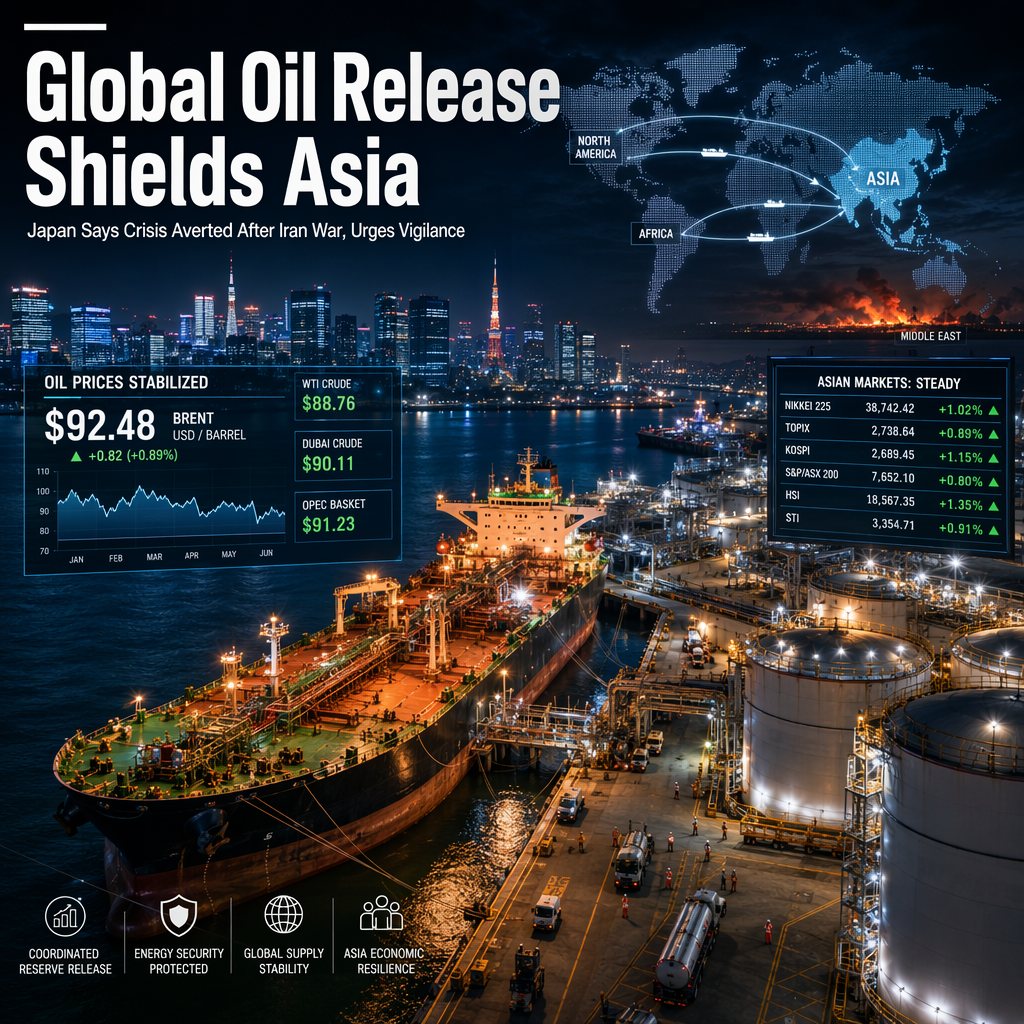
According to a report released by Japan's Ministry of Economy, Trade and Industry (METI), Asian economies successfully avoided a sharp slowdown that could have resulted from the Iran war, primarily due to the coordinated global release of oil reserves [1]. The International Energy Agency's 32 member countries collectively agreed to inject 400 million barrels of oil into the market, an unprecedented move that helped stabilize oil prices and enabled Asian economies to secure crude oil from alternative sources outside the Middle East [1].
The Japanese government analysis emphasized that, without this coordinated action, Asian oil importers would have faced severe shortages and significantly higher prices, negatively impacting manufacturing and transport sectors [1]. The report highlighted that Brent crude prices remained around $90 per barrel after the Iran conflict, rather than exceeding $120 as some market watchers had feared [1]. Technical analysis from METI indicated that oil market volatility spiked in the immediate aftermath of the Iran war, but price resistance was established at $95 per barrel, supported by the reserve releases and increased shipments from North America and Africa [1]. Japanese refiners also reported that inventories stayed above the five-year average, providing additional protection against supply shocks [1].
Market sentiment has improved since the initial conflict, with Asian equity indices rebounding from their lows during the early stages of the Iran war [1]. The Japanese government recommends ongoing vigilance and diversification of supply sources due to persistent risks of further escalation in the Middle East [1]. The report also advises maintaining strategic oil reserves at current levels and enhancing regional cooperation to better withstand future supply shocks, underscoring the importance of coordinated response mechanisms [1].
CONCLUSION
Japan's government report credits the coordinated global release of oil reserves with averting a deep recession in Asia following the Iran war. Oil prices stabilized, inventories remained robust, and market sentiment improved, but authorities urge continued vigilance and regional cooperation to mitigate future risks.