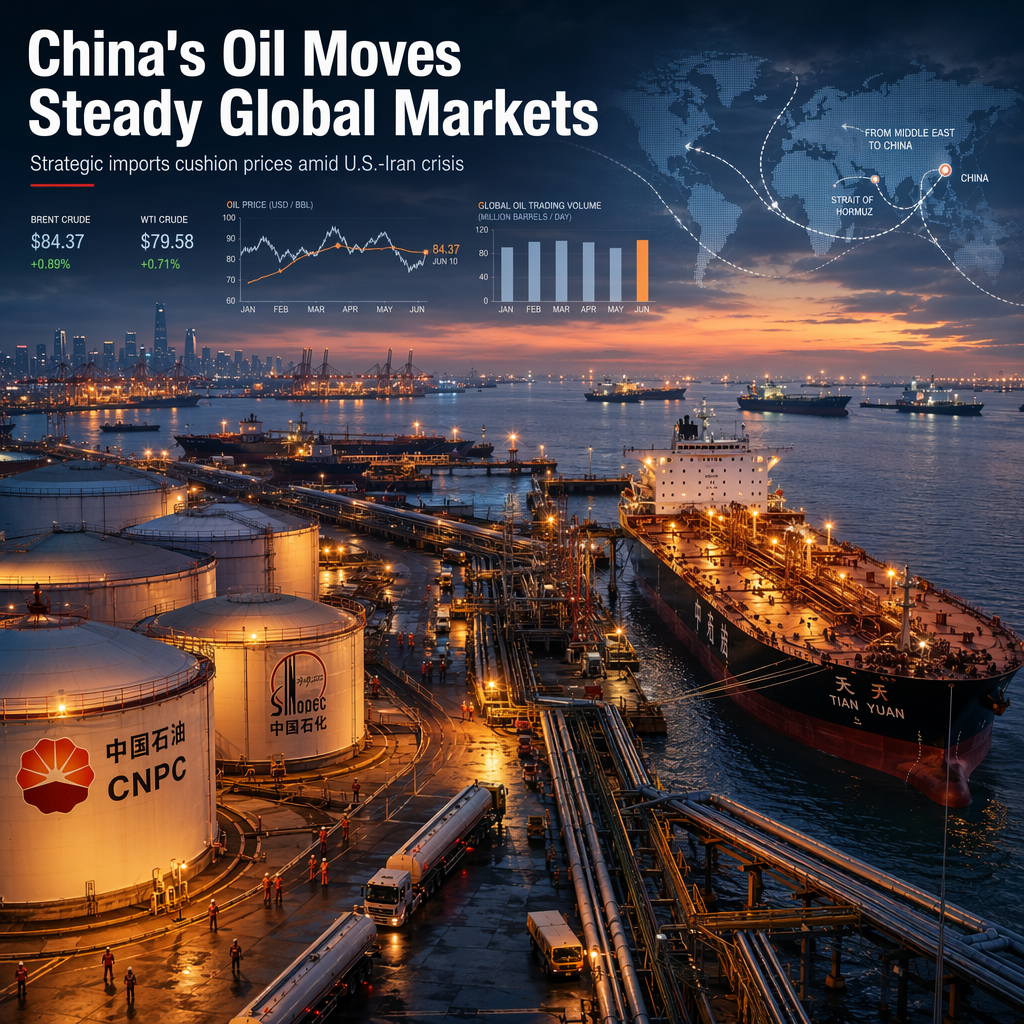
The recent U.S.-Iran military conflict was widely expected to cause a sharp spike in crude oil prices due to disruptions in tanker traffic through the Strait of Hormuz, a critical chokepoint for global oil shipments. Contrary to these expectations, China's strategic actions as a 'swing importer' have played a pivotal role in mitigating the anticipated surge in oil prices [1].
China demonstrated significant flexibility by quickly adjusting its oil imports, which helped offset the loss of supply resulting from the closure of the Strait of Hormuz. While other major importers scrambled to secure alternative supplies, China's state-owned oil companies drew on reserves and delayed purchases, thereby softening the impact on global oil benchmarks [1].
A Tokyo-based oil market analyst highlighted that China's demand elasticity acts as a stabilizing factor during geopolitical shocks, noting that the country's ability to absorb or reduce imports at short notice has become a key variable in oil price formation [1]. As a result, the forward curve in oil futures remained relatively stable, with Brent crude holding near $85 per barrel instead of surpassing the $100 mark, which some analysts had predicted immediately after the Strait's closure [1]. Technical analysis indicates support for Brent crude around $83 per barrel and resistance near $90 per barrel, with increased trading volumes in Asian markets reflecting heightened interest in China's import strategies [1].
Market sentiment remains cautious, as traders closely monitor potential changes in China's import quotas or inventory policies. Any significant adjustments by China could trigger renewed volatility in oil prices, especially if disruptions in Middle East supply persist [1].
CONCLUSION
China's agile management of oil imports has helped cushion the global market from a major price spike following the U.S.-Iran conflict and the closure of the Strait of Hormuz. While prices have remained relatively stable, ongoing vigilance is warranted as any shift in China's import strategy could quickly alter market dynamics.