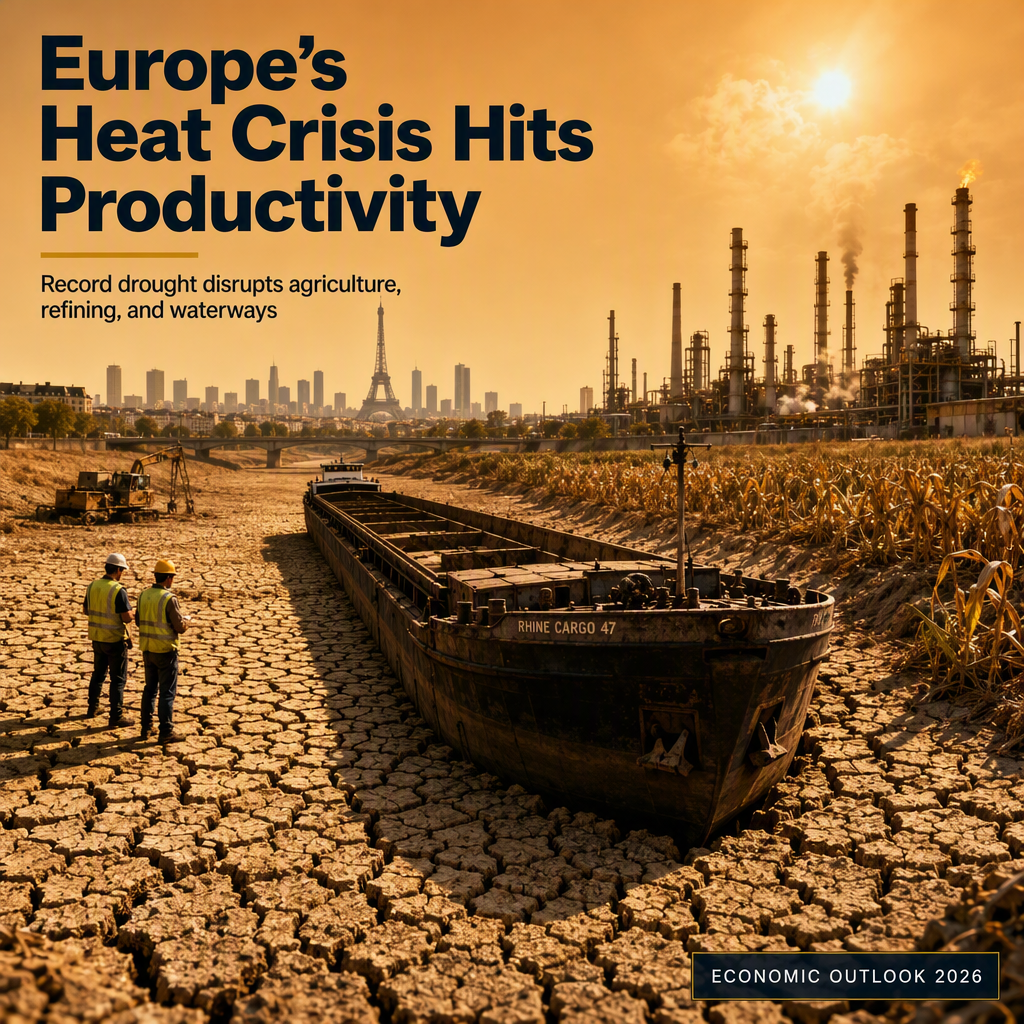
Europe is facing record-breaking heat and widespread drought in 2026, significantly disrupting key sectors such as refining, power generation, inland waterways, and agriculture, according to Standard Chartered’s Christopher Graham and Emily Ashford [1]. The European Central Bank (ECB) has highlighted that temperature records have been broken in many EU countries, with Western Europe experiencing the hottest June on record [1]. Large parts of Europe are also experiencing drought conditions, exacerbated by the evaporative effects of higher temperatures [1].
ECB research indicates that extreme heatwave and drought conditions, similar to those observed in 2022, could result in sizeable output losses, with Eastern Europe expected to be more heavily affected [1]. The ECB also notes significant regional effects that could intensify over time, warning that investment in climate adaptation infrastructure may divert resources from more productive uses [1].
Policy makers at the ECB and fiscal agencies are facing difficult trade-offs as they navigate the interaction between inflation and weaker demand caused by these extreme weather events [1]. The combination of immediate disruptions and longer-term resource allocation challenges underscores the potential for sustained economic headwinds in the region [1].
CONCLUSION
Europe’s record heat and drought in 2026 are causing significant disruptions across multiple sectors and are expected to result in notable output losses, particularly in Eastern Europe. Policymakers face challenging decisions as they balance inflation, weaker demand, and the need for climate adaptation investment, suggesting a high market impact and a negative outlook for near-term growth.