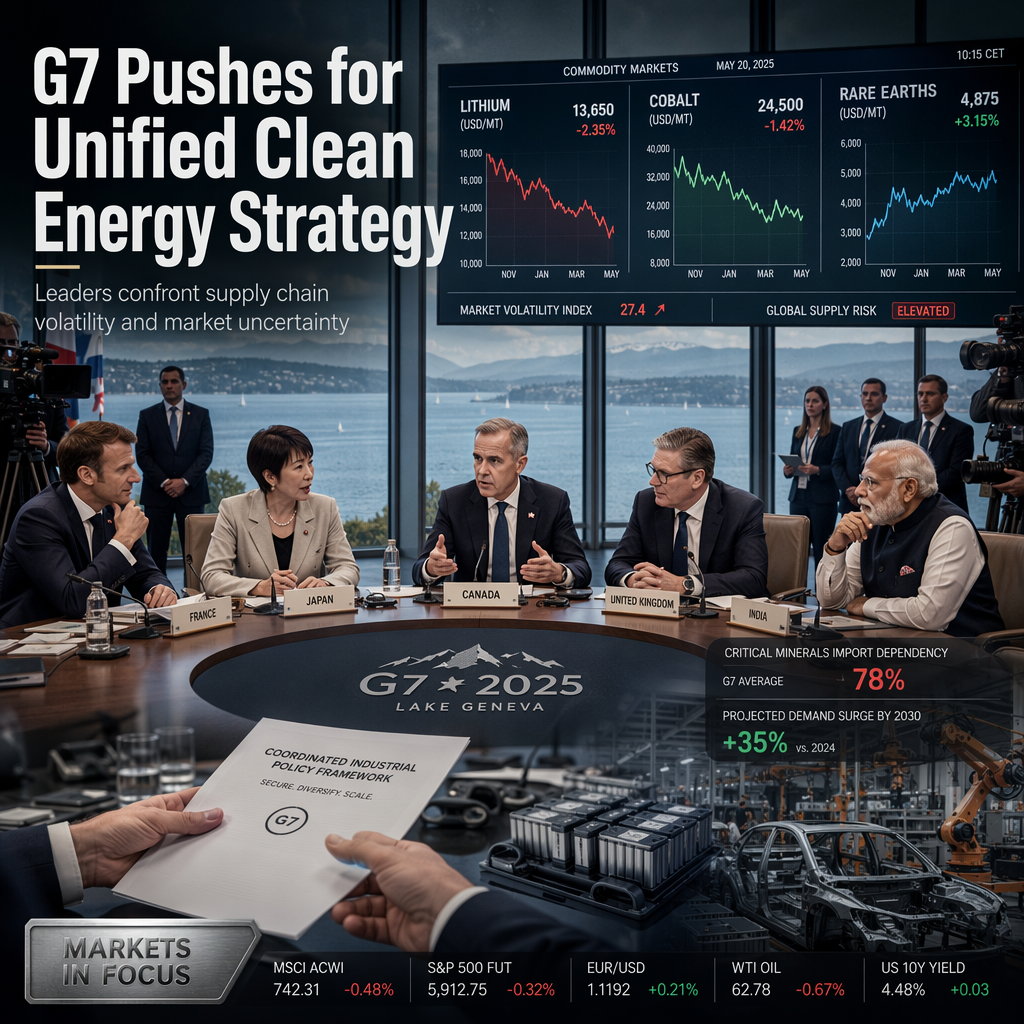
At the G7 summit in Evian, France, on June 16, world leaders including French President Emmanuel Macron, Japanese Prime Minister Sanae Takaichi, Canadian Prime Minister Mark Carney, British Prime Minister Keir Starmer, and Indian Prime Minister Narendra Modi emphasized the urgent need for coordinated industrial strategies to enhance energy security and reduce dependence on unstable international suppliers [1]. The summit highlighted that while diplomatic agreements can be reached quickly, the development of robust supply chains for critical clean energy materials such as lithium, cobalt, and rare earth elements requires years of investment and development [1].
Sarah Ladislaw, founding director of the New Energy Industrial Strategy (NEIS) Center, stressed the importance of consistent and clear industrial strategies to provide predictability for investors and developers. She warned that frequent policy and diplomatic shifts undermine confidence and delay progress in building reliable supply chains [1].
Financial markets have responded to these uncertainties with increased volatility in key commodity prices. Lithium spot prices have fluctuated between $13,000 and $17,000 per metric ton over the past six months, reflecting concerns about future supply disruptions. Cobalt futures are trading near $45,000 per metric ton, marking a 12% increase since the beginning of the year, with analysts cautioning that ongoing geopolitical tensions could drive prices even higher. Rare earth prices are showing persistent resistance at the $90,000 per metric ton level, with technical indicators suggesting a potential breakout if new supply sources are not developed [1].
Market strategists recommend maintaining exposure to diversified resource equities and considering hedges against supply chain disruptions, particularly in sectors dependent on electric vehicle batteries and advanced manufacturing. Ladislaw concluded that securing clean energy supply chains is essential not only for meeting climate targets but also for maintaining economic competitiveness and national security [1].
CONCLUSION
The G7 summit underscored the growing gap between rapid diplomatic shifts and the slower pace of clean energy supply chain development, fueling market volatility in key commodities. Consistent industrial strategies are seen as crucial for investor confidence and long-term energy security. Market participants are advised to remain vigilant and consider hedging strategies amid ongoing supply chain uncertainties.