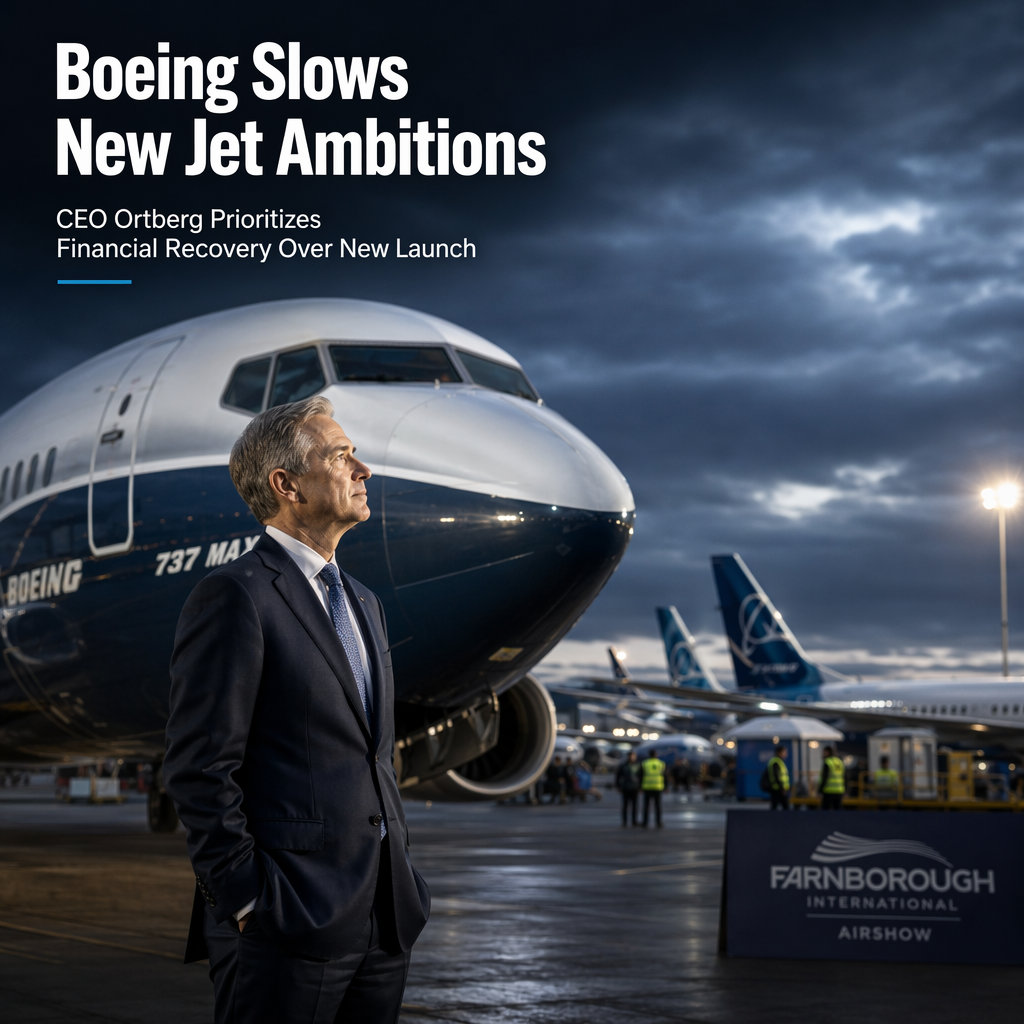
Boeing CEO Kelly Ortberg stated at the Farnborough International Airshow that the company will require 'a couple more years' to repair its finances before launching a new commercial jet, indicating a shift in focus toward stabilizing its current business operations rather than expediting the development of a successor to the 737 MAX [1]. Ortberg, who returned from retirement to lead Boeing through ongoing manufacturing and quality challenges, identified three primary hurdles before committing to a new aircraft program: achieving financial stability, ensuring technological readiness, and confirming sufficient market demand [1].
Ortberg emphasized that airline customers are currently urging Boeing to prioritize improving the reliability and production of its existing aircraft lineup instead of introducing a new model [1]. This feedback suggests that the launch of a new narrowbody aircraft, intended to compete with Airbus' A320 family, is unlikely to occur until later in the decade [1].
The CEO's remarks highlight Boeing's immediate priorities: stabilizing its finances, resolving manufacturing and quality issues, and meeting customer demands for reliability and production improvements in its current offerings [1]. While the development of a new aircraft is considered vital for Boeing's long-term competitiveness against Airbus, Ortberg made it clear that the company will not proceed until all necessary financial, technological, and market conditions are met [1].
CONCLUSION
Boeing is taking a cautious approach to launching a new commercial jet, focusing first on financial recovery and operational stability. The company is responding to customer demands for improved reliability and production in its current lineup, delaying any new aircraft program until conditions are favorable. This strategy signals a medium-term pause in major product launches as Boeing works to restore its competitive footing.