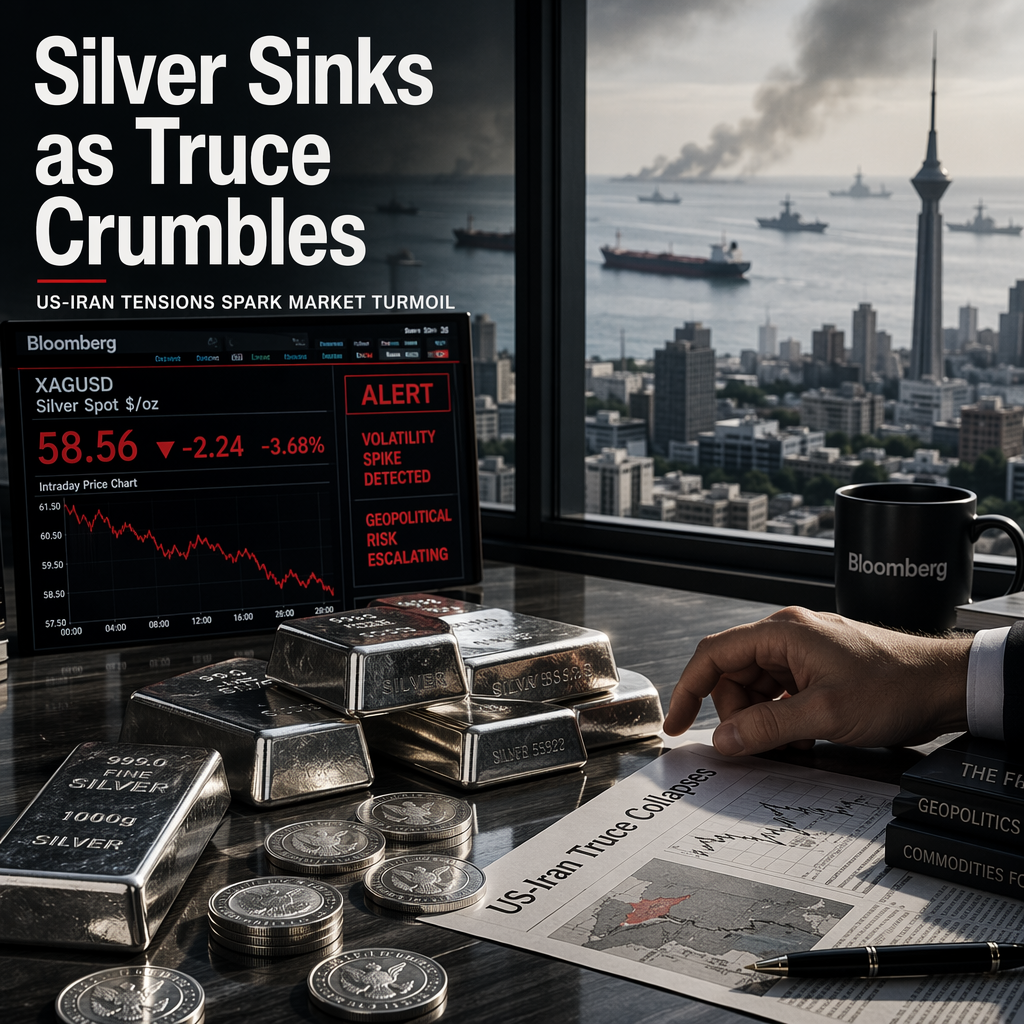
Silver prices (XAG/USD) experienced a significant decline on Wednesday, trading at $58.56 per troy ounce according to FXStreet data, marking a 2.34% drop from Tuesday's price of $59.97 and a 17.61% decrease since the beginning of the year [1]. During European trading hours, silver hovered around $58.30 per troy ounce, extending its losses for the third consecutive day [2].
The core event driving this market movement was the official collapse of the interim ceasefire between the United States and Iran. US President Donald Trump, during the annual NATO summit in Ankara, declared the truce 'finished' while sitting alongside NATO Secretary General Mark Rutte, describing the agreement as 'just a waste of time' and signaling the immediate prospect of renewed military conflict [2]. Following this announcement, the US revoked a critical sanctions waiver that had allowed Iran to sell crude oil on global markets [2].
This escalation in Middle East tensions injected volatility into the energy sector, with oil prices rising and shipping companies avoiding the Strait of Hormuz due to increased risks, raising concerns about severe disruptions to the global energy supply [2]. The resulting inflation fears and the prospect of higher interest rates further pressured silver, a non-yielding asset, as investors weighed geopolitical anxieties against upcoming macroeconomic data, including the minutes of the Federal Reserve’s June meeting [2].
The Gold/Silver ratio increased to 69.27 from 68.47, indicating a relative weakening of silver compared to gold [1]. While silver had previously rebounded on softer-than-expected US jobs data, which reduced expectations for near-term Fed rate hikes, the renewed conflict in the Middle East has created significant uncertainty for the broader policy and market outlook [2].
CONCLUSION
The collapse of the US-Iran truce and subsequent geopolitical tensions have driven silver prices sharply lower, with heightened volatility across commodity and financial markets. Rising oil prices and inflation fears, combined with policy uncertainty, suggest continued market turbulence and a cautious outlook for silver in the near term.