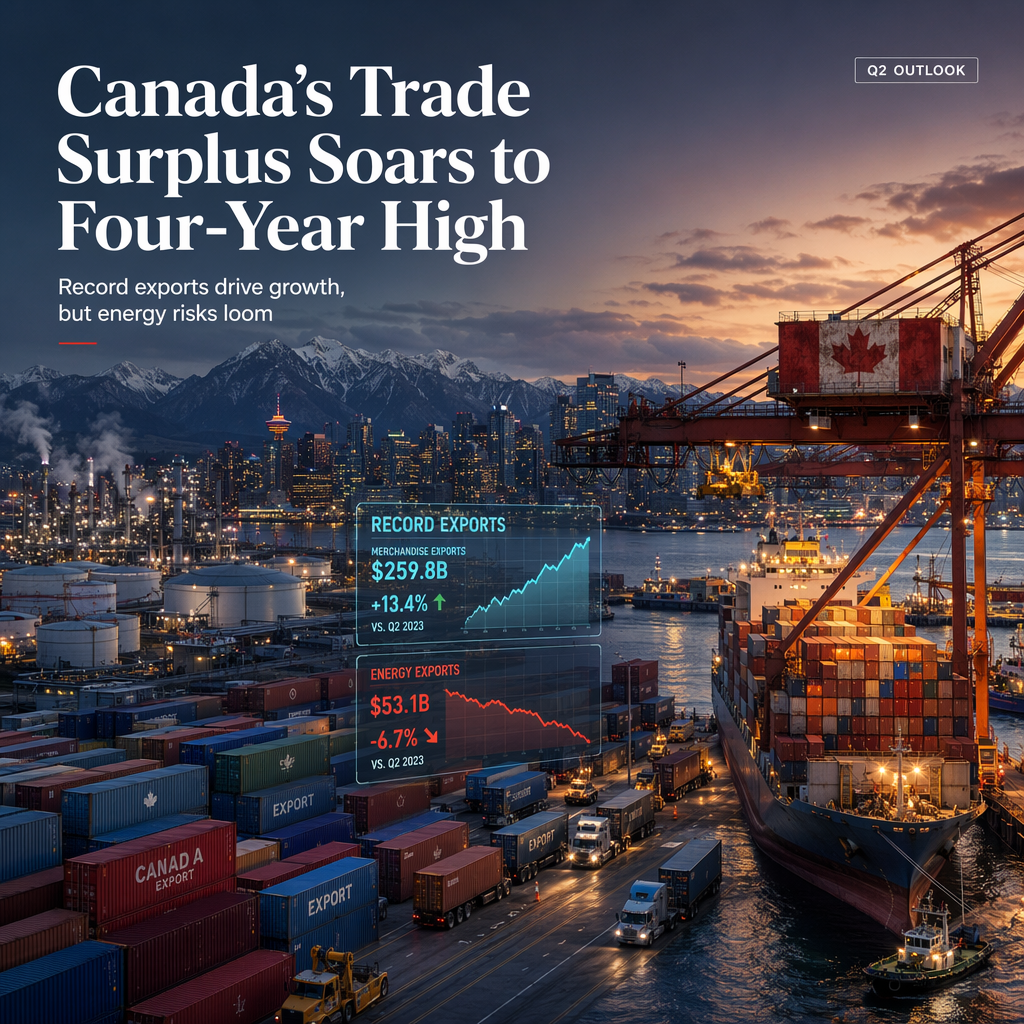
Canada's merchandise trade surplus reached its highest level in four years in May, according to National Bank of Canada strategist Alexandra Ducharme, as exports surged to a record C$77.1 billion [1]. The increase in exports was primarily driven by gains in metal ores and non-metallic minerals, while energy exports experienced a decline [1]. On the import side, there was a decrease mainly due to weaker gold-related purchases [1].
In real terms, with two months of data available for the quarter, exports are tracking a 27.1% annualized increase, while imports are set to rise 11.5% [1]. This dynamic suggests that trade is likely to make a positive contribution to Canada's second-quarter economic growth [1].
Looking ahead, the recent decline in energy prices, following the easing of tensions in the Middle East, is expected to weigh on Canada's nominal exports in the coming months [1]. Given the significant role of energy products in the country's trade balance, this could result in a narrower trade surplus [1]. However, traffic through the Strait of Hormuz has not yet returned to normal, indicating that ongoing disruptions from the conflict may continue to impact global supply chains and Canadian trade data [1].
CONCLUSION
Canada's trade surplus has reached a four-year high, fueled by record exports and a positive outlook for second-quarter growth. However, declining energy prices and ongoing supply chain disruptions could narrow the surplus in the near future.