
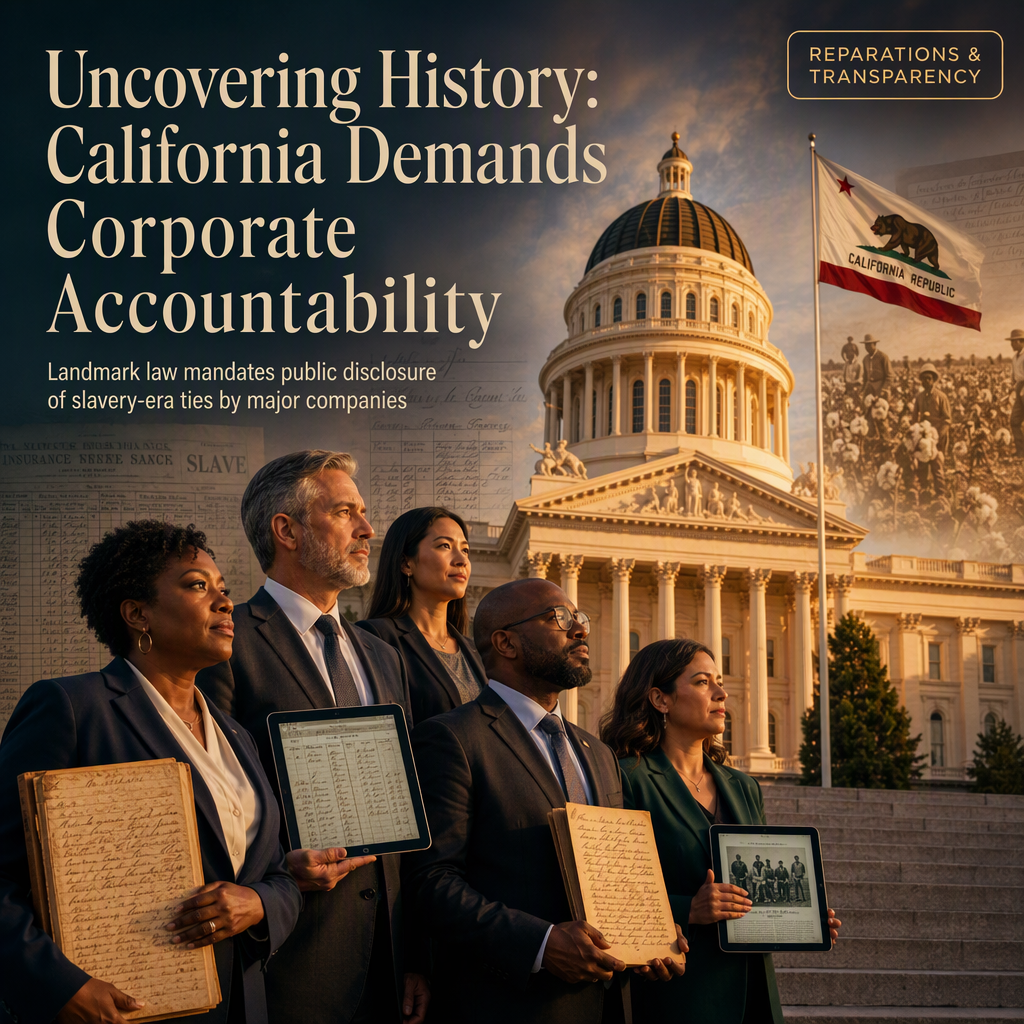
California Governor Gavin Newsom has signed a groundbreaking law mandating that large companies operating in the state publicly disclose any historical ties to slavery-era transactions. The legislation, Assembly Bill 2599, applies to businesses with more than $100 million in annual worldwide gross receipts that existed, or have a predecessor that existed, on or before December 31, 1964. These companies are required to search their records for connections to slavery dating back to 1849, including insurance policies on enslaved people and the use of enslaved individuals as collateral for loans, and submit affidavits under penalty of perjury verifying their findings [1].
The law is part of California's broader reparations effort and aims to establish corporate accountability through transparency. The records uncovered must be made publicly accessible via a state digital platform. For companies doing business in California as of January 1, 2028, the first affidavits are due by January 15, 2029, or later if the digital platform is not yet operational [1].
Assemblymember Isaac Bryan, who authored the bill, emphasized that the measure seeks to expose corporate wealth derived from slavery, highlighting the economic benefits private corporations gained from chattel slavery and the transfer of wealth through free labor. The law follows the recommendations of California's Reparations Task Force, which issued over 100 suggestions to address the effects of slavery and discrimination, including policy changes in housing, education, policing, health, and economic disparities. However, Governor Newsom has previously stated that addressing the legacy of slavery involves more than direct cash payments, suggesting a broader approach to reparations [1].
The task force's report referenced JPMorgan Chase as an example, noting the bank's 2005 apology after research revealed two predecessor banks had ties to slavery. The law's implementation is contingent on legislative funding for the digital platform and administrative processes [1].
CONCLUSION
California's new law marks a significant step in corporate accountability and transparency regarding historical ties to slavery. While the immediate market impact is moderate, the legislation could prompt increased scrutiny of large companies' historical records and influence future reparations-related policies. The law underscores California's leadership in addressing the legacy of slavery through public disclosure and policy reform.