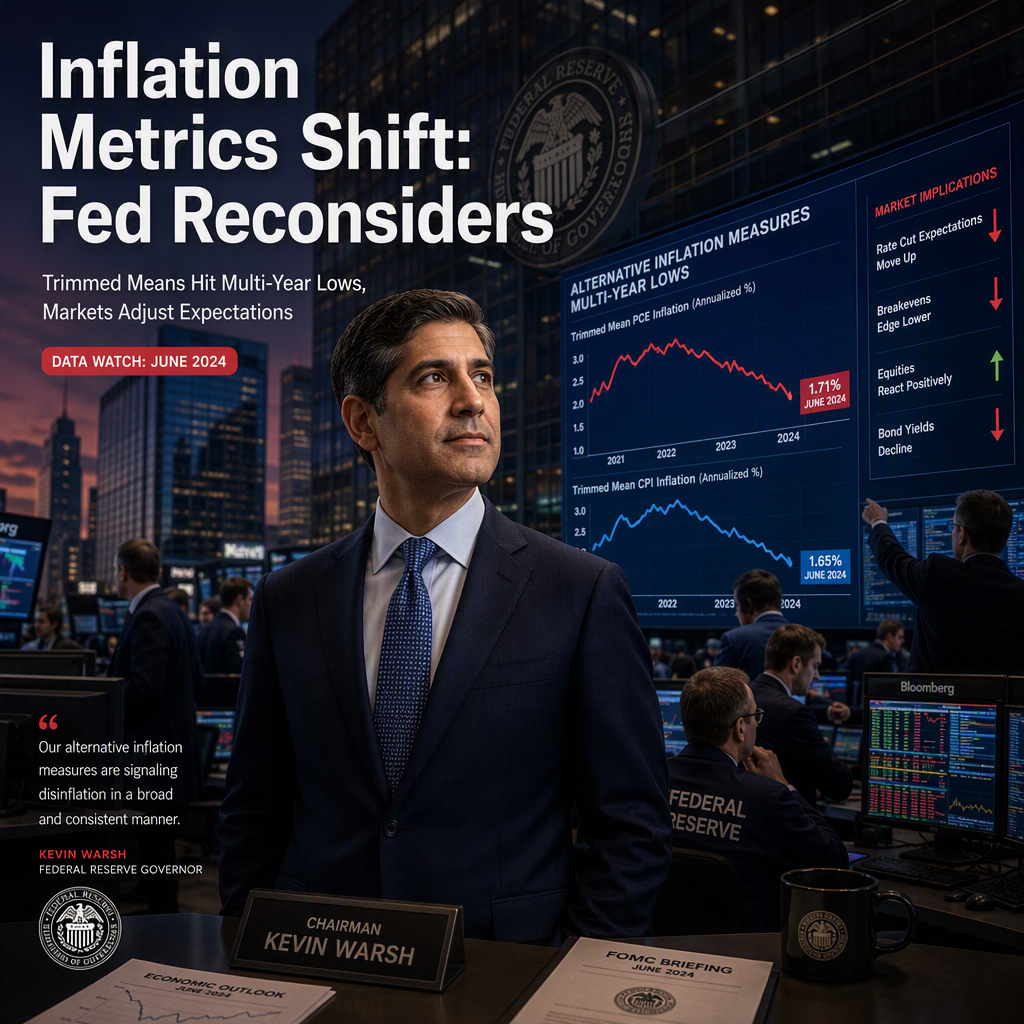
The Federal Reserve, under Chairman Kevin Warsh, is facing renewed pressure to act on inflation as alternative indicators, specifically trimmed mean measures, show inflation at its lowest levels in years [1]. While traditional inflation metrics remain above the Fed's 2% target, trimmed mean estimates—which exclude extreme price changes—suggest a different trend. For June, the Dallas Fed's trimmed mean measure reported a one-month annualized inflation rate of just 1.4%, a significant drop of 1.3 percentage points from May and the lowest since November 2020 [1]. The 12-month rate, closely monitored by policymakers, fell to 2.2%, down 0.2 percentage point from the previous month, marking its lowest point since July 2021 [1].
The Commerce Department's data showed the all-items personal consumption expenditures (PCE) price index fell 0.1% in June, mainly due to a sharp decline in fuel costs, while the core PCE (excluding food and energy) rose 0.1%. On an annual basis, these indices increased by 3.7% and 3.3%, respectively [1]. The Cleveland Fed's 16% trimmed mean, based on the consumer price index, recorded a trimmed CPI of 2.63% for June [1].
Citigroup economist Andrew Hollenhorst noted that the slowing trend in underlying inflation, as indicated by a broad set of indicators, is particularly relevant given Chair Warsh's stated intention to reassess how the Fed evaluates inflation and which data points it prioritizes [1]. Hollenhorst further commented that markets are likely to "price-out rate hikes in coming months on inflation data, and price-in cuts if the unemployment rate rises as we project" [1].
While some skepticism remains regarding whether trimmed mean measures provide a true picture of inflation, the current data is likely to attract attention from policymakers and market participants, especially as the Fed considers a broader range of metrics in its decision-making process [1].
CONCLUSION
Trimmed mean inflation measures have reached multi-year lows, suggesting underlying inflation is slowing more than traditional metrics indicate. This trend, combined with Chairman Warsh's openness to alternative data, may prompt markets to reassess expectations for future Fed rate moves. Market participants are likely to focus on upcoming inflation and employment data for further direction.