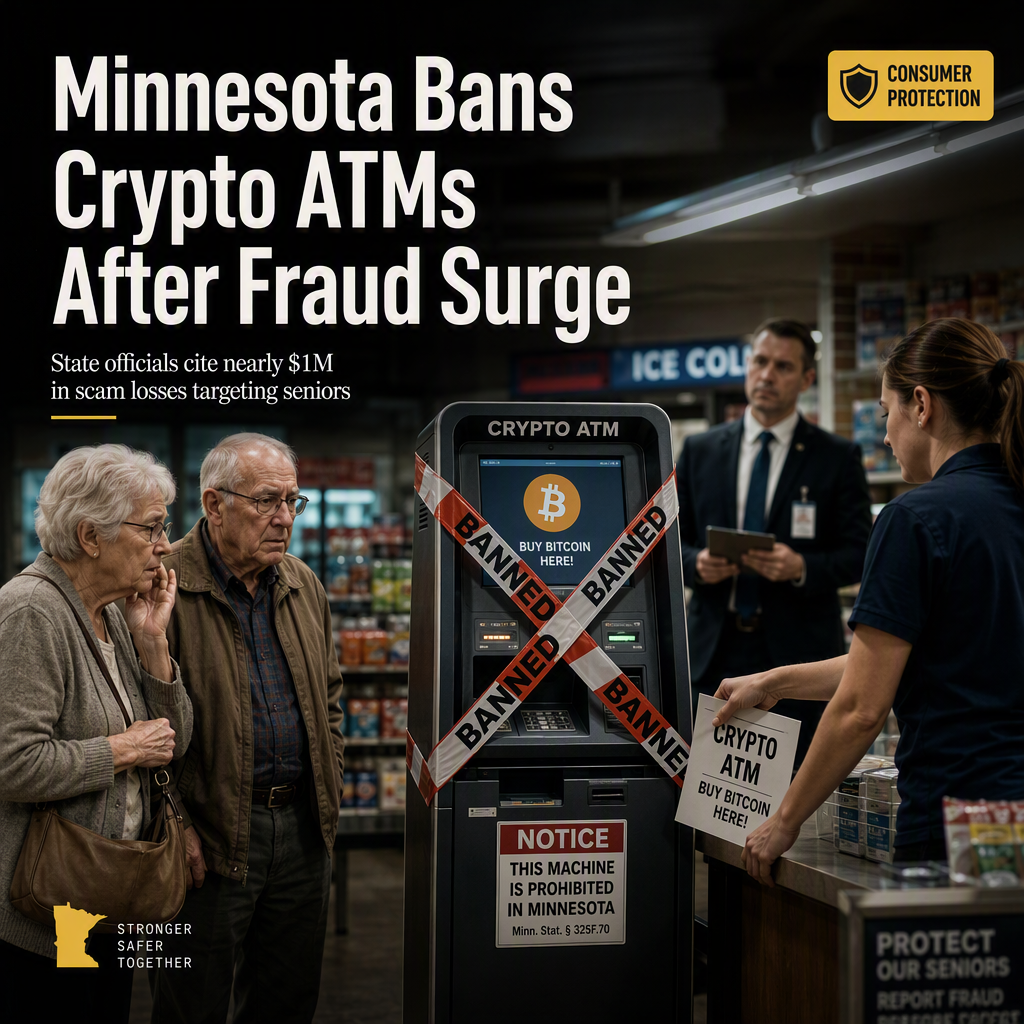
Minnesota has enacted a statewide ban on cryptocurrency ATMs, effective Saturday, after state officials reported that residents lost nearly $1 million in scams involving these machines since 2023 [1]. The legislation, signed by Democratic Governor Tim Walz on May 4, prohibits the installation of new crypto ATMs and mandates the removal of existing machines by December 31 [1]. These kiosks, commonly located in gas stations and convenience stores, have been used by criminals to disproportionately target seniors. According to Paul Haas, an investigator with Minnesota's Department of Commerce, scammers often impersonate law enforcement officers and pressure elderly victims into using nearby crypto ATMs to send money for a loved one’s supposed release from jail [1].
In 2023 alone, investigators documented 70 cases of fraud schemes involving crypto ATMs, resulting in losses exceeding $540,000, with the average loss per transaction nearly $6,800 [1]. Officials noted that many thefts go unreported due to victims' embarrassment. Crypto ATM transactions are irreversible and difficult to trace once funds reach a scammer’s digital wallet, making recovery nearly impossible [1]. This contrasts with traditional bank transactions, which can be disputed or reversed, and credit card payments, which offer chargeback protections [1].
The ban comes amid broader scrutiny of fraud in Minnesota, including allegations of widespread fraud involving government-funded programs. On July 21, the Trump administration froze more than $1 billion in federal Medicaid funding to California and Minnesota over suspected fraud, with the Centers for Medicare & Medicaid Services withholding more than $200 million from Minnesota [1].
Officials emphasized that the lack of consumer protections in crypto transactions is a significant concern, and Congress is attempting to bring digital currency under more stringent federal regulation [1]. The move is seen as part of a growing federal crackdown and renewed criticism of Governor Walz’s oversight of state agencies [1].
CONCLUSION
Minnesota's ban on crypto ATMs reflects heightened concerns over consumer protection and fraud, particularly targeting vulnerable populations. The action is expected to reduce scam-related losses but also signals increased regulatory scrutiny on digital currency transactions. The market impact is medium, as the ban may influence similar regulatory actions in other states.