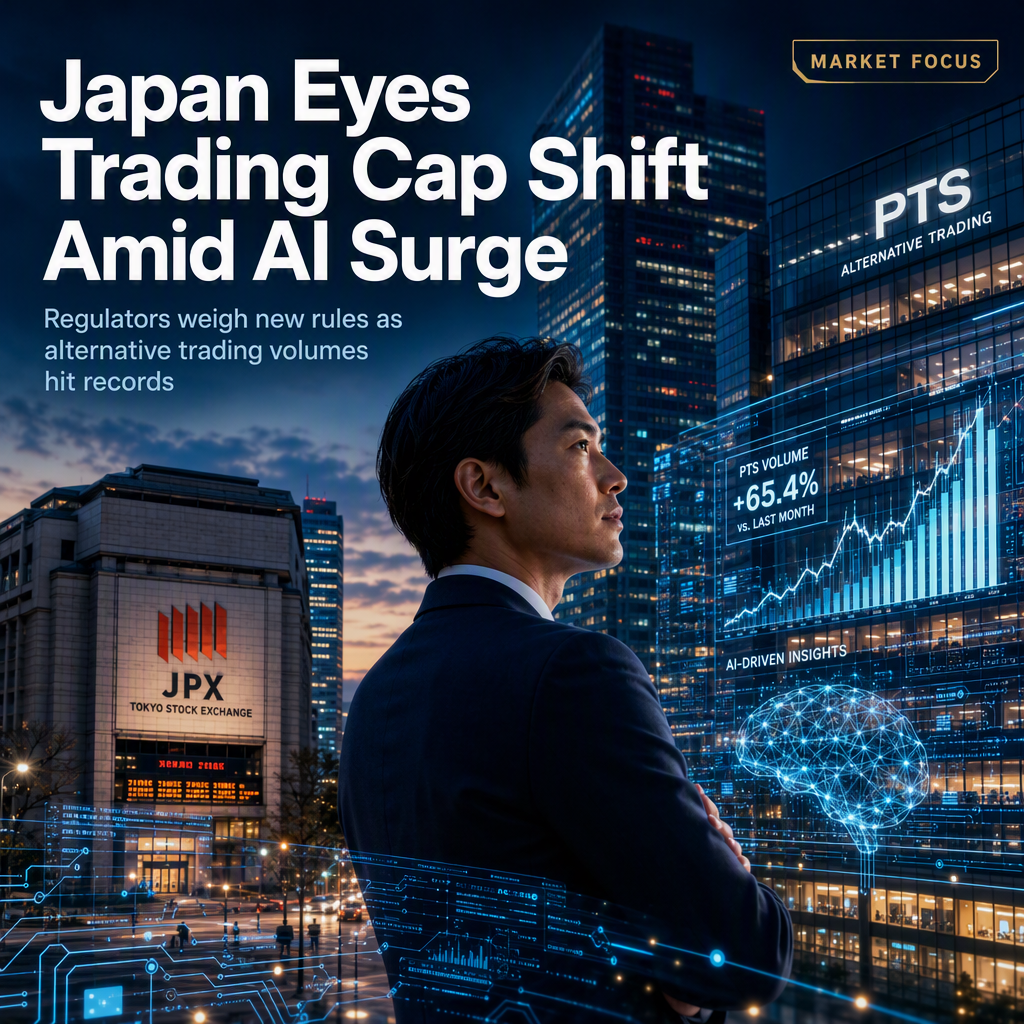
Japanese financial authorities are considering changes to the rule that separates proprietary trading systems (PTSs) from full-fledged securities exchanges, according to Nikkei. This move comes as trading volume on PTSs has surged, a trend attributed in part to the growing popularity of AI-related stocks and increased demand for alternative trading venues amid rapid technological advancements [1]. The Financial Services Agency has actively encouraged the growth of PTSs to reduce the concentration of trading at the Tokyo Stock Exchange, but the current cap restricts PTSs from operating as full-fledged exchanges [1].
Market participants have observed record highs in transaction value on some PTS platforms, and analysts suggest that the existing cap may be constraining further market growth and efficiency, especially as AI-driven trading strategies become more common [1]. Technical analysis indicates that the rising volume could establish new support and resistance levels for stocks traded on PTSs, potentially affecting price discovery and liquidity [1]. Observers believe that revising the proprietary trading cap could shift market sentiment and attract more institutional investors seeking diversified trading venues [1].
Regulators are carefully considering the potential impact of any changes, emphasizing the need to prevent market disruption and maintain investor confidence. They are also assessing the implications for market stability, as increased leverage and the proliferation of alternative trading systems could introduce new risks [1]. Nonetheless, proponents argue that updating trading rules is essential for Japan to keep pace with global financial innovation and remain competitive as a trading hub [1].
No specific price levels or trading advice were provided in the article, but the discussion highlights that regulatory changes could significantly affect the trading landscape, particularly for AI-related equities and other high-volume securities [1].
CONCLUSION
Japanese regulators are weighing adjustments to the proprietary trading cap in response to soaring PTS volumes and the rise of AI-driven trading. Any regulatory changes could have a significant impact on market structure, liquidity, and investor sentiment, especially for high-growth sectors. The outcome will be closely watched by market participants seeking greater efficiency and diversification.