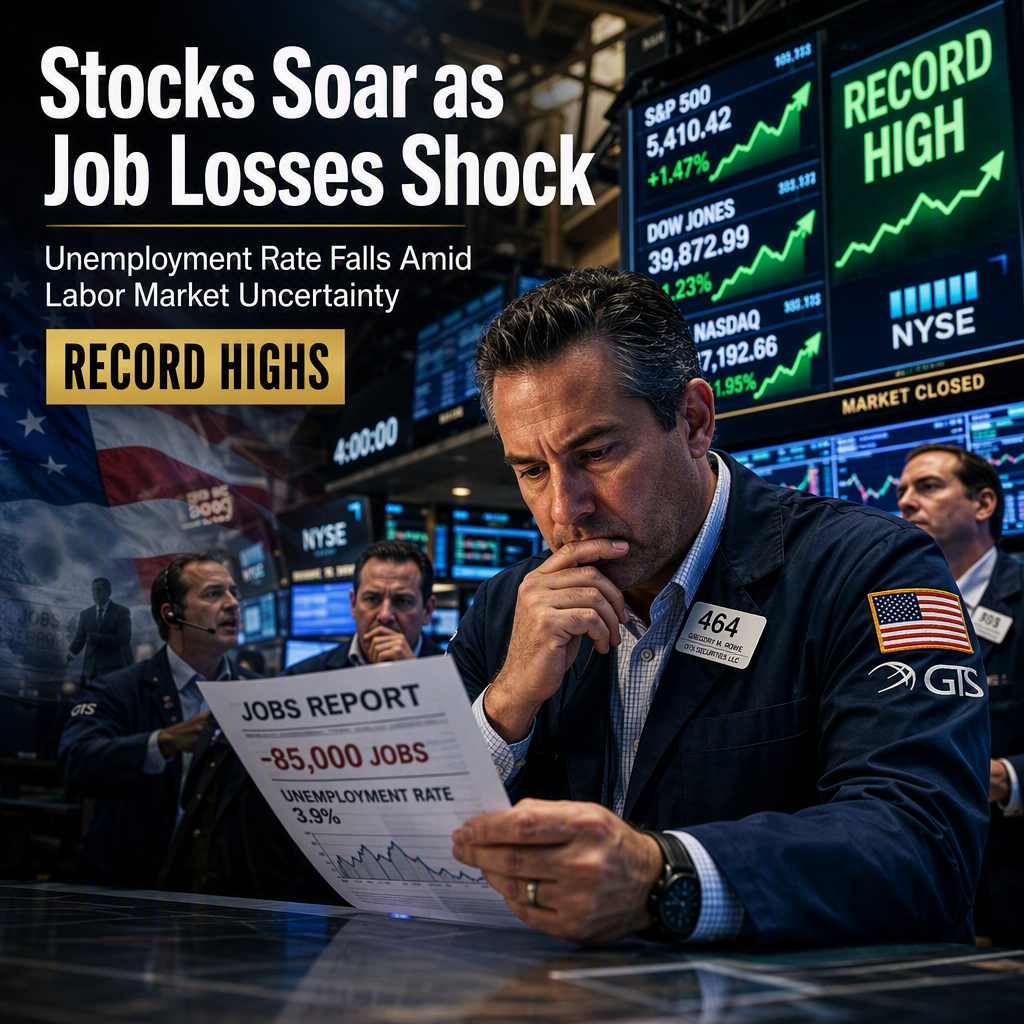
The latest U.S. jobs report revealed an unexpected decline in employment, with the economy losing jobs in the previous month despite analysts forecasting modest gains [1]. In a surprising twist, the unemployment rate fell, which may indicate that some workers exited the labor force or that hiring in certain sectors was stronger than anticipated [1]. Specific figures for job losses and the new unemployment rate were not provided in the report [1].
Despite the weaker jobs data, the stock market responded positively, with major indices reaching all-time highs following the report [1]. This suggests that investors are focusing on other positive economic indicators and maintaining confidence in the broader economic outlook, possibly due to expectations for continued low interest rates [1]. NBC News’ Gabe Gutierrez noted, "Despite the disappointing jobs numbers, Wall Street continues to rally, with investors seemingly confident in the broader economic outlook" [1].
Analysts highlighted that the combination of a lower unemployment rate and a soft jobs report could complicate the Federal Reserve’s future decisions regarding interest rate hikes [1]. Traders are closely monitoring upcoming economic releases and Federal Reserve communications for further guidance, as sustained job losses could eventually impact consumer confidence and market momentum [1].
Technical analysis indicates that stocks are trading near record highs with strong upward momentum, although no specific price levels or chart details were provided [1]. Market participants are advised to remain vigilant for any shifts in economic data or central bank policy that could affect market direction [1].
CONCLUSION
The U.S. jobs report delivered a mixed message, with job losses offset by a lower unemployment rate and record-high stock markets. While investor sentiment remains optimistic, ongoing labor market weakness could pose risks if it persists. Market participants are encouraged to watch for further economic data and Federal Reserve signals.