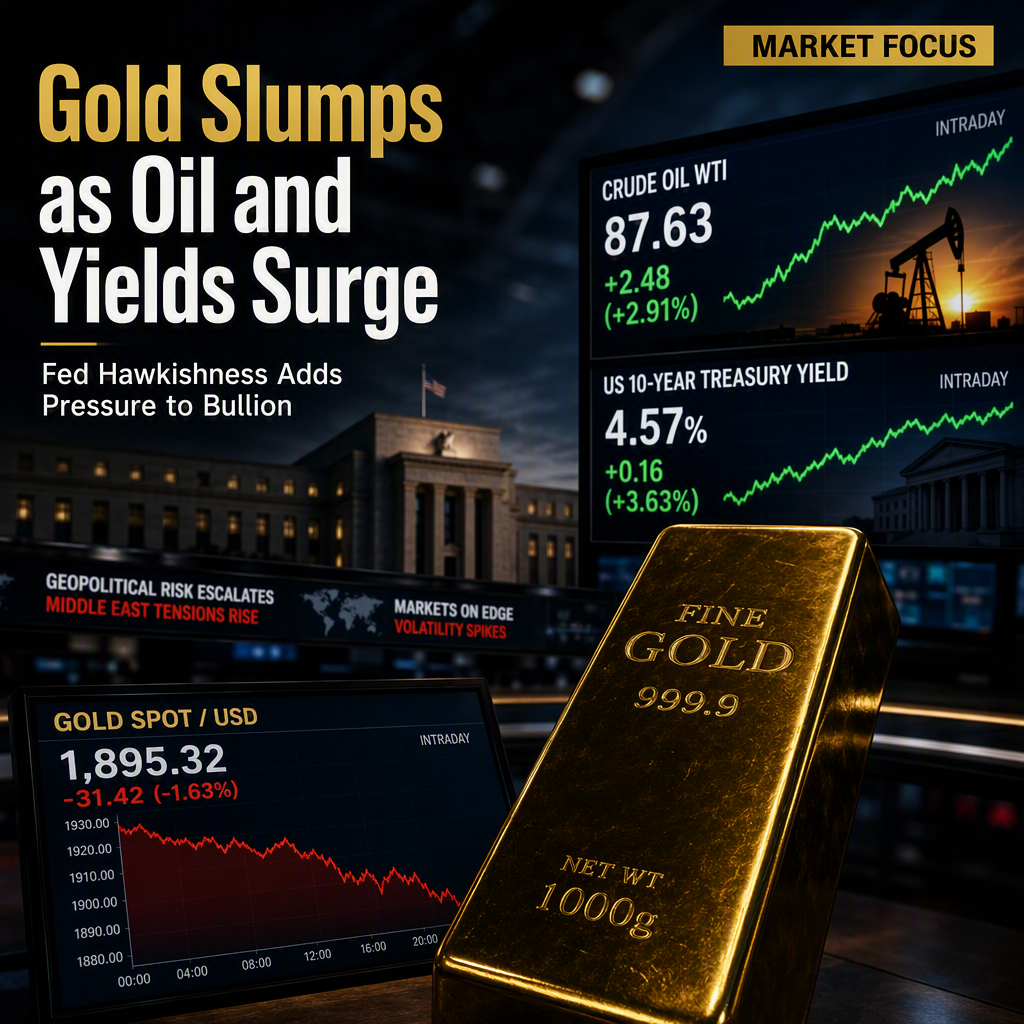
Gold prices have declined to a two-week low, slipping below $4,300/oz, as escalating tensions in the Middle East have driven oil prices and global bond yields higher, reviving concerns over US inflation and limiting the scope for near-term Federal Reserve easing [1][2]. According to ING commodities strategists Warren Patterson and Ewa Manthey, the recent rise in energy costs has prompted markets to reassess the outlook for US interest rates, with higher inflation expectations weighing on non-yielding assets such as gold [1].
On Wednesday, XAU/USD traded around $4,310 after hitting an intraday low of $4,282, its lowest level since August 7 [2]. The benchmark 10-year US Treasury yield advanced for the sixth consecutive day, reaching approximately 4.81%, its highest level since October 2023 [2]. The US Dollar Index (DXY) also strengthened, trading around 99.85, its highest since August 14, further pressuring gold prices [2].
Market participants have increased bets that the Federal Reserve could raise interest rates as soon as September, particularly after Fed Chair Kevin Warsh adopted a tougher stance on inflation at the Jackson Hole Symposium last week [2]. The CME FedWatch tool indicates the probability of a rate hike at the September 15-16 meeting has risen to around 70%, up from 36% a week ago [2]. Rising yields and expectations of higher interest rates are currently outweighing the support gold would typically receive from heightened inflation and geopolitical tensions [2].
Despite the recent decline, ING strategists argue that medium-term fundamentals remain supportive for gold, citing expectations of lower rates over the medium term, central bank purchases, and persistent geopolitical uncertainty as factors likely to provide a floor for prices [1]. Technical analysis shows XAU/USD remains below key moving averages, with momentum indicators such as the RSI and MACD signaling increasing bearish pressure. Immediate support is seen near $4,204 [2]. Upcoming US labor market data, including the ADP Employment Change and Nonfarm Payrolls reports, could influence Fed rate expectations and drive further moves in gold, the US Dollar, and Treasury yields [2].
CONCLUSION
Gold has come under significant pressure due to rising oil prices, higher bond yields, and increased expectations of a hawkish Federal Reserve stance. While near-term sentiment is negative, with technicals pointing to further downside, medium-term support from central bank buying and geopolitical uncertainty could limit further losses. Market participants are closely watching upcoming US labor data for additional cues on the Fed's policy path.