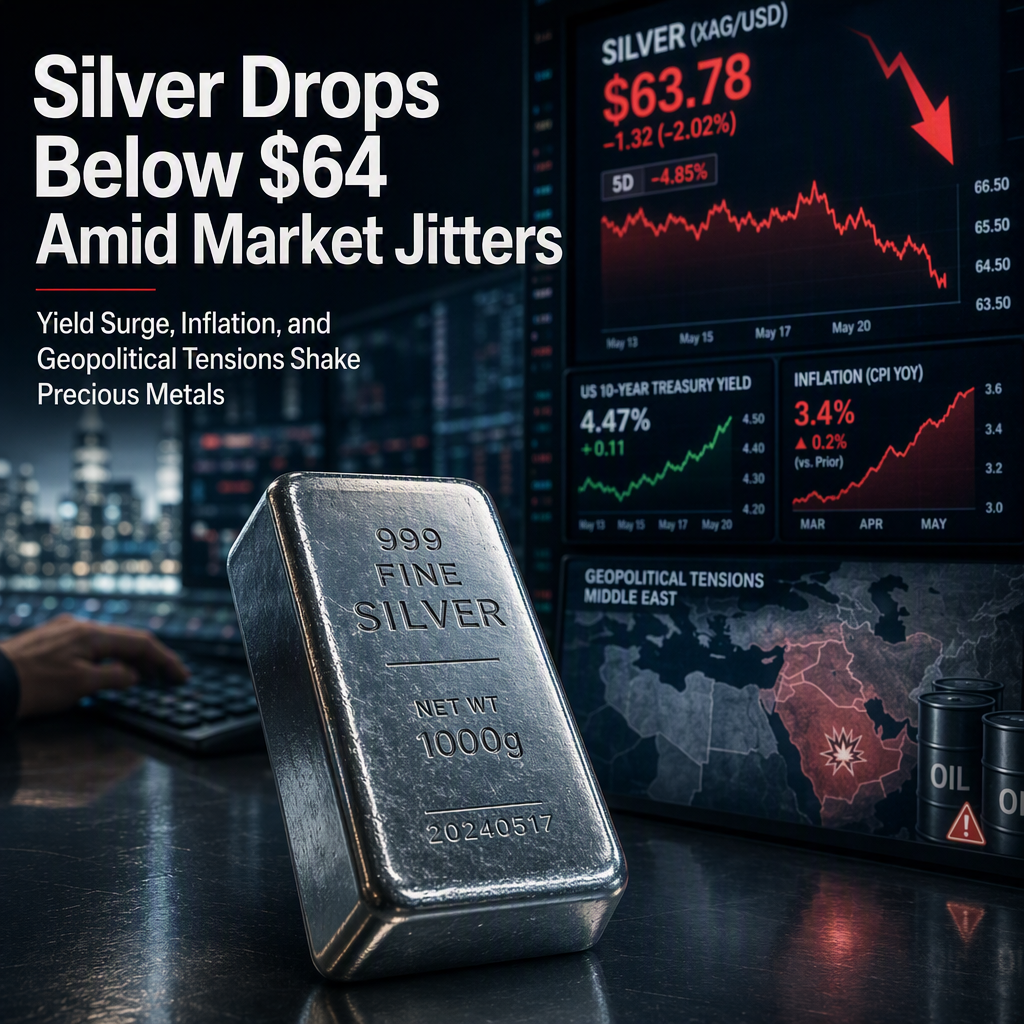
Silver (XAG/USD) extended its losses for a second consecutive day, trading around $63.40 per troy ounce during Asian hours on Wednesday, after slipping below the $64.00 mark. The decline in silver prices was attributed to a global bond selloff that pushed the US 10-year Treasury yield up to 4.80%, its highest level since early 2025. This surge in yields has reignited market anxieties about persistent inflation and the possibility of further interest rate hikes by the Federal Reserve [1].
Additional inflationary pressures emerged as crude oil prices spiked due to escalating geopolitical tensions between the United States and Iran, raising concerns about energy supply disruptions from the Middle East. TD Securities strategists noted that the renewed tensions highlight the fragility of any regional agreements and sustain a risk premium across the energy complex [1].
Recent US economic data presented a mixed outlook: July JOLTS job openings fell short of expectations at 7.27 million, while the ISM Manufacturing PMI for August dipped to 54.6 from 55.6 in July. Although the PMI missed estimates, it remained in expansion territory, suggesting continued strength in manufacturing. Investors are now awaiting the upcoming ADP employment report and Friday's nonfarm payrolls for further guidance on the Federal Reserve's policy direction [1].
Federal Reserve Vice Chair Barr delivered a more hawkish-than-usual message, with the FXS Speechtracker score at 7/10 compared to a historical average of 6.8/10. Barr emphasized that inflation "remains too high" and indicated that the option for a rate hike remains open if inflation does not moderate. The FXS Fed Sentiment Index slipped by 0.42 points to 128.86, signaling a modest pullback in perceived hawkishness but remaining well above the neutral 100 mark, reflecting a continued bias toward tightening and supporting the US Dollar against lower-yielding currencies [1].
CONCLUSION
Silver prices have come under pressure due to rising US Treasury yields, persistent inflation concerns, and geopolitical tensions impacting energy markets. The Federal Reserve's hawkish stance and upcoming US employment data are likely to keep market participants cautious, with upside risks for the US Dollar and further volatility in precious metals possible.