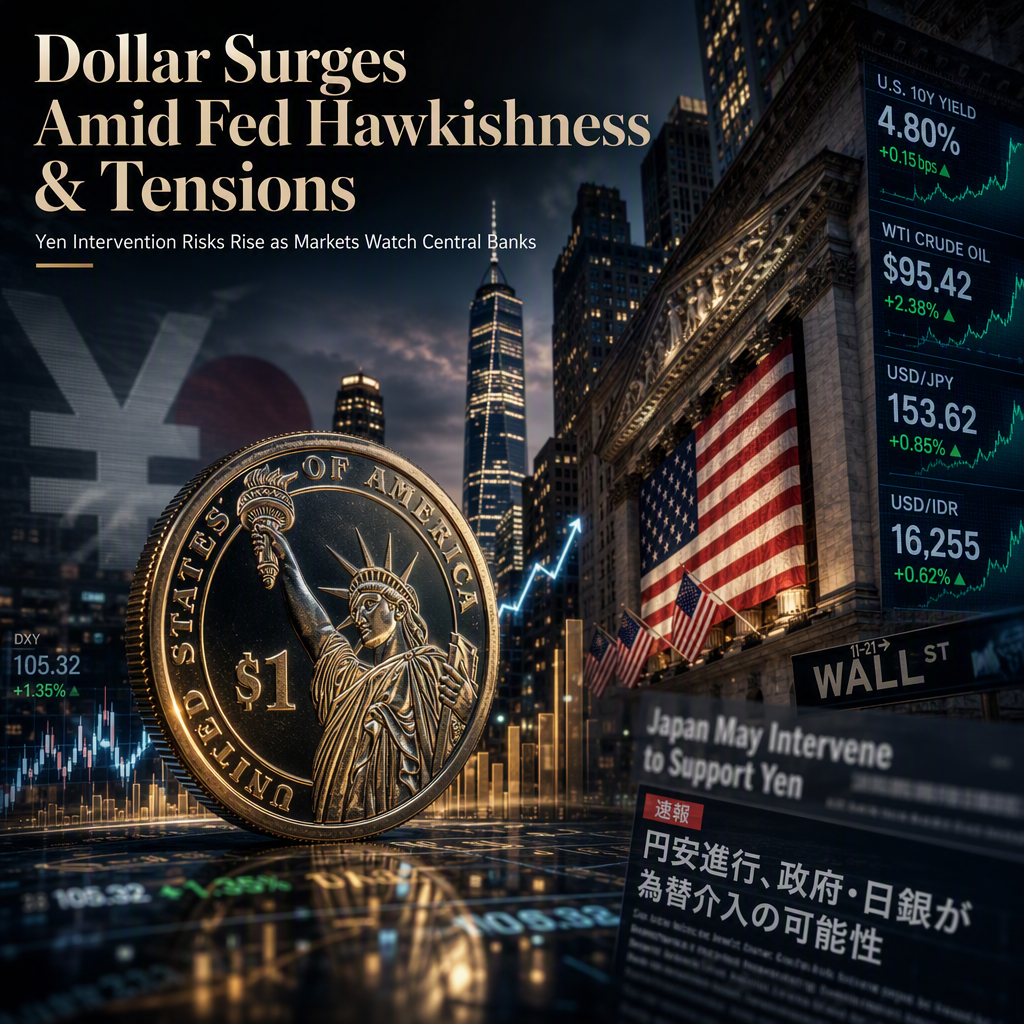
The US Dollar has shown renewed strength, supported by expectations of a Federal Reserve rate hike in September and a spike in energy prices following escalating hostilities between the United States and Iran. ING’s Chris Turner notes that the Dollar is holding gains after hawkish comments from Fed Chair Kevin Warsh, with markets now anticipating a rate hike in September due to persistent inflation and a resilient US economy. Turner projects the DXY index could grind higher toward the 100.10/20 area, especially as the cyclical Fed story outweighs concerns about Dollar debasement and long-end US bond dynamics [1].
The rise in US bond yields, with the 10-year Treasury yield surging to 4.80%—its highest since early 2025—has further fueled Dollar gains. This move is compounded by a significant jump in crude oil prices, with WTI gaining nearly 5% and Brent crude climbing above $95 per barrel, as renewed US-Iran hostilities intensify concerns over Middle East supply risks [2][3]. The USD/IDR pair extended gains for a second day, trading around 17,810, reflecting the Dollar’s broad-based strength amid these developments [2].
Market sentiment has shifted to risk aversion, with investors closely watching upcoming US economic data, including the ADP employment report and Nonfarm Payrolls, to gauge the Fed’s next move. Despite mixed US data—July JOLTS job openings at 7.27 million and ISM Manufacturing PMI easing to 54.6 in August—the manufacturing sector remains in expansion, supporting the case for further tightening [2].
Meanwhile, the Japanese Yen has come into focus as intervention risk rises. The Euro tumbled against the Yen amid speculation of another US-Japan joint intervention, following comments from Japan’s Finance Minister Satsuki Katayama and US Treasury Secretary Scott Bessent emphasizing the importance of orderly yen movements. Markets are assigning a 92% chance of a September rate hike by the Bank of Japan, with strategists highlighting that future guidance on the path of rate hikes will be crucial for Yen sentiment [4]. BNY’s Geoff Yu notes that JPY selling has largely run its course, with USD/JPY capped near 160 after significant intervention spending ($96.4bn) and the market remaining vigilant for further intervention [5].
Despite the Dollar’s strength, some analysts warn that if pressure on the long end of the US yield curve intensifies, the Dollar could face downside risks, especially if Treasury Secretary Bessent takes further action to support the bond market. Investors are also expressing Dollar debasement concerns through USD/CHF trades [1][2].
CONCLUSION
The US Dollar’s renewed strength is underpinned by Fed rate hike expectations, surging bond yields, and geopolitical tensions, while the Japanese Yen faces intervention risk as it approaches key levels. Market sentiment remains cautious, with investors closely monitoring central bank actions and upcoming economic data for further direction. The overall market impact is high, with significant moves in major currency pairs and commodities.