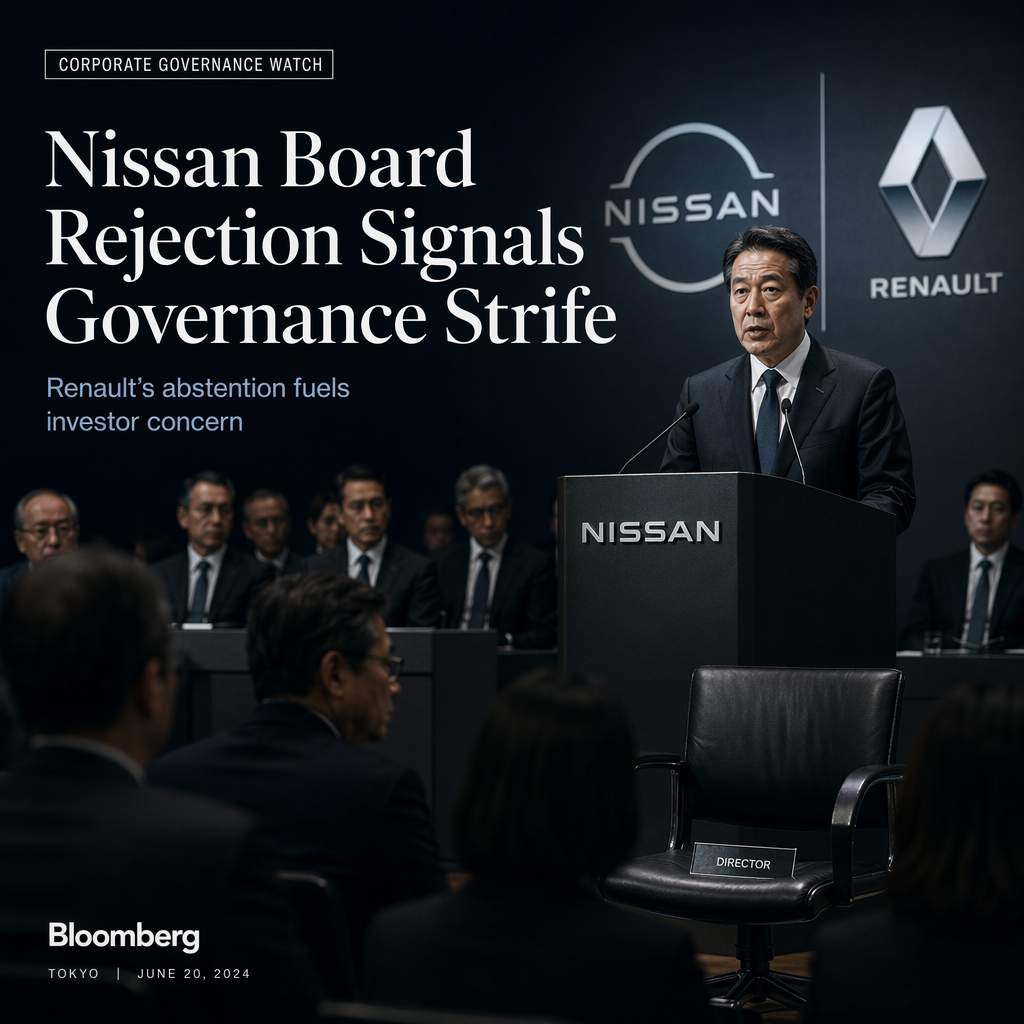
On June 23, 2026, Nissan Motor shareholders voted to reject the appointment of a key outside director who currently serves as chair of the company's audit committee [1]. This decision was notably influenced by Renault, Nissan's quarter-century-long partner and major shareholder, which abstained from voting on the director, raising investor concerns about the director’s independence and contributing to the outcome [1]. The rejection comes at a time when Nissan is under persistent scrutiny regarding its governance, signaling continued investor unease about the automaker’s board structure and oversight [1].
Renault’s abstention, given its significant stake in Nissan, played a crucial role in the vote and highlighted the importance of independent oversight within the company [1]. Shareholders’ focus on governance follows recent challenges for Nissan, including annual debt payments amounting to $690 million and a slowdown in its turnaround efforts [1]. The outcome of the vote underscores the market's demand for stronger independent oversight as Nissan seeks to recover and drive future growth [1].
During the meeting, important quotes and statements emphasized concerns about the board’s independence and the necessity for transparent governance, particularly as Nissan continues its partnership with Renault [1]. Investors and analysts are expected to closely monitor how Nissan addresses these governance issues in the upcoming quarters, with corporate governance remaining a key area of focus [1].
CONCLUSION
Nissan's shareholders have sent a clear signal demanding stronger independent oversight and transparent governance, especially in light of recent financial and operational challenges. The rejection of the director appointment, influenced by Renault's abstention, highlights ongoing concerns about board independence. Market participants will be watching Nissan's next steps closely as governance remains a critical issue for the automaker.