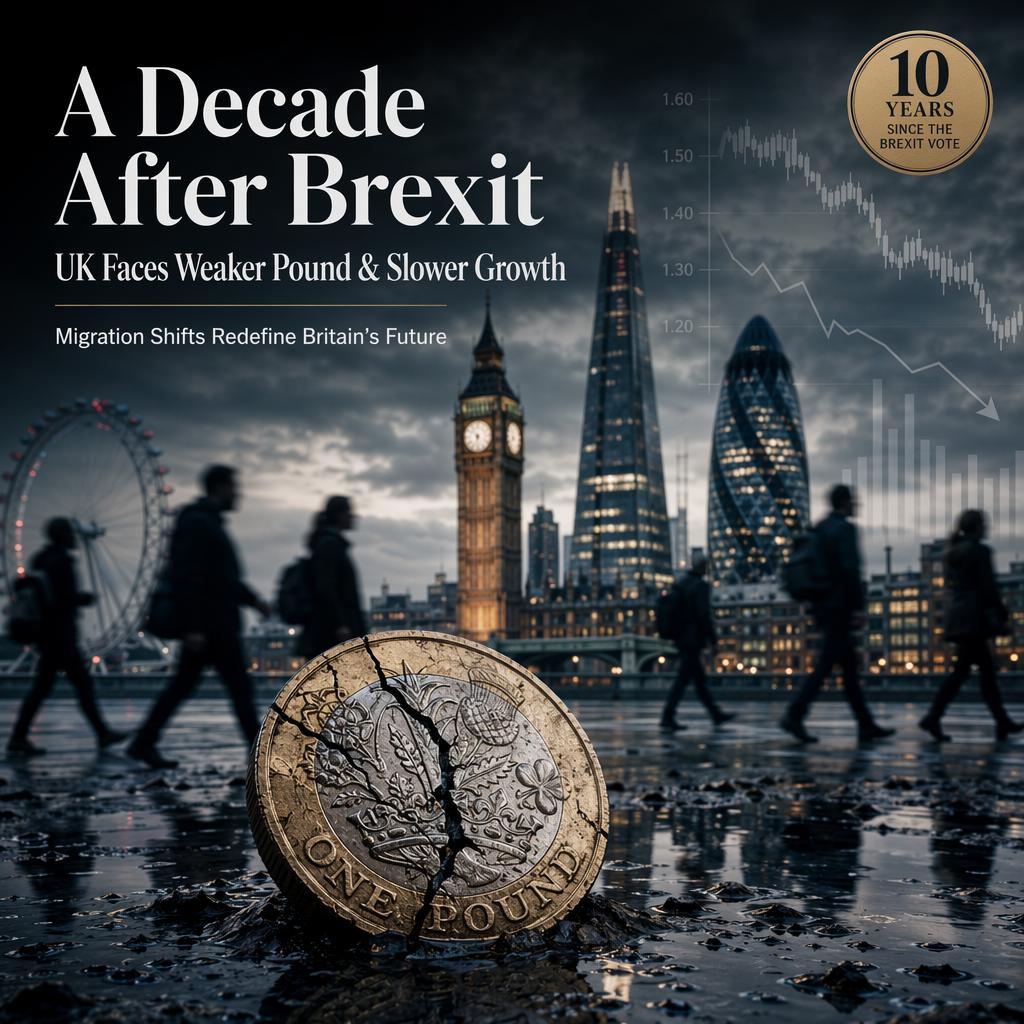
On June 23, 2016, the United Kingdom voted to leave the European Union by a margin of 52% to 48%, resulting in immediate market turmoil as the pound fell sharply and the FTSE 100 index tumbled. The political fallout was swift, with then-Prime Minister David Cameron resigning after leading the unsuccessful Remain campaign. The subsequent years saw prolonged negotiations, with Theresa May failing to pass a Brexit deal three times before Boris Johnson ultimately delivered Brexit in 2020 [1].
The economic impact of Brexit has been significant. According to Stanford professor Nicholas Bloom, by 2025, Brexit had reduced the UK's GDP by 6-8%. Bloom attributes these negative effects to elevated uncertainty, reduced demand, diverted management time, and increased misallocation of resources stemming from the protracted Brexit process [1].
In terms of immigration, the Vote Leave campaign's promise to 'take back control' of migration policy led to a reversal in net migration with EU countries. The UK now experiences net emigration to the EU, while migration from non-EU countries has surged due to work supply shortages, more international students, and emergency visa schemes for countries such as Ukraine. The Migration Observatory noted that 'EU net migration subsequently turned negative in 2022, as the post-Brexit immigration system greatly reduced opportunities for EU citizens to move to the UK,' and that 'take-up of work visas among EU citizens has been relatively low since Brexit' [1].
Sterling remains one of the clearest indicators of Brexit's impact. The pound crashed following the referendum and has not regained its pre-referendum highs against either the euro or the dollar [1].
CONCLUSION
Ten years after the Brexit vote, the UK faces a weaker currency, lower economic growth, and a transformed migration landscape. The long-term market and economic consequences of Brexit remain substantial, with no sign of a return to pre-referendum conditions.