
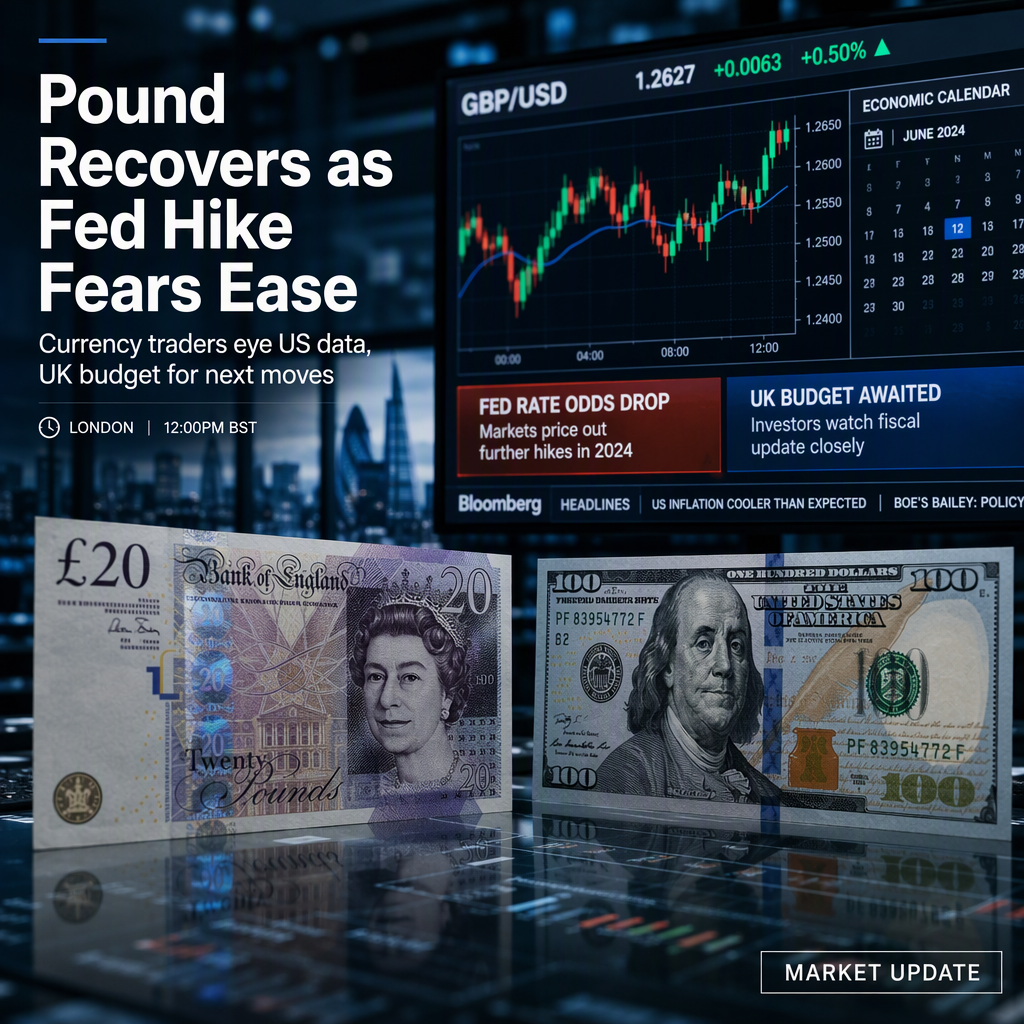
The British Pound (GBP) recovered some of its earlier losses against the US Dollar (USD) during the European trading session on Monday, though it remained 0.15% lower near 1.3220. This modest rebound came as the US Dollar Index retreated after reaching a fresh annual high near 102.53, with receded hawkish Federal Reserve (Fed) expectations capping further upside for the greenback [1].
According to the CME FedWatch tool, the probability of the Fed raising interest rates at its upcoming policy meeting has dropped sharply to 19.4%, down from 70.9% just a week ago. This shift follows the release of the US Nonfarm Payrolls (NFP) data for September, which indicated moderate job growth and prompted traders to scale back expectations for near-term Fed tightening [1]. However, Societe Generale’s Kenneth Broux noted that while the softer payrolls report has reinforced the recent pullback in rate hike expectations, it is not a 'game changer' for the Fed’s hawkish stance, as inflation remains a central concern. The latest jobs data, according to Broux, justifies caution regarding the pace and scale of future policy adjustments, as articulated by FOMC voter Williams [1].
Market participants are now focused on the upcoming US ISM Services Purchasing Managers’ Index (PMI) data for September, scheduled for release at 14:00 GMT. The PMI is expected to decline slightly to 55.0 from 55.4 in August [1]. On the UK side, attention is turning to the forthcoming budget announcement later this month. Rabobank strategists highlighted that Prime Minister Burnham and Chancellor Healey have reassured markets that former Chancellor Reeves’ fiscal rules will be maintained, implying that taxes are likely to be raised again—a move seen as negative for both growth prospects and voter sentiment [1].
From a technical perspective, GBP/USD is trading at 1.3225, maintaining a bearish near-term outlook as it remains below the 20-day exponential moving average (EMA) at 1.3326. The Relative Strength Index (14) stands at 34.9, just above oversold territory, indicating ongoing downside pressure [1].
CONCLUSION
The British Pound's slight recovery against the US Dollar reflects diminished expectations for immediate Fed rate hikes following softer US jobs data, though inflation concerns persist. Market focus now shifts to the US ISM Services PMI and the upcoming UK budget, both of which could influence future currency movements. Technical indicators suggest continued downside risk for GBP/USD in the near term.