
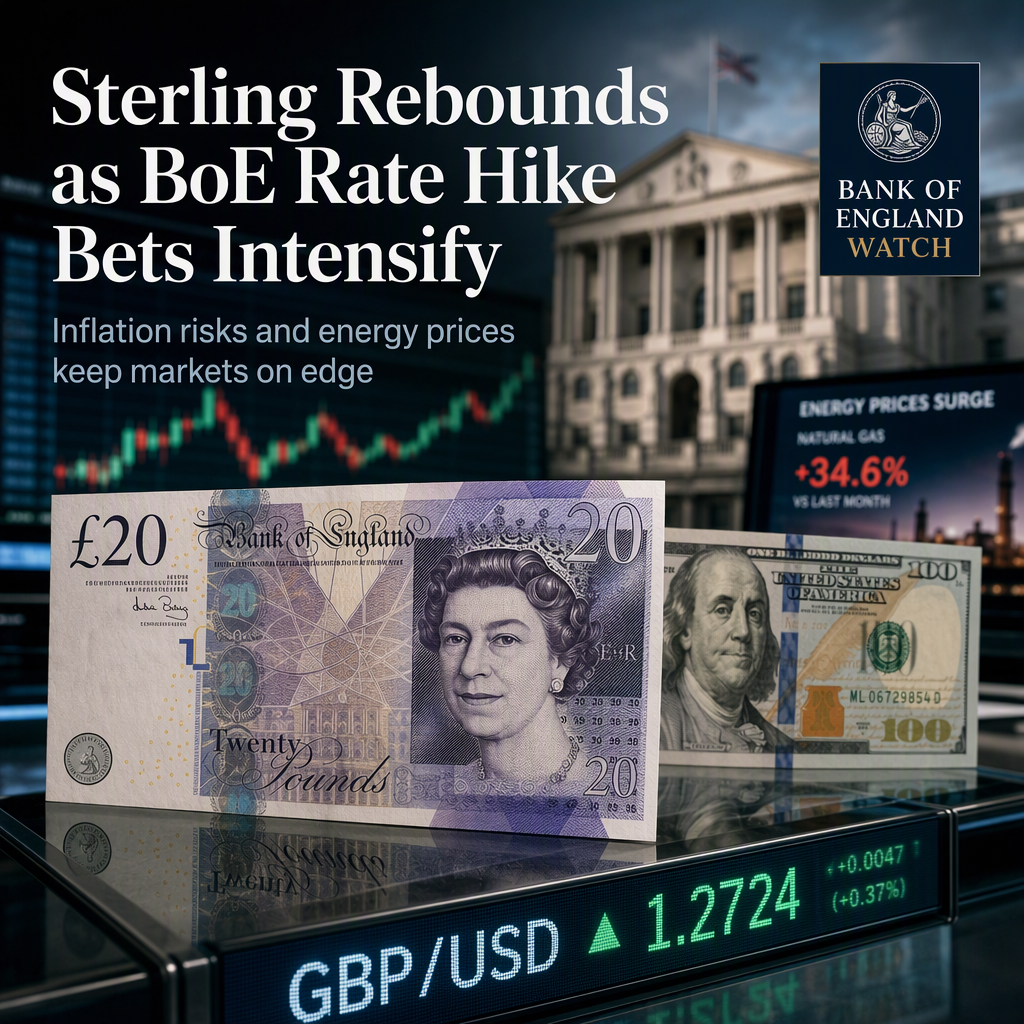
The Pound Sterling (GBP) trimmed some of its weekly losses, gaining over 0.18% against the US Dollar (USD) on Friday, as the Greenback paused despite rising US Treasury yields [1]. GBP/USD traded at 1.3243 after rebounding from daily lows of 1.3209 [1]. The market remains influenced by geopolitical tensions, particularly in the Middle East, which have driven energy prices higher and contributed to increased inflationary pressures [1].
In the United States, the University of Michigan Consumer Sentiment Index for September fell to a four-month low of 48.1, down from 51.7 in August, reflecting growing concerns about inflation eroding household purchasing power [1]. One-year inflation expectations rose from 4% to 4.6%, while five to ten-year expectations edged up from 3.3% to 3.4% [1]. Meanwhile, core Durable Goods Orders exceeded estimates in August, and July data was revised upward, indicating robust business spending [1].
In the UK, the surge in oil prices has heightened inflation risks, prompting investors to anticipate further tightening by the Bank of England (BoE) [1]. Although the BoE kept rates unchanged last week, it signaled openness to future hikes if inflation persists [1]. Money market traders are pricing in 33 basis points of additional tightening from the BoE this year, with a 77% probability of a move at the November meeting, according to Prime Terminal [1]. For 2027, investors expect 105 basis points of tightening by the central bank [1].
Technically, GBP/USD remains in a bearish near-term bias, trading below key moving averages and trend lines, with the Relative Strength Index (RSI) at 28.4 indicating oversold conditions. While selling pressure dominates, the downside momentum may be losing steam tactically [1].
CONCLUSION
The Pound Sterling's modest recovery against the US Dollar reflects a pause in USD strength and rising expectations for Bank of England rate hikes amid persistent inflation risks. Market sentiment remains cautious due to geopolitical tensions and elevated energy prices, with traders closely watching upcoming BoE decisions for further direction.