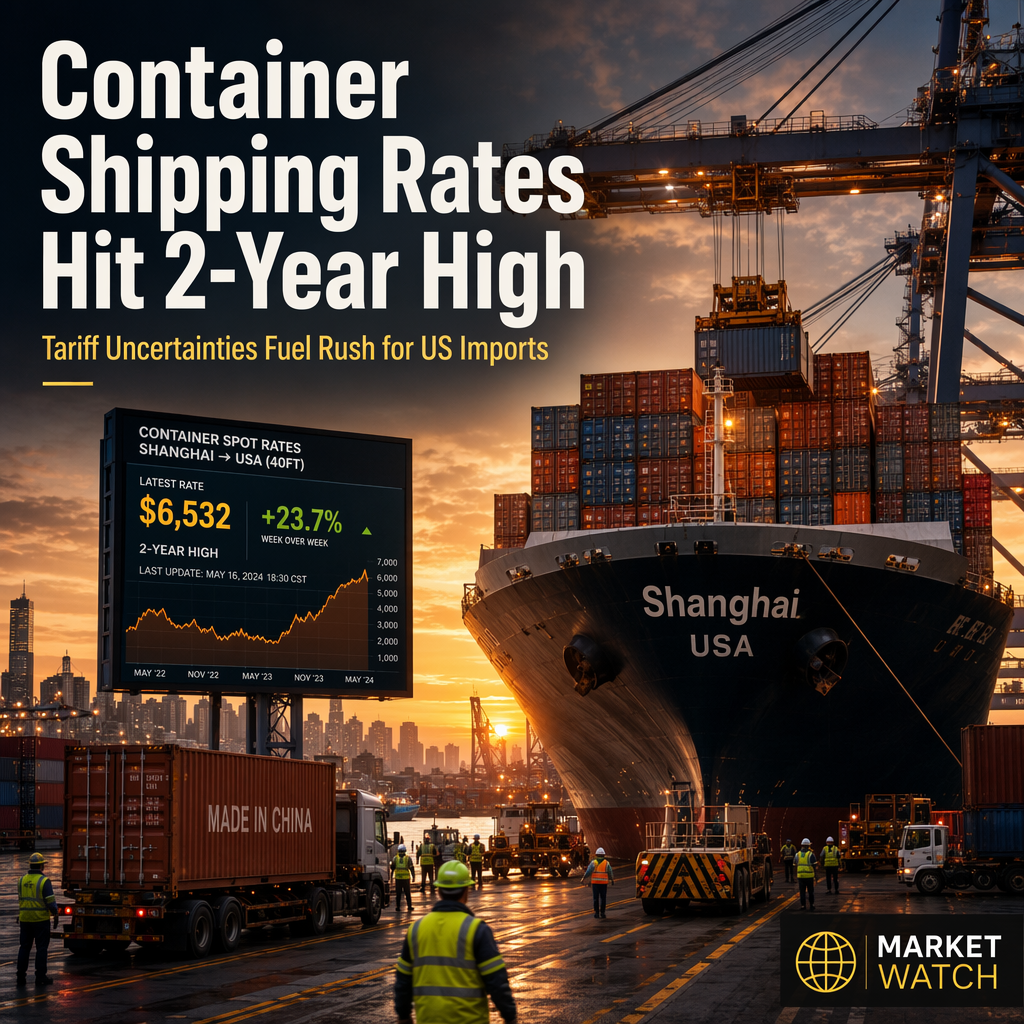
Spot freight rates for container ships traveling from China to the U.S. have reached their highest point in nearly two years, driven by a rush among retailers and businesses to import holiday season products ahead of potential U.S. tariff increases [1]. The anticipation of new tariffs has led companies to expedite shipments and clear goods through customs before any changes take effect, resulting in a significant spike in demand for container space on transpacific routes [1].
Freight forwarders and logistics companies are reporting a surge in bookings, with some routes experiencing tight capacity and rising prices [1]. According to industry sources, spot rates for a 40-foot container from Shanghai to the U.S. West Coast have climbed above $5,000, a level not seen since the post-pandemic demand surge, while support levels are now around $4,500 [1]. Technical analysis indicates that key resistance levels have been breached, and market sentiment has turned bullish, with upside risk if tariff policy changes are announced [1].
Analysts caution that elevated rates could persist if tariff uncertainties remain, potentially squeezing margins for importers and retailers [1]. A logistics industry executive described the situation as a 'classic case of supply-demand imbalance,' with urgent shipments creating a price premium on China-U.S. lanes [1]. Traders and importers are advised to monitor tariff announcements closely, as confirmation of higher tariffs could trigger further volatility and price spikes [1].
The current environment is marked by high uncertainty, with short-term trading strategies favoring quick execution and risk management [1]. Freight brokers recommend closely watching booking trends and rate indices, as technical indicators suggest continued strength in shipping rates in the near term [1].
CONCLUSION
China-U.S. container shipping rates have surged to a two-year high as businesses rush to import goods ahead of possible tariff hikes. The market is experiencing heightened volatility and bullish sentiment, with analysts warning of persistent elevated rates if tariff uncertainties continue. Importers are urged to act swiftly and monitor policy developments to manage costs and risks.