
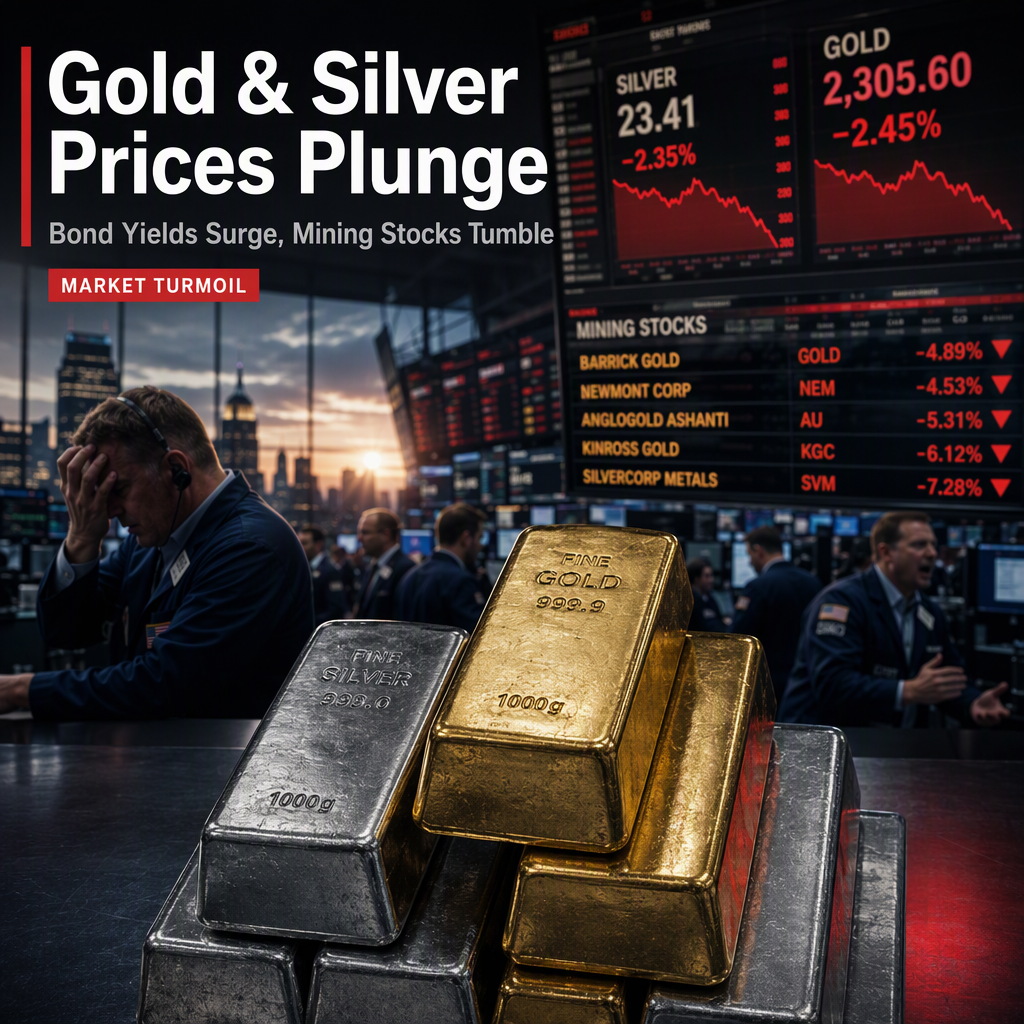
On Monday, silver prices (XAG/USD) experienced a sharp decline, trading at $61.14 per troy ounce, which represents a 4.91% drop from Friday's price of $64.30, according to FXStreet data [1]. Silver has fallen by 13.98% since the beginning of the year [1]. CNBC World reported similar figures, with spot silver down 4.92% to $61.11 and silver futures dropping 5.1% to $61.52 per troy ounce [2]. The Gold/Silver ratio increased to 67.78 from 66.64 on Friday, indicating a relative shift in valuation between the two metals [1].
Gold also saw significant losses, with futures slumping 3.34% to $4,176.80 and spot prices falling 3.27% to $4,145.88 around 5:40 a.m. E.T. [2]. The sell-off in precious metals was attributed to surging global bond yields, which reduced investor appetite for non-interest-bearing assets like gold and silver [2].
The decline in metal prices had a pronounced effect on mining stocks. U.S.-listed shares of major gold and silver miners dropped in premarket trading: Sibanye Stillwater fell 7.92%, Harmony Gold Mining slumped 7.49%, and Newmont Corporation was down 4.72% [2]. Among silver miners, Silvercorp Metals dropped 7.13%, Endeavour Silver shed 5.86%, and Hecla Mining dipped 5.55% [2].
Market participants are closely watching inflationary pressures and the potential for further interest rate hikes from the Federal Reserve, which are contributing to the rise in government bond yields [2]. Max Baecker, president of American Hartford Gold, commented that if rate hikes succeed in controlling inflation, gold could face sustained pressure; however, persistent inflation or economic stress could bolster demand for gold as a diversifier [2]. Baecker also noted that global central banks purchased a record 289 metric tons of gold in the second quarter, viewing this as a longer-term reserve strategy independent of Fed rate decisions [2].
CONCLUSION
Both gold and silver prices fell sharply on Monday, driven by rising bond yields and expectations of further interest rate hikes. The sell-off extended to mining stocks, which saw significant declines in premarket trading. Market sentiment remains negative, with investors cautious amid inflation concerns and shifting central bank strategies.