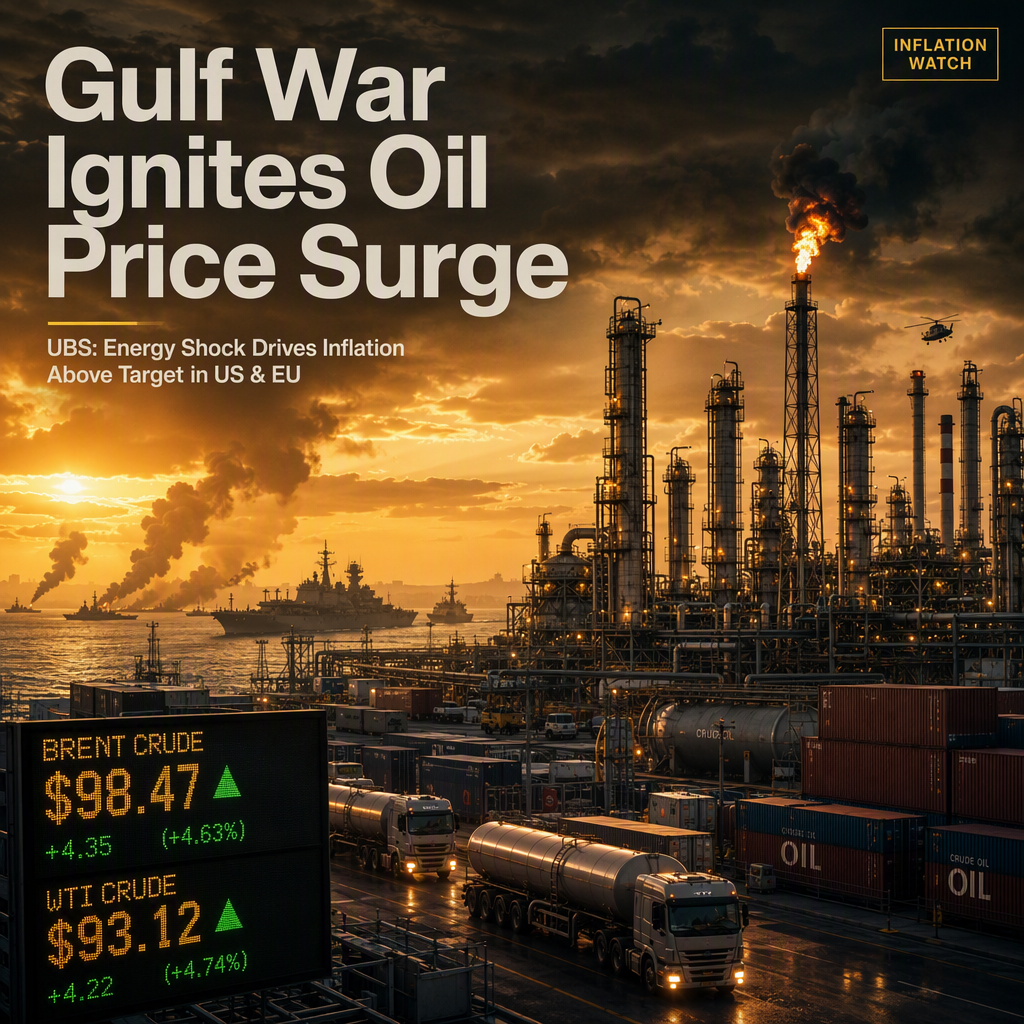
UBS economist Paul Donovan has highlighted the significant impact of the Gulf war on global oil prices and consumer price inflation in major economies [1]. According to Donovan, the conflict has pushed up oil prices, which in turn has increased consumer price inflation above target levels in both the US and the EU [1]. He notes that while energy accounts for just over 7% of the US consumer price basket and almost 11% in the EU, its indirect effects—such as through transport and production—are substantial and not fully captured by core inflation measures that exclude food and energy [1].
Donovan points out the complexity of isolating war-related price effects from overall inflation, emphasizing that energy costs are embedded in various goods and services, including airfares and delivery costs [1]. He also explains that measuring an economy’s oil consumption does not fully reflect the oil embedded in imported goods, such as those manufactured in China and sold in Europe [1].
Since February, the crude oil futures price has risen by 26%, while US diesel prices have surged by almost 50% [1]. In contrast, China’s vehicle energy prices have increased by only 5%, suggesting that the oil cost embedded in US imports from China is likely less than that in US domestic production [1]. Donovan further notes that the rise in refined oil prices is exacerbated by damage to Gulf refining capacity [1].
Overall, Donovan concludes that, despite the challenges in quantifying the exact impact, the price consequences of the Gulf war are the dominant reason why inflation is currently above target in major economies [1].
CONCLUSION
The Gulf war has led to a significant increase in oil prices, which is the primary driver of above-target inflation in the US and EU, according to UBS economist Paul Donovan. The indirect effects of energy costs and the complexity of global supply chains make it difficult to isolate the war’s impact, but its influence on inflation is clear. Market participants should closely monitor ongoing developments in the Gulf region and their effects on energy prices and inflation.