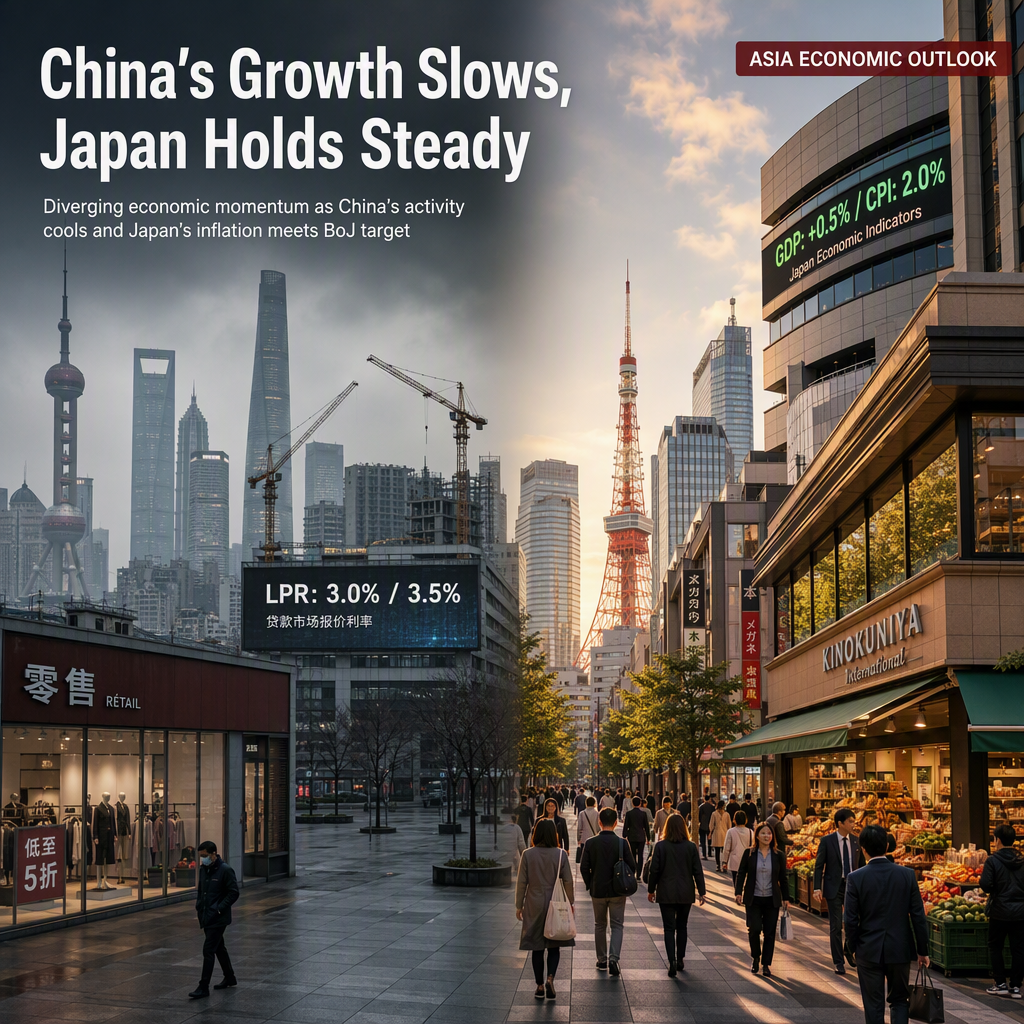
China is set to release its key domestic activity data for July, with ING's Lynn Song forecasting continued sluggish momentum in the economy. Retail sales are expected to remain weak at 1.7% year-on-year, while fixed asset investment is likely to contract further, slowing to -6.3% year-on-year year-to-date. Industrial production, however, is projected to remain relatively firm, moderating to 5.0% year-on-year. Following the July Politburo meeting, which emphasized accelerating fiscal spending and the deployment of bond proceeds, ING anticipates that investment activity could begin to recover in the coming months. Despite these developments, China is expected to keep its Loan Prime Rates unchanged, with the 1-year and 5-year rates remaining at 3.0% and 3.5%, respectively [1].
In Japan, ING reports that market consensus expects the preliminary Q2 Gross Domestic Product (GDP), due on 17 August, to hold steady at 0.5% quarter-on-quarter, seasonally adjusted. Private consumption is anticipated to remain the primary driver of growth. Additionally, Japan is scheduled to release its headline and core Consumer Price Index (CPI) data on 21 August, with expectations for a moderate increase to 2.0% and 1.8% year-on-year, respectively. This projected acceleration in headline inflation would bring the national figure back to the Bank of Japan’s 2% target for the first time in recent months, mainly due to persistent import price pressures [2].
While China faces ongoing economic headwinds with weak retail sales and contracting investment, Japan's economic indicators suggest stability, with GDP growth and inflation aligning closely with market expectations and central bank targets. No immediate changes in monetary policy are anticipated in either country, as China is expected to maintain its current loan prime rates and Japan's inflation is projected to meet the BoJ's target [1][2].
CONCLUSION
China's July data points to continued economic sluggishness and an unchanged monetary policy stance, while Japan's GDP and inflation figures indicate stable growth and price levels near the central bank's target. Market impact is moderate, with both countries showing no immediate signs of policy shifts but diverging in economic momentum.