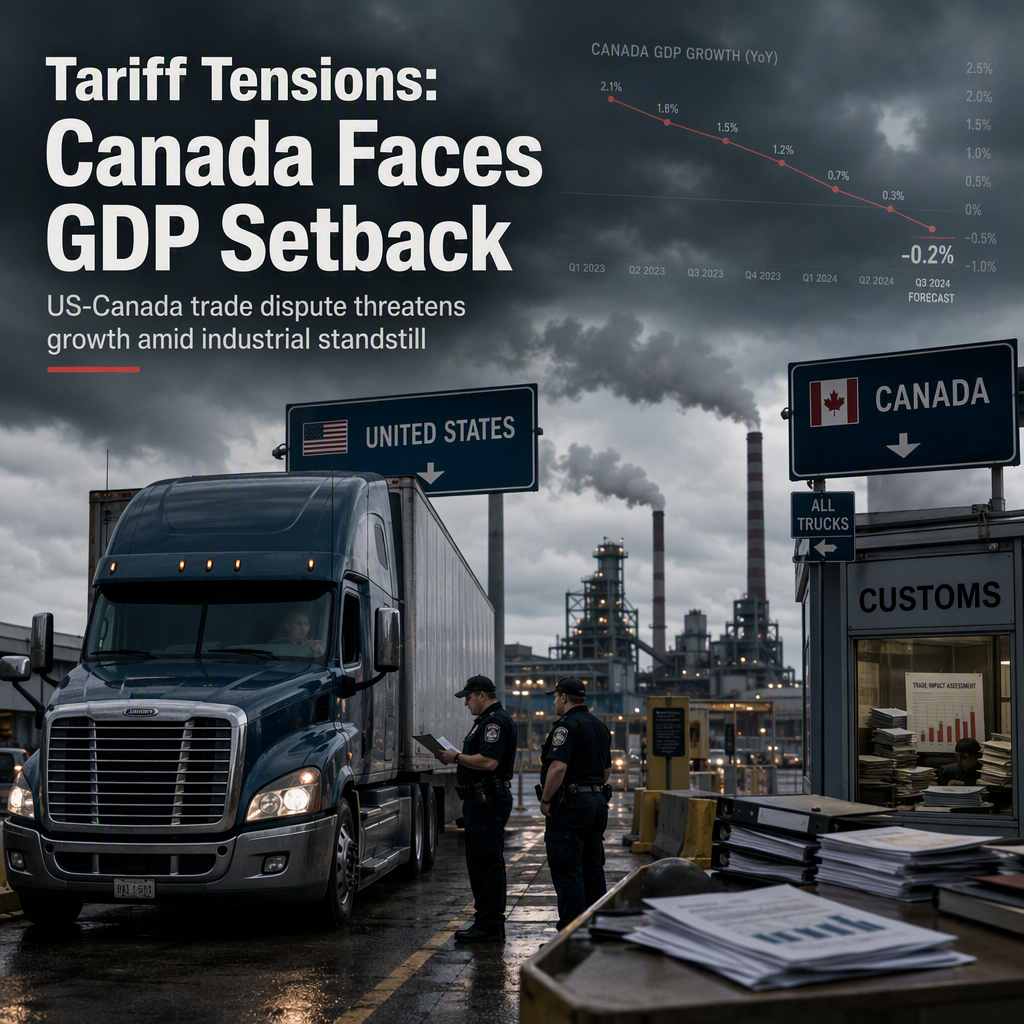
TD Securities' Robert Both has analyzed the economic impact of the new Section 338 US tariffs and Canada's retaliatory measures, projecting that these combined actions will reduce Canadian GDP by approximately 0.3 percentage points by the end of 2027, with the most significant effects expected in late 2026 [1]. The report notes that fiscal supports totaling CAD 7.5 billion are anticipated to partially offset the negative effects, while inflationary pressures are expected to remain contained [1].
The escalation in tariffs will see the total policy-implied tariff rate rise to around 7.5% from about 5.0% over Q2, marking the highest level since the 35% IEEPA tariffs were replaced with Section 122. This compares to a potential 3.5% rate if proposed reductions to steel, aluminum, and auto tariffs had been implemented [1]. The targeted nature of Section 338 means the impact will be less broad-based, but it still represents a significant escalation in the US-Canada trade dispute [1].
TD Securities expects the new tariffs to primarily affect Canadian GDP growth in late Q3 and Q4, with the fiscal response extending into 2027. The direct impact from US tariffs is expected to slow the recent rebound in Canadian exports, particularly in primary metals and motor vehicles, though outright contractions in quarterly GDP are not anticipated [1].
Canadian retaliatory tariffs are projected to generate about $8.4 billion in annual revenues based on 2025 import levels, with industrial goods—especially steel products—accounting for roughly 30% of these revenues. This focus on industrial goods is expected to limit the impact on consumer prices, which did not experience significant pass-through from tariffs imposed in 2025 [1]. The Bank of Canada may be more sensitive to inflation risks due to ongoing global energy supply shocks, but without further escalation, domestic inflation impacts are not expected to exceed 0.2 percentage points on CPI by the end of 2027 [1].
CONCLUSION
TD Securities forecasts that the new US-Canada tariffs will moderately dampen Canadian GDP growth through 2027, with targeted fiscal supports expected to cushion the blow. Inflationary effects are projected to be limited, and the Bank of Canada is not expected to face significant additional pressure unless the trade dispute escalates further.