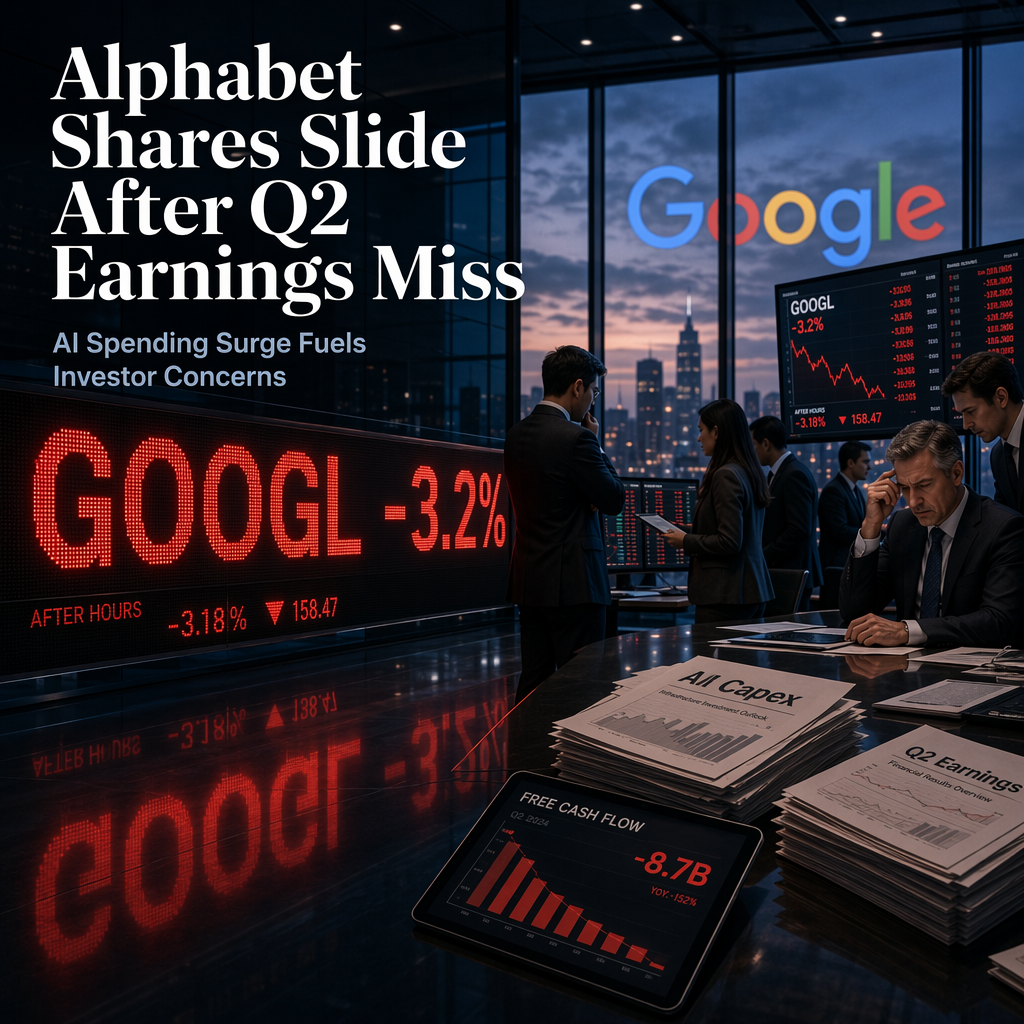
Alphabet, the parent company of Google, reported its second-quarter results, revealing a 24% year-over-year revenue increase to $119.8 billion, surpassing the $116.9 billion expected by analysts according to LSEG data [1]. Earnings per share (EPS) were reported at $9.11, significantly above the consensus estimate of $2.89. However, this figure was heavily influenced by a $99 billion gain from equity investments in SpaceX and Anthropic. Excluding this one-time gain, operational EPS was closer to $2.85, which is below expectations and likely contributed to the market's negative reaction [1].
Operating income for the quarter was $40.77 billion, with operating margins expanding by 1.6 percentage points year-over-year, indicating some underlying business strength [1]. Despite these positives, Alphabet's shares fell over 3% in after-hours trading, continuing a downward trend that began in mid-May after the stock peaked at a record $402.62 on May 13. The decline reflects growing market skepticism about Alphabet's increasing capital expenditures on artificial intelligence (AI) infrastructure and data centers [1].
Alphabet raised its capital expenditure outlook for 2026 to a range of $195 billion to $205 billion, up from the $180 billion to $190 billion range provided in April, which itself was an increase from earlier guidance in February. The company also reaffirmed that capex would "increase significantly in 2027" to accelerate capacity for AI offerings. This comes at a time when Alphabet's quarterly free cash flow has turned negative, heightening investor concerns about the sustainability of such heavy spending [1].
Additionally, Google Search revenue, while showing robust year-over-year growth of nearly 17%, fell short of expectations, adding to investor frustration. The market's reaction suggests little tolerance for operational earnings misses or rising costs, especially as Alphabet faces questions about AI researcher departures and delays to its new flagship AI model [1].
CONCLUSION
Alphabet's second-quarter results highlighted strong top-line growth driven by AI demand, but operational earnings and rising capital expenditures disappointed investors. The stock's after-hours decline reflects market concerns about the sustainability of Alphabet's aggressive AI investments and the company's ability to deliver on earnings expectations. Forward guidance for even higher spending in 2027 suggests continued scrutiny from investors in the quarters ahead.