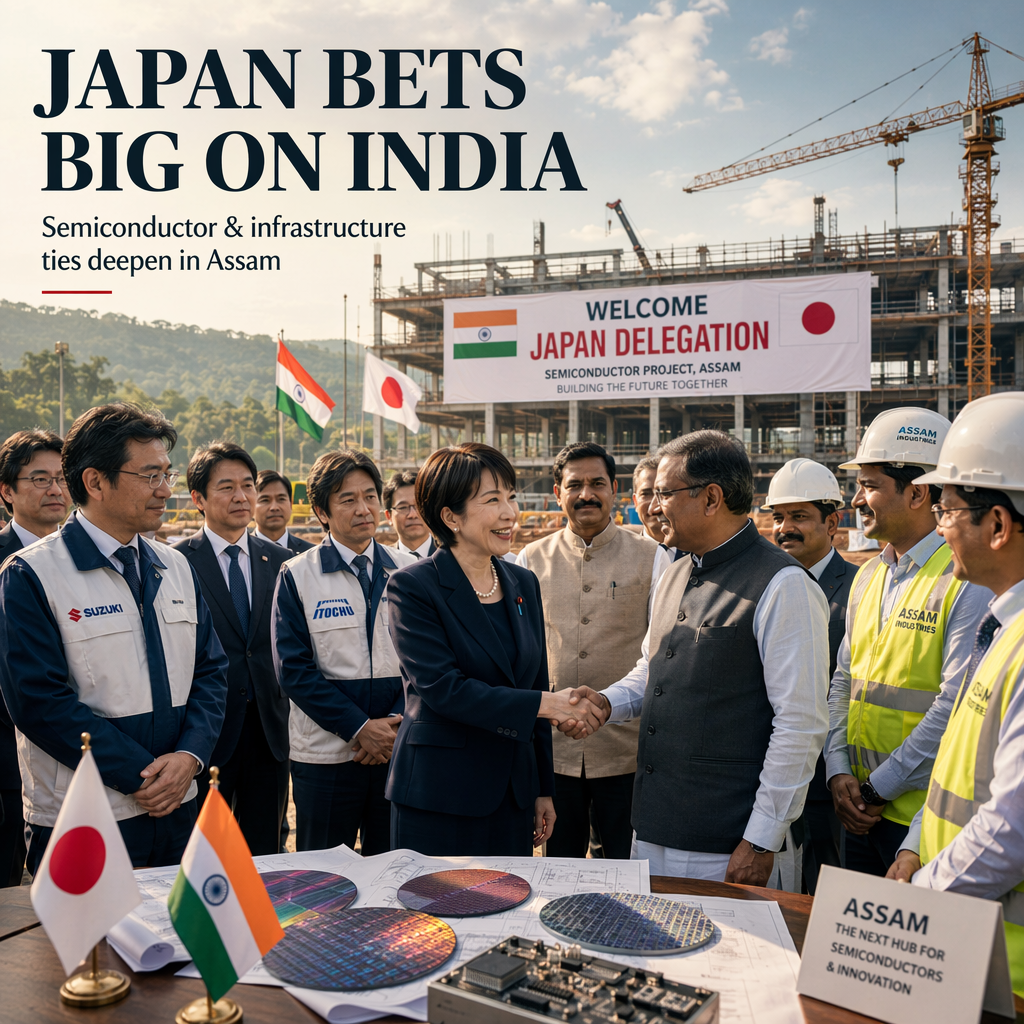
Prime Minister Sanae Takaichi of Japan is scheduled to visit India's northern state of Assam in early July, accompanied by leaders from over 50 Japanese companies and organizations, including executives from major corporations such as Suzuki and Itochu [1]. This high-profile delegation highlights Japan's intention to deepen economic ties with India, focusing particularly on the semiconductor, automotive, and infrastructure sectors [1].
Assam has been identified as a potential new hub for chip-related investments, aligning with India's recent efforts to expand its semiconductor industry [1]. The Japanese government and private sector are actively exploring opportunities to collaborate with Indian partners in building manufacturing facilities and supply chains [1]. This initiative is part of a broader strategy by Japanese companies to diversify their supply chains and reduce reliance on China, positioning India as a key destination for future investments [1].
The visit is expected to result in new business agreements and partnerships, especially in technology and manufacturing sectors [1]. Business leaders will assess on-the-ground opportunities and engage with Indian officials to discuss incentives, infrastructure, and regulatory support for Japanese investments [1]. This move follows India's recent initiatives to double public investment in infrastructure, including rails and chip plants, over the past five years [1].
The Japanese delegation's focus on Assam underscores the state's potential to become a strategic hub for semiconductor production and related industries, which could further strengthen economic cooperation between Japan and India [1].
CONCLUSION
Japan's upcoming delegation to India, led by Prime Minister Takaichi and featuring top executives from Suzuki, Itochu, and other major firms, signals a significant step in strengthening bilateral economic ties. The focus on semiconductor and infrastructure investments in Assam is poised to create new business opportunities and partnerships, with potential long-term impacts on regional supply chains and industry growth.