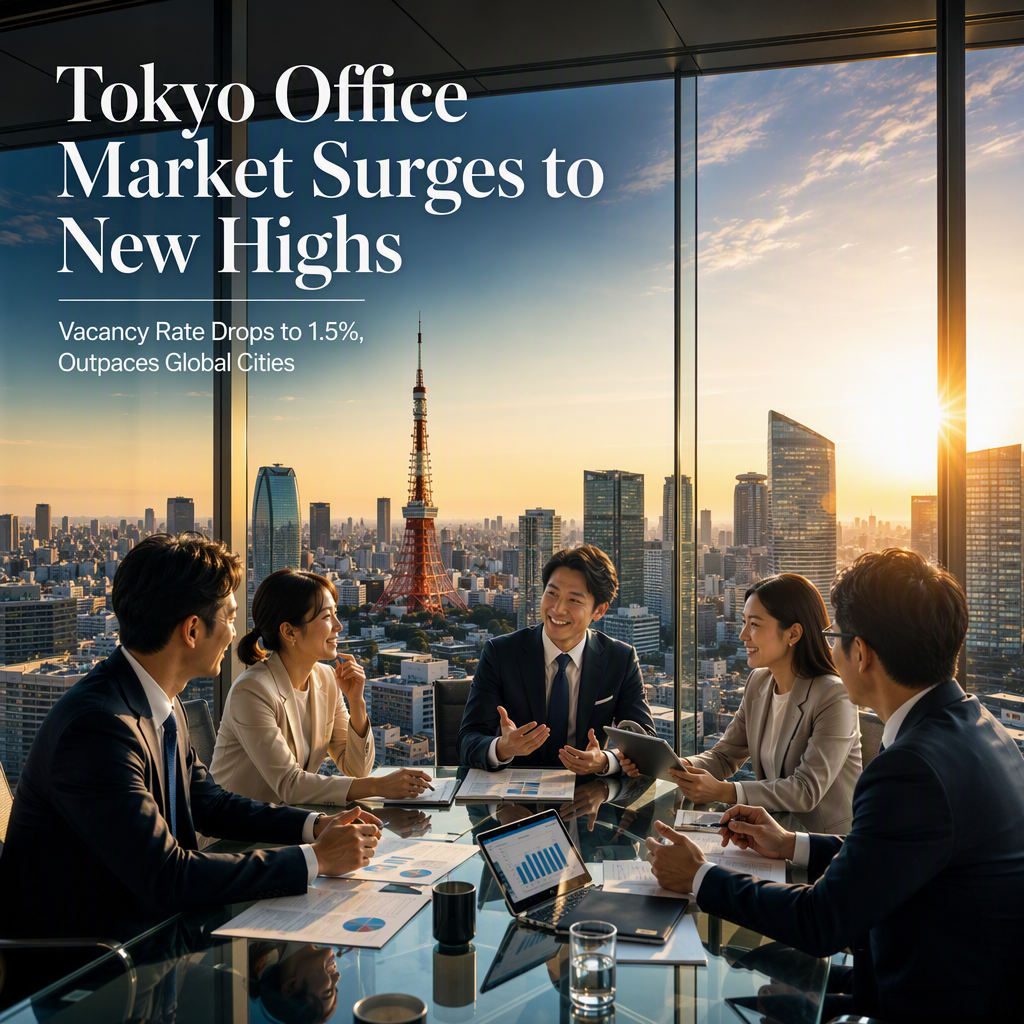
Tokyo's office vacancy rate dropped to 1.5% in the first quarter of the year, marking the lowest level among major global cities and highlighting a robust recovery in the city's commercial property sector [1]. This sharp decline is attributed to companies increasingly bringing employees back to physical workplaces, with a strong emphasis on face-to-face communication and collaboration [1]. The cultural preference for in-person interaction, coupled with a slower adoption of artificial intelligence tools for remote work, has sustained demand for office space in Tokyo [1].
The competitive leasing environment resulting from tight supply and robust demand has pushed Tokyo office rents to a fresh three-decade high, signaling strong market fundamentals [1]. Compared to other global cities, many of which are still grappling with high vacancy rates due to persistent remote work trends, Tokyo stands out for its rapid post-pandemic recovery [1]. The article notes that the 2% vacancy rate served as a support level during the pandemic, and the recent drop below this threshold indicates renewed strength in the market [1].
Market observers and investors may view Tokyo's office market favorably, given its low vacancy rate, rising rents, and resilient demand [1]. The article suggests that these factors are likely to continue driving a competitive leasing environment and upward pressure on rents [1].
CONCLUSION
Tokyo's office market has demonstrated exceptional resilience, with vacancy rates falling to historic lows and rents reaching new highs. The city's strong demand for office space, driven by cultural preferences and limited remote work adoption, positions it as a standout performer among global commercial property markets. Investors are likely to see continued strength and opportunity in Tokyo's office sector.