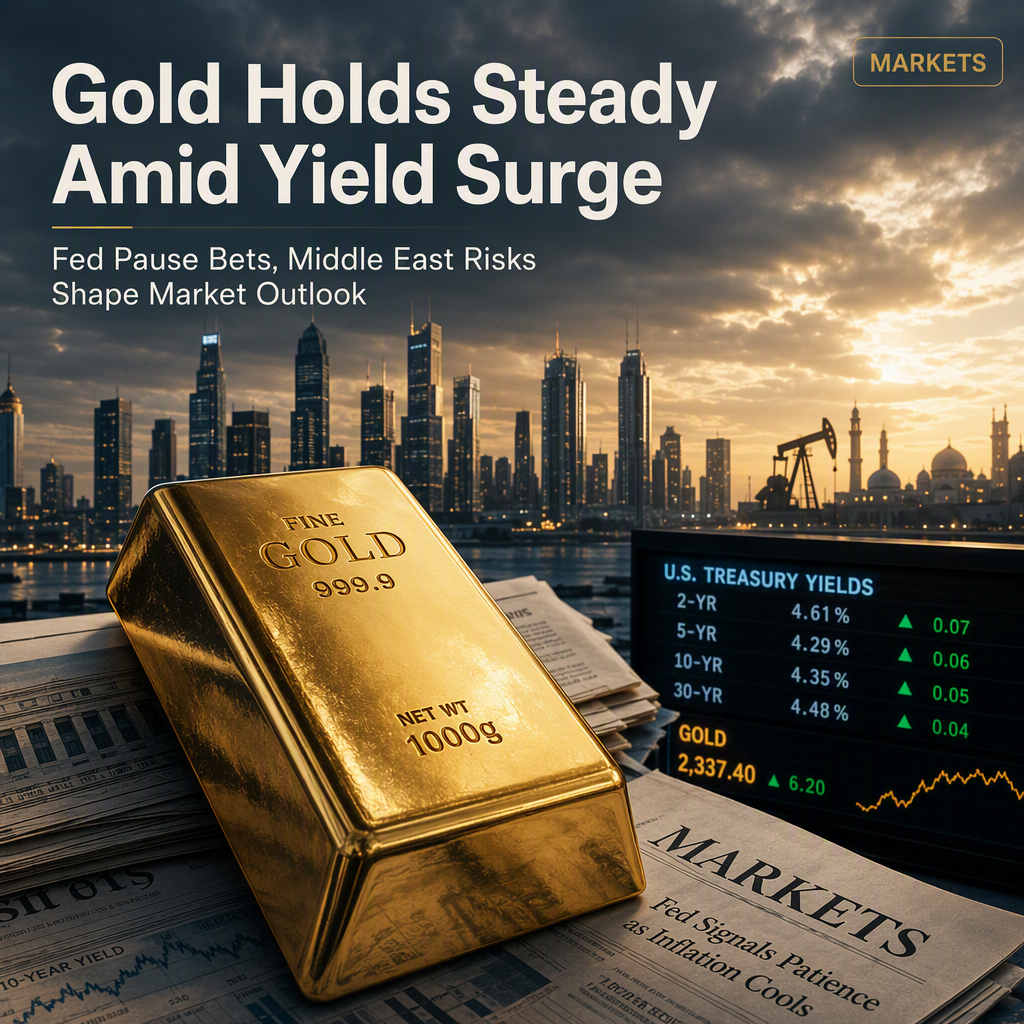
Gold prices have remained resilient, holding around USD 4,400 per ounce, despite a notable rise in US Treasury yields, with the 10-year yield reaching 4.74% and the 30-year yield surpassing 5.3% for the first time since 2007 [1]. This decoupling from real interest rates is significant, as market-based inflation expectations have remained stable, and real rates have returned to late-July levels. At that time, gold was trading at USD 4,040, indicating a substantial increase since then [1]. Commerzbank’s Carsten Fritsch suggests that the rise in yields is not due to increased expectations of Fed rate hikes, as only one hike is priced in by year-end—13 basis points lower than at the end of July [1]. Instead, he points to market doubts about the Fed's willingness or ability to hike rates sufficiently, or concerns over fiscal risks such as rising government debt, both of which are seen as supportive for gold. Renewed investor interest is also evident in ETF flows after recent outflows [1].
According to TD Securities strategists, gold continues to draw support from growing expectations that the Federal Reserve will hold interest rates steady for the rest of the year, following softer US inflation and employment data [2]. This has led money managers to aggressively build long positions in gold, while some traders maintain downside hedges against potential oil-driven rate shocks [2]. The stabilization of short-end yields and a weakening US Dollar have further encouraged speculative long positioning [2]. However, ongoing tensions in the Middle East and the risk of energy price volatility present a key cap on gold’s near-term upside. A surge in oil prices could reignite inflation concerns and prompt the Fed to reconsider its rate path, which would likely force gold traders to reprice policy expectations for higher rates [2].
Looking ahead, TD Securities projects that gold will remain range-bound in the near to medium term, anchored within a USD 4,200–4,500 per ounce corridor into early 2027 due to the risk of higher interest rates stemming from energy market uncertainty [2]. However, they anticipate that once inflation pressures subside, gold could break out toward higher levels later in 2027 [2].
CONCLUSION
Gold has demonstrated resilience in the face of rising US Treasury yields, supported by expectations of a Fed rate pause and renewed investor interest. However, ongoing geopolitical risks and the potential for oil-driven inflation shocks are expected to keep gold trading within a defined range in the near term. Market participants remain watchful for shifts in inflation and Fed policy that could alter gold’s trajectory.