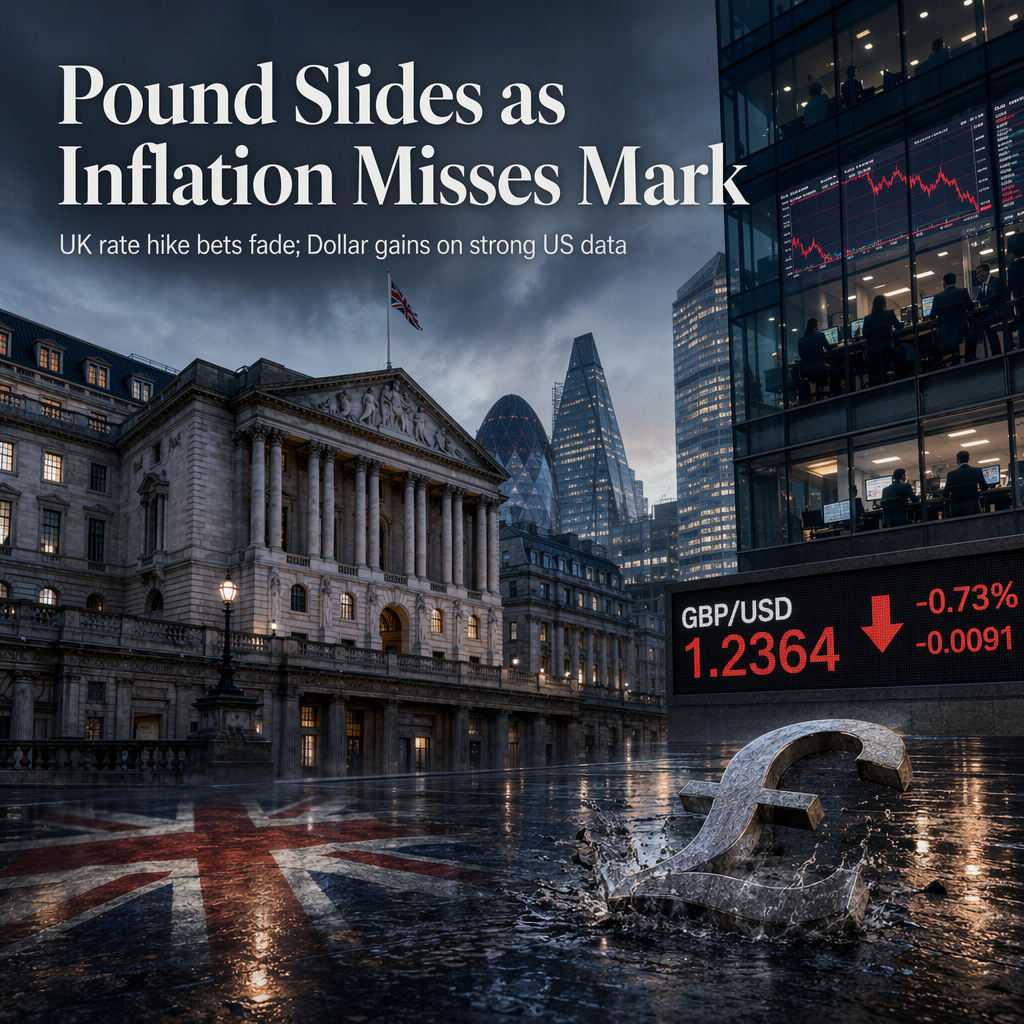
The British Pound (GBP) declined towards 1.3400 against the US Dollar (USD) on Wednesday after the latest UK inflation report showed consumer prices rising by 2.8% year-over-year in May, unchanged from April and below economists' expectations of a 3% increase [1]. This softer-than-expected inflation print led investors to scale back their bets on further Bank of England (BoE) interest rate hikes, with money markets now pricing in just 30 basis points of tightening, compared to 50 basis points anticipated a week earlier [1].
Meanwhile, the US Dollar gained momentum as US Retail Sales for May rose by 0.9% month-over-month, surpassing estimates of a 0.5% increase, according to the US Census Bureau [1]. The report highlighted broad-based consumer resilience, with 11 of 13 categories posting gains and gas station sales jumping 3.4% due to higher gasoline prices amid the Iran war [1]. This robust US data supported the Greenback ahead of the Federal Reserve's policy decision, where the central bank is expected to keep rates unchanged and update its economic projections [1].
In the currency markets, GBP/USD traded with losses of over 0.22%, settling at 1.3397 and maintaining a soft tone below key technical resistance levels, including the simple moving average at 1.3475 and a downward resistance trendline near 1.3551 [1]. The Relative Strength Index (RSI) around the mid-40s signaled fading momentum, reinforcing a cautious, mildly bearish outlook for the pair as it remains vulnerable to further downside if it breaks below current levels [1].
Looking ahead, traders are focused on the upcoming Federal Reserve policy decision and the first press conference by new Fed Chair Kevin Warsh, as well as the release of UK economic growth figures [1].
CONCLUSION
The British Pound weakened after UK inflation data came in below expectations, reducing the likelihood of further BoE rate hikes. Strong US retail sales data bolstered the US Dollar, adding to GBP/USD downside pressure. Market participants are now closely watching central bank decisions and upcoming economic data for further direction.