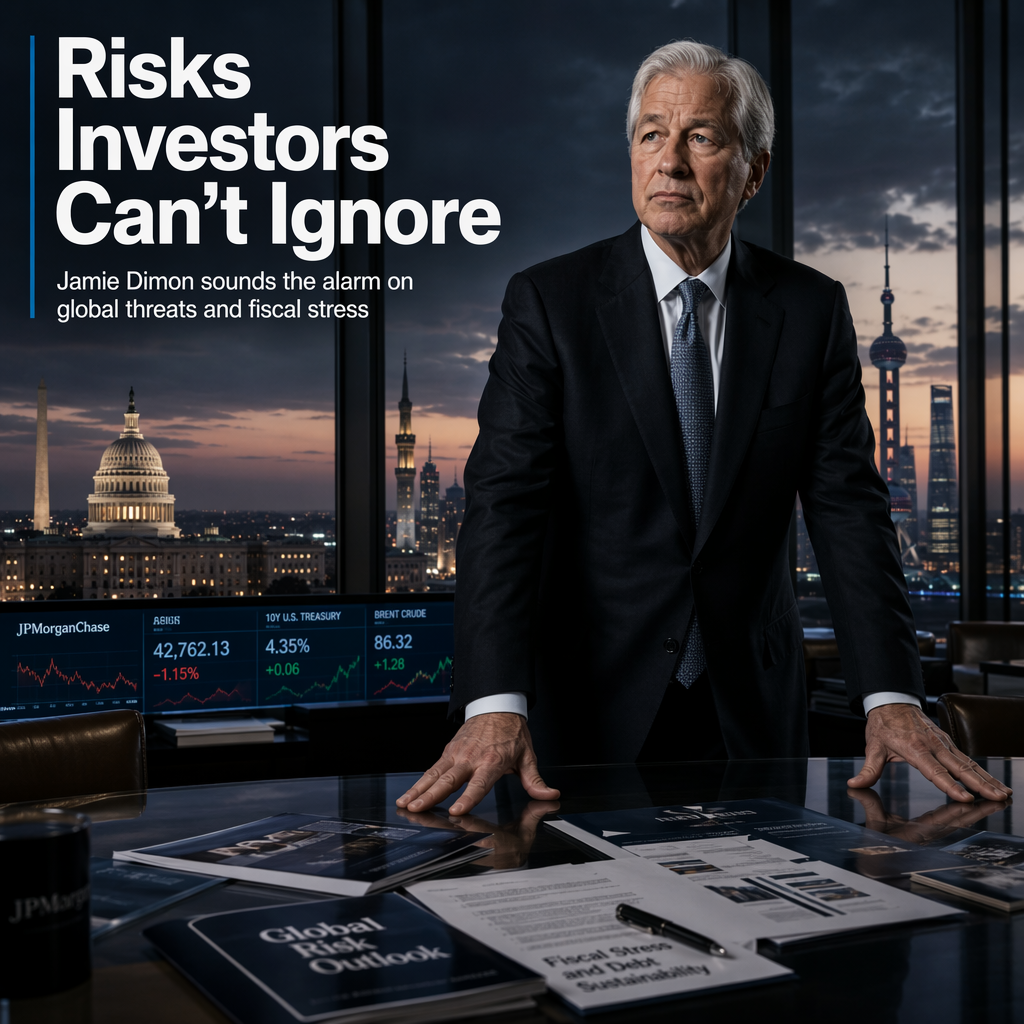
JPMorgan Chase CEO Jamie Dimon cautioned that investors are underestimating significant geopolitical and fiscal risks that could disrupt markets. In an interview released on July 20, 2026, Dimon stated he would not buy equities or long-dated U.S. Treasurys at current prices, citing concerns over ongoing wars in Ukraine and the Middle East, escalating U.S.-China tensions, and rising military spending amid growing government deficits [1].
Dimon emphasized that while markets have largely looked past recent shocks, including wars and tariffs, these risks are 'probably bigger than other people think.' He noted that the S&P 500 has returned nearly 10% this year, driven by consumer spending, moderating inflation, and enthusiasm for artificial intelligence investments. However, he warned that persistent U.S. budget deficits could eventually force a reckoning, potentially driving interest rates higher as bond investors demand greater compensation to finance government debt [1].
Despite acknowledging the global economy's increased resilience due to lower energy dependence, Dimon cautioned that this does not eliminate the possibility of a sudden market inflection point. He suggested that more cumulative shocks may be needed to trigger such a tipping point, but warned that 'even this current war starting up again, maybe that's not enough to do it.' Dimon predicted that the 10-year Treasury yield should be at 4% to 4.5% even if inflation returns to the Federal Reserve's 2% target, indicating little upside for Treasury prices at current levels [1].
Dimon also expressed caution regarding the broader stock market, stating he would only consider individual stocks if they represented a 'great investment,' but would not buy the market as a whole at current valuations. On artificial intelligence, he compared the current investment boom to the early days of the internet, suggesting a measured approach is warranted [1].
Last week, JPMorgan Chase and its peers reported strong quarterly results, driven by surging trading and investment banking revenue, which reinforced the view that the U.S. economy has so far weathered recent geopolitical turmoil better than many expected [1].
CONCLUSION
Jamie Dimon's warnings highlight a cautious outlook despite recent market gains and strong bank earnings. He sees significant underappreciated risks in both equities and Treasurys, and expects higher interest rates ahead due to fiscal pressures. Investors may need to reassess their risk exposure in light of these comments.