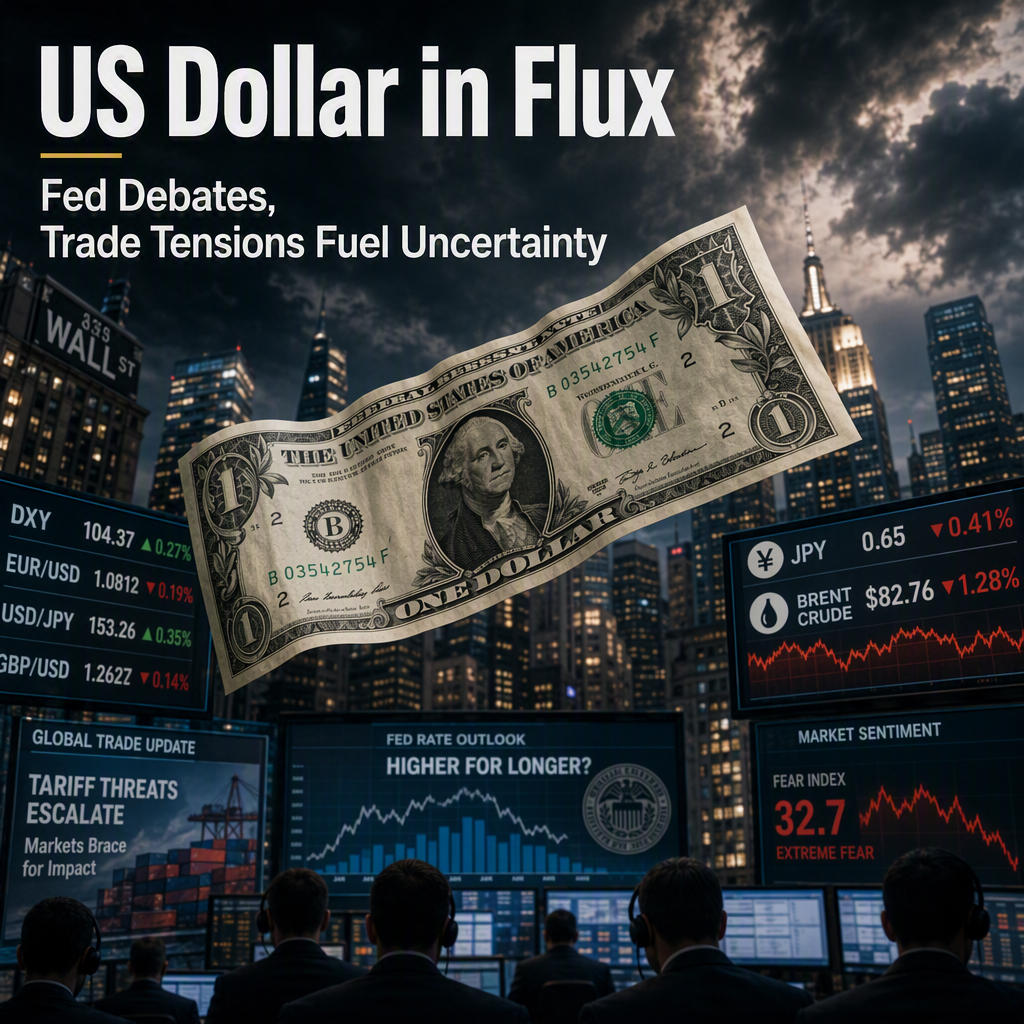
Scotiabank strategists Shaun Osborne and Eric Theoret report that the US Dollar (USD) is exhibiting mixed performance as financial markets react to several key factors, including rising oil prices, Japanese Yen (JPY) strength, and escalating US trade tensions [1]. Brent crude is approaching $100 per barrel following attacks on Saudi oil infrastructure, contributing to firmer US yields and a slightly steeper Treasury curve, while stock markets remain soft [1].
Political pressure on the Federal Reserve (Fed) to cut interest rates is intensifying, with President Trump recently using social media to criticize Canada after Ottawa imposed counter-tariffs, and threatening a broader trade war unless the Fed lowers rates. This follows strong jobs data, which has emboldened the administration's campaign for lower rates. Vice President Vance also advocated for Fed easing last week [1].
Despite these pressures, some Fed officials remain cautious. Cleveland Fed President Hammack called for tighter policy just before the FOMC blackout, while Warsh emphasized the need for progress towards 2% inflation 'with speed.' Conversely, Waller and Williams noted signs of disinflation, suggesting that higher rates may not be necessary at this time [1].
Upcoming US Producer Price Index (PPI) and Consumer Price Index (CPI) data, scheduled for Thursday and Friday respectively, are expected to be decisive for the Fed's policy direction. Market swaps currently price in around a 60% chance of a 25 basis point hike at the September 16th policy meeting, indicating that traders remain divided on the Fed's next move [1].
CONCLUSION
The US Dollar's performance remains uncertain as markets weigh conflicting signals from rising oil prices, trade tensions, and Fed policy debates. Upcoming inflation data will be crucial in determining whether the Fed opts for a rate hike or holds steady. Market sentiment is cautious, with a moderate impact expected pending further economic releases.