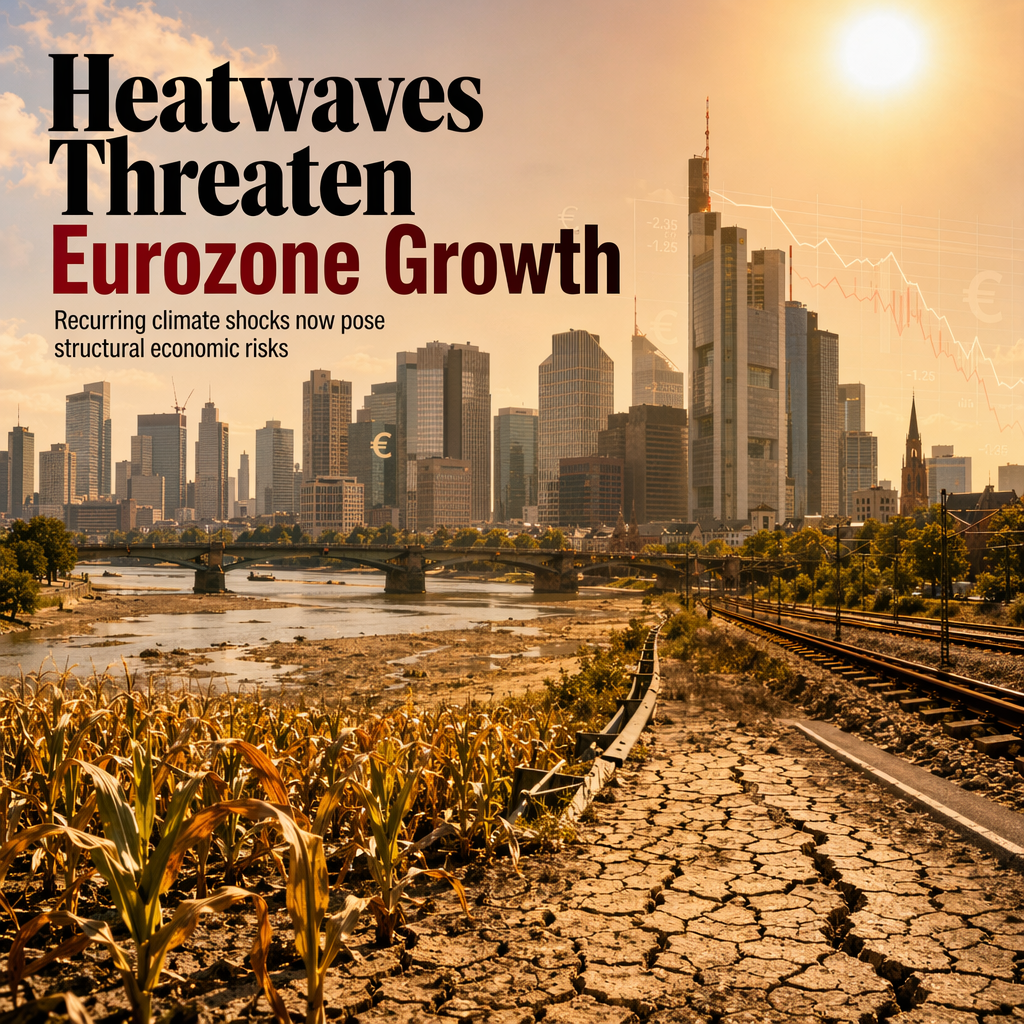
ING’s Global Head of Macro, Carsten Brzeski, has highlighted that recurring heatwaves across Europe are now a structural drag on Eurozone economic growth, rather than just a temporary disruption. Brzeski references academic and European Central Bank (ECB) research that quantifies the economic impact of extreme temperatures, including measurable losses in output and increased food inflation [1].
A 2021 study cited by Brzeski found that during Europe’s worst heat years—2003, 2010, 2015, and 2018—continent-wide GDP losses from reduced labour productivity alone ranged from 0.3% to 0.5% of output, with losses exceeding 1% in the most exposed regions [1]. Additional studies that factor in the costs of cooling, rising healthcare expenses, emergency infrastructure repairs, and the effects on waterways, transportation, and agriculture suggest an even larger negative impact on growth [1].
A joint paper from the University of Mannheim and the ECB analyzed the heatwaves, droughts, and floods of the summer of 2025, estimating that the European economy lost approximately 0.3% of output. The paper projects that this damage could accumulate to 0.8% by 2029, considering lost productivity, supply chain disruptions, and reduced tourism revenue [1]. The ECB has also estimated that heatwaves and drought could increase food inflation by 0.4 to 0.9 percentage points, with the potential for this effect to double over the next 30 years [1].
Looking forward, Brzeski notes that while a recent drop in energy prices may provide some relief to European households and companies, the ongoing heatwaves introduce new downside risks for the Eurozone economy. These risks include potential supply chain frictions due to low water levels in major rivers, affected infrastructure such as railways and highways, and further productivity losses [1].
CONCLUSION
The analysis underscores that recurring heatwaves are no longer a temporary issue but a persistent macroeconomic risk for the Eurozone. With quantifiable impacts on output and inflation, and the potential for these effects to intensify, climate-related disruptions are now a significant consideration for economic outlook and policy in the region.