
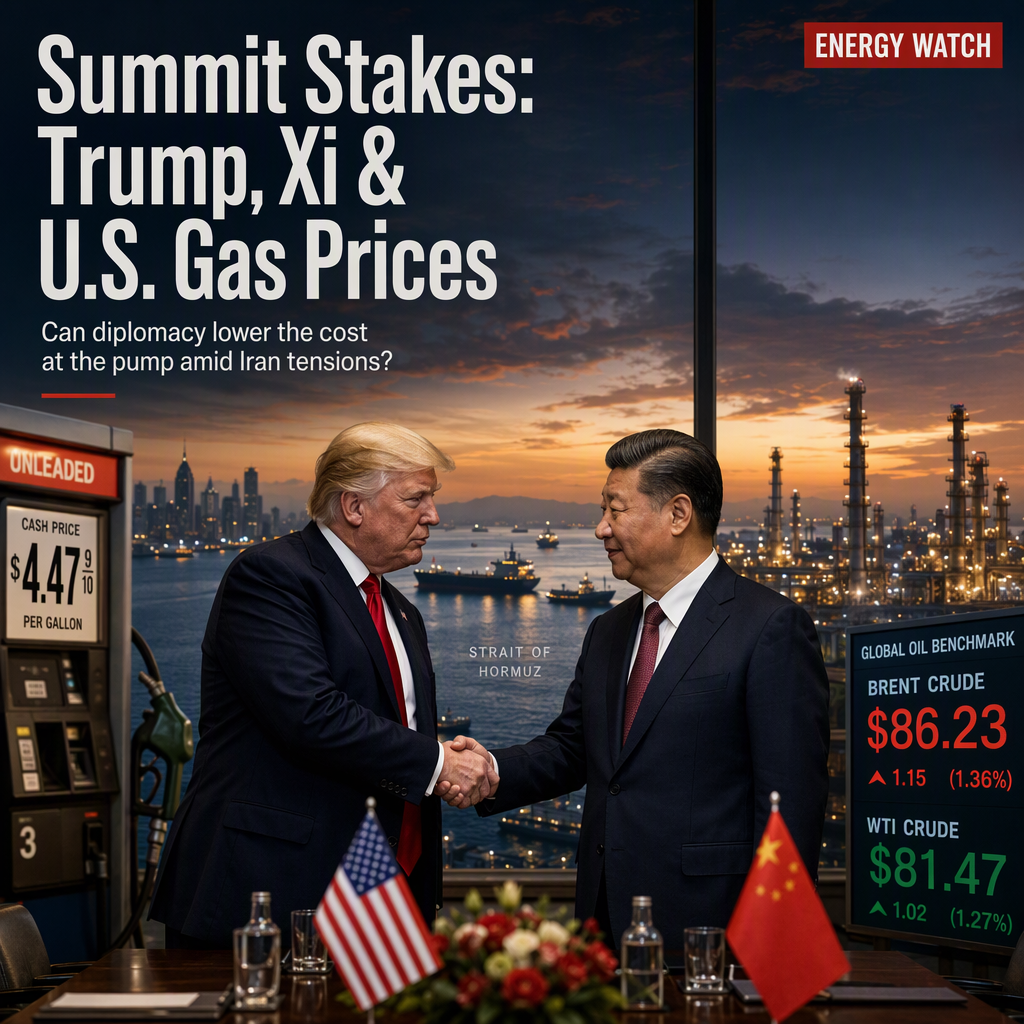
House Foreign Affairs Committee Chairman Brian Mast, R-Fla., stated that the upcoming summit between President Trump and Chinese President Xi Jinping could be crucial in addressing high gas prices in the United States, which have become a significant concern for American consumers ahead of the November midterm elections [1]. Mast attributed the recent spike in gas prices—now averaging $4.47 per gallon, up more than 30 cents since September 3—to instability in global oil markets caused by the ongoing U.S. conflict with Iran and the effective closure of the Strait of Hormuz [1].
Mast specifically blamed China's support for Iran, including the alleged arming of Iran, for exacerbating tensions and disrupting a key global oil route. He argued that if President Trump can secure a commitment from China to halt its support for Iran, it could lead to greater affordability for Americans by stabilizing global crude prices [1]. Mast also noted that China is a major actor influencing oil prices, not only through its support of Iran but also Russia, and highlighted that over the past two months, Trump has facilitated the movement of over a billion barrels of oil and more than 2,000 civilian merchant ships through the Strait of Hormuz, while Iran has not moved any [1].
The summit, scheduled for Thursday, will be the third meeting between Trump and Xi during this term and marks Xi's first visit to the U.S. since Trump returned to the White House last year [1]. Mast pointed to the recently signed Russia-Iran sanctions bill, named after the late Sen. Lindsey Graham, as a source of leverage for Trump in negotiations with Xi. The bill targets China and could significantly impact trade if Trump chooses to enforce its provisions without waivers [1].
Additionally, Bessent predicted that oil prices could drop as low as $40 per barrel once the Iran conflict ends and supply stabilizes, suggesting a potential for significant relief at the pump if diplomatic efforts are successful [1].
CONCLUSION
The Trump-Xi summit is viewed as a critical opportunity to address rising U.S. gas prices by targeting China's support for Iran, which is seen as a key factor in global oil market instability. With new sanctions in place and the potential for diplomatic breakthroughs, the market is closely watching for outcomes that could lead to lower energy costs for American consumers.