
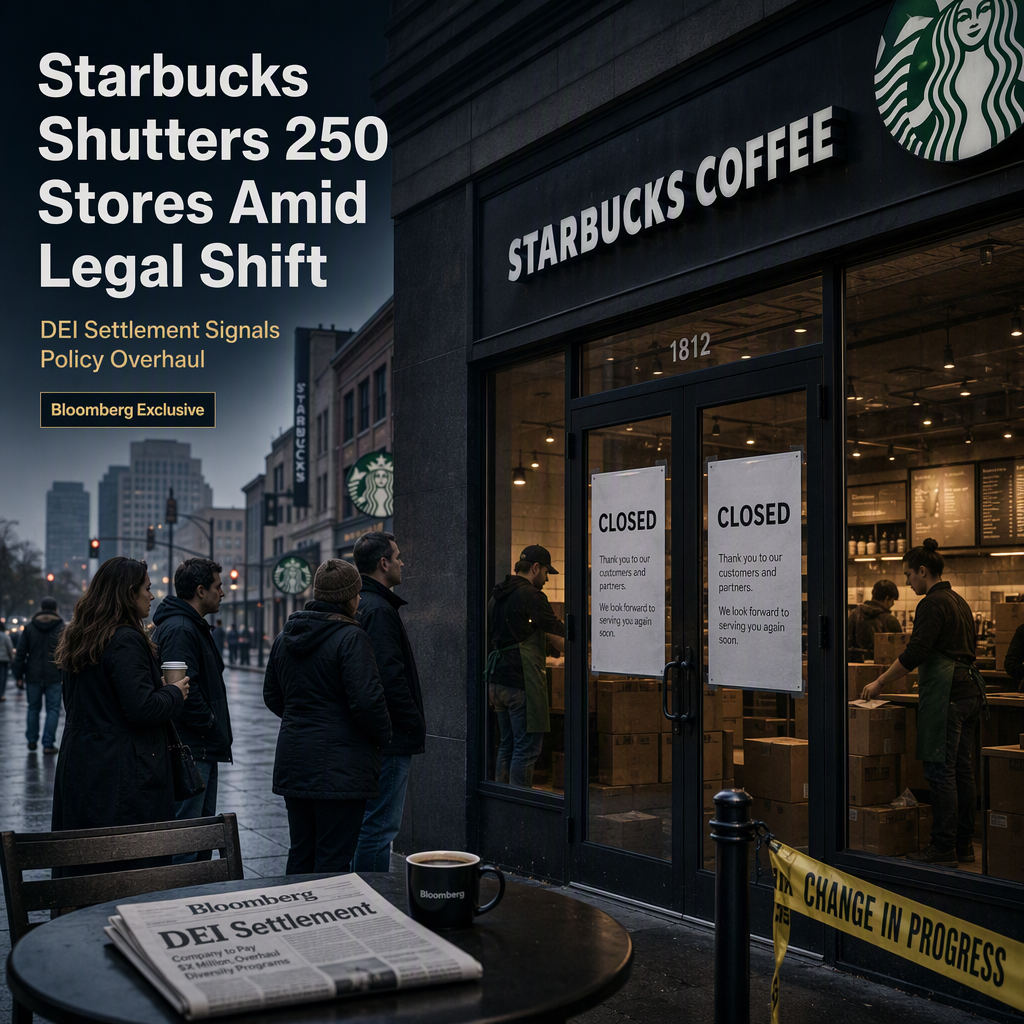
Starbucks announced it will close approximately 250 stores across North America this week, representing about 1% of its more than 18,000 coffeehouses in the region. The closures were revealed by COO Mike Grams, who stated that the decision followed a careful review of the company's North America coffeehouse portfolio. Grams emphasized that while most stores are profitable, a small portion has been struggling, and the company does not see a path to acceptable financial performance for these locations. He described the closures as a 'difficult decision' that will impact partners, customers, and communities affected by the move [1].
This announcement comes shortly after Starbucks resolved a lawsuit with the state of Florida regarding its diversity, equity, and inclusion (DEI) policies. Under the settlement, Starbucks will pay Florida $1 million and has agreed not to use race- and sex-based goals, quotas, or preferences in its employment practices nationwide. The agreement, confirmed by Florida Attorney General James Uthmeier's office, applies to all Starbucks operations in the United States, not just those in Florida. Starbucks also committed to complying with Florida's civil rights law, which prohibits race- and sex-based preferences in hiring, promotions, pay, executive compensation, mentorship programs, supplier selection, and board composition. Additionally, the company will not participate in organizations that require increased racial diversity on its board of directors, and its chief legal officer must submit annual compliance certifications for four years [1].
The settlement ends a lawsuit filed by Uthmeier in December 2025, which accused Starbucks of violating the Florida Civil Rights Act through its workplace policies. The $1 million payment will reimburse the Florida Department of Legal Affairs for the time, expenses, and costs of bringing the case [1].
No specific market reactions or analyst opinions were mentioned in the article. However, the combination of store closures and the resolution of a high-profile legal dispute could have implications for Starbucks' operational strategy and public image [1].
CONCLUSION
Starbucks is taking significant steps to address underperforming locations and legal challenges related to its employment practices. The closure of 250 stores and the nationwide DEI policy changes mark a period of operational and legal adjustment for the company. While the immediate market reaction is not detailed, these developments are likely to influence Starbucks' business strategy and stakeholder perceptions.