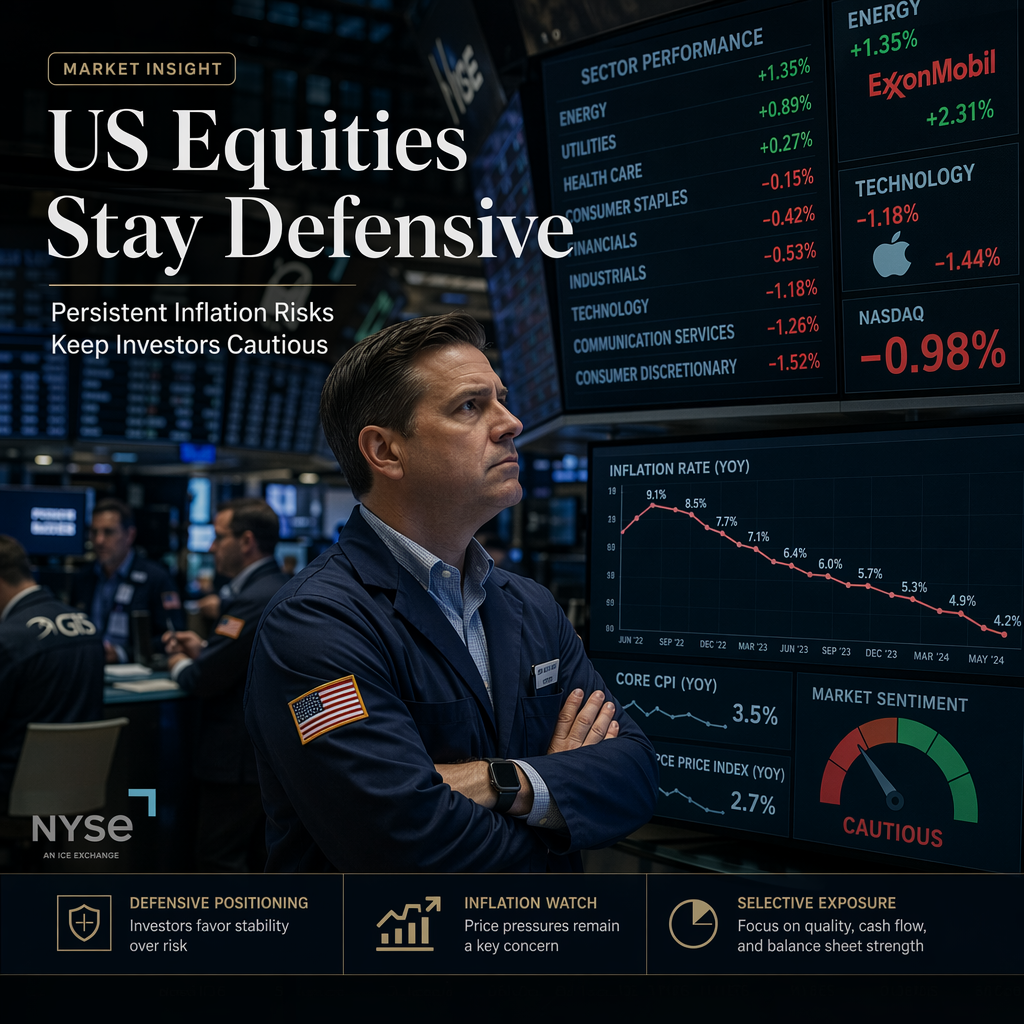
According to Geoff Yu at BNY, client flows into US equities continue to be influenced by inflation risk, despite a reduction in inflows to the most direct inflation-hedge sectors [1]. BNY’s iFlow equity inflation style indicator reveals a significant divergence between inflation-sensitive equity flows and declining breakeven inflation rates, with the current gap being the widest in 18 months [1]. This development emerged in May, when breakeven inflation rates dropped sharply due to weakening energy prices, yet there was no corresponding outflow from industry groups with high inflation correlations [1].
Yu notes that investors appear to accept energy-led disinflation but remain concerned about ongoing inflation risks, particularly those related to labor markets and technology-driven price pressures [1]. As a result, sector allocations have stayed defensive, with investors hesitant to reduce their exposure to inflation-sensitive sectors [1]. The report also suggests that easier financial conditions could support equities, provided that softer inflation is a result of supply-side normalization rather than a significant decline in demand [1].
Overall, the analysis indicates that while some inflationary pressures have eased, market participants are not yet convinced that broader inflation risks have been resolved, leading to continued caution in equity sector allocations [1].
CONCLUSION
US equity investors remain cautious, maintaining defensive sector allocations due to persistent concerns about non-energy inflation risks, particularly in labor and technology. The market is supported by easier financial conditions, but confidence will depend on further evidence that inflation pressures are easing beyond the energy sector.