
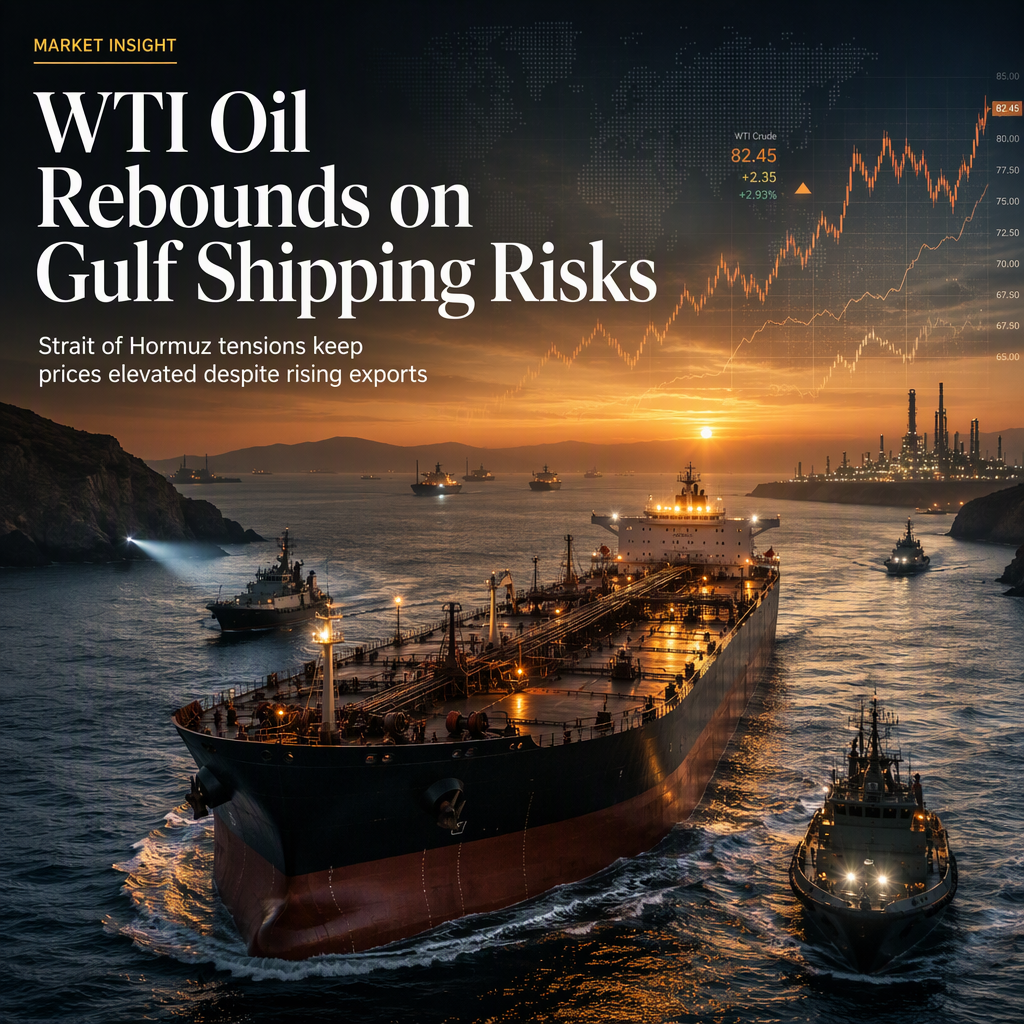
West Texas Intermediate (WTI) oil prices rebounded on Tuesday, trading around $89 after hitting an intraday low of $86.32, the lowest since September 1. This recovery was driven by persistent shipping risks in the Strait of Hormuz, which continue to support oil prices despite an increase in Middle East exports and ongoing deadlock in US-Iran talks [1].
Recent data from Kpler indicated that Gulf crude exports, excluding Iran, averaged 18.3 million barrels per day in the final week of September, with Saudi Arabia being the main contributor to the recovery. Additional supply relief was provided by the G7 countries' agreement to release 100 million barrels of diesel and crude oil from emergency reserves [1]. Saudi Energy Minister Prince Abdulaziz bin Salman reported that flows through the East-West Pipeline reached 5.8 million barrels per day, offering an alternative export route that bypasses the Strait of Hormuz [1].
Despite the increase in exports, shipping risks remain high, with at least seven tanker incidents reported in the past week according to Marisks. Ongoing conflict between Saudi Arabia and Iran-backed Houthis continues to threaten regional infrastructure [1]. TD Securities noted that Chinese product export restrictions and growing refiner demand are absorbing the increased supply, keeping prices elevated and risks tilted to the upside [1].
The US Energy Information Administration (EIA) raised its oil price forecasts in the October Short-Term Energy Outlook, citing declining global inventories and tight diesel markets. The EIA increased its 2026 Brent forecast to $96.32 per barrel from $91.01 and its 2027 projection to $83.74 from $73.74. WTI forecasts were also raised to $88.21 for 2026 and $79.74 for 2027, up from $84.65 and $69.74, respectively. However, the EIA lowered its global oil demand forecasts to 102.4 million barrels per day for 2026 and 104.6 million for 2027, down from 102.6 million and 105 million, respectively [1].
Market participants are now awaiting US inventory figures for further insights into supply and demand, with the American Petroleum Institute (API) report due later on Tuesday and the EIA's weekly inventory data expected on Wednesday [1].
CONCLUSION
WTI oil prices have rebounded due to ongoing shipping risks in the Strait of Hormuz, despite increased Gulf exports and emergency supply releases. Elevated risks and tight market conditions have led the EIA to raise its price forecasts, while traders await upcoming US inventory data for further direction.