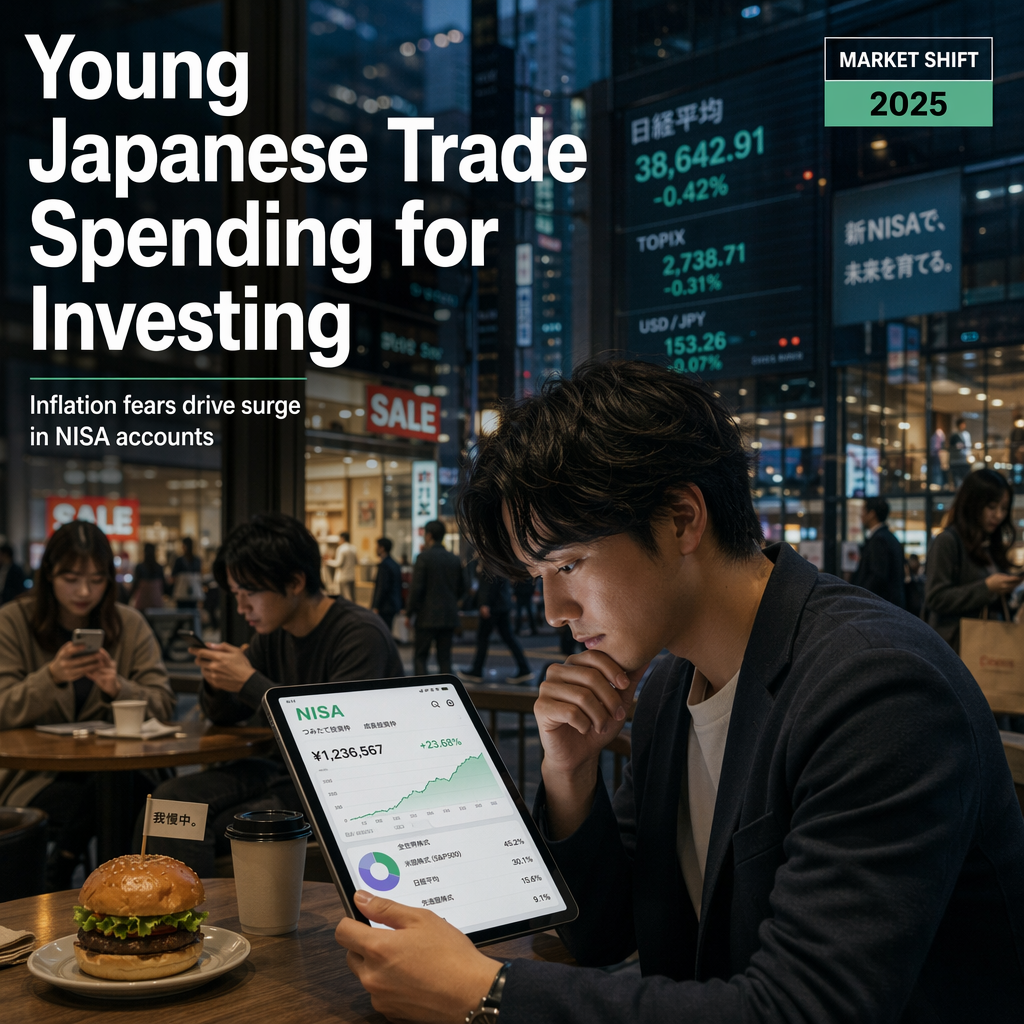
A growing number of young Japanese are significantly reducing discretionary spending, including on items such as burgers and holidays, to allocate more funds into tax-free investment accounts, specifically NISA (Nippon Individual Savings Account) accounts [1]. This shift is driven by concerns over missing out on stock market gains, rising inflation, and anxiety about future financial security [1]. As of the end of June 2025, investors aged 40 or younger accounted for approximately 49% of total NISA purchases, highlighting the substantial participation of the younger demographic in retail investing [1].
Market observers note that this trend is not only changing consumption patterns but also has the potential to reshape Japan's retail investment landscape for years to come [1]. The persistent weakness in the yen, ongoing inflation, and global market volatility are cited as key factors fueling the increased investment appetite among younger Japanese [1].
A young investor expressed that, due to inflation and uncertain job security, relying solely on salary or savings no longer feels sufficient, making investment—especially with NISA's tax benefits—a necessity [1]. Financial advisors add that this generation is more financially literate and willing to take calculated risks, particularly when supported by favorable government schemes like NISA [1]. The trend is expected to persist as Japan continues to face demographic challenges and shifts in economic policy [1].
CONCLUSION
The surge in young Japanese investing through NISA accounts reflects a significant shift in financial behavior, driven by inflation and economic uncertainty. This trend is expected to continue, potentially reshaping Japan's retail investment landscape and altering traditional consumption patterns.