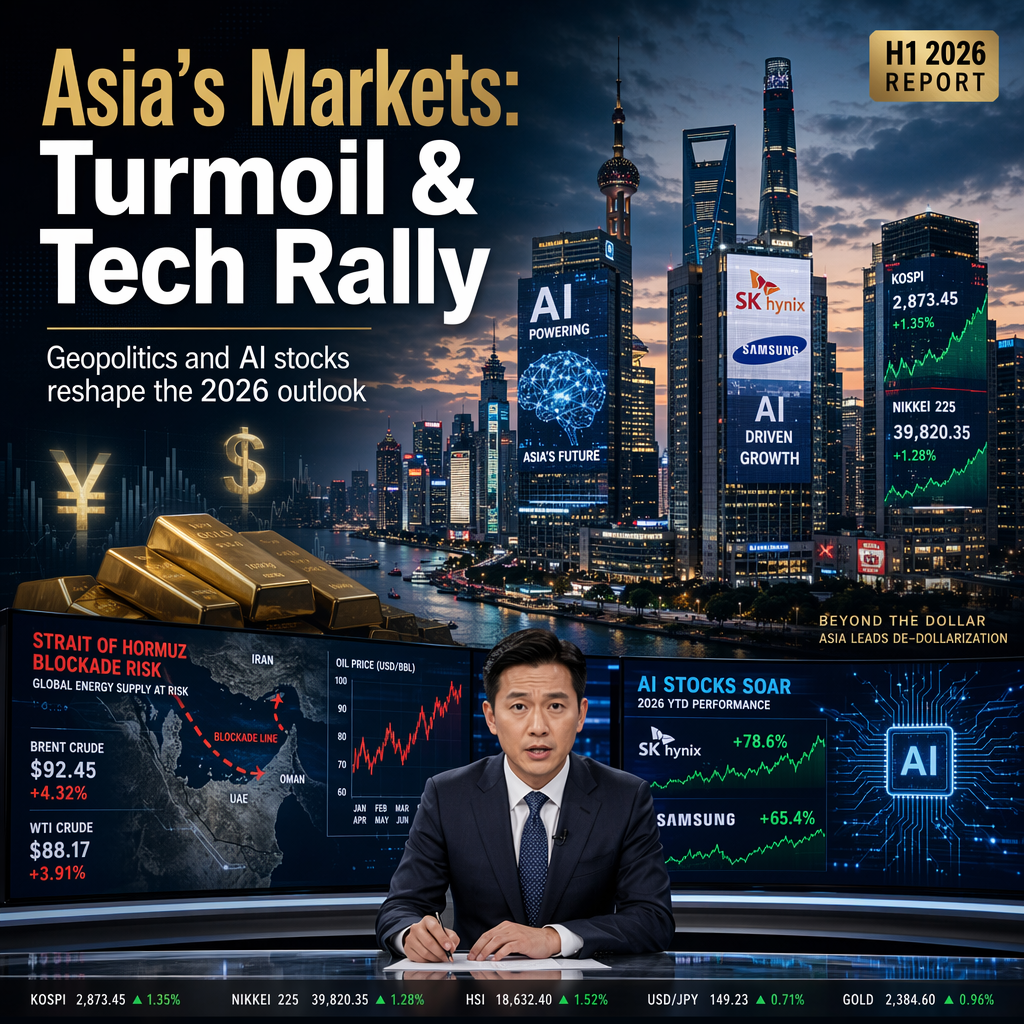
In the first half of 2026, Asian financial markets were shaped by two dominant themes: the geopolitical turmoil stemming from the Iran conflict and the resulting blockade of the Strait of Hormuz, and a significant rally in artificial intelligence (AI) stocks. The blockade caused notable volatility in energy markets, with energy prices experiencing significant fluctuations. Although there was some recovery in supply following a US-Iran deal, analysts cautioned that energy prices could remain elevated for months [1].
Amid these geopolitical risks, Asian equities saw a surge driven by the AI boom. Companies leading in AI innovation posted strong gains, with South Korea’s SK Hynix overtaking Samsung to become the country’s most valuable company [1]. However, this rally also raised concerns about rising leverage in certain markets. The currency markets mirrored these shifts, as the Japanese yen fell to a 39-year low against the US dollar, which itself was rallying strongly. This dollar strength put additional pressure on struggling Asian economies by increasing the cost of imports and foreign-denominated debt [1].
Bond markets responded to these developments, with Japan’s long-term bond yields reaching record highs amid ongoing fiscal concerns. In commodities, central banks in the region were expected to increase their gold reserves, reflecting a trend of de-dollarization as countries sought to diversify away from US assets [1].
Looking ahead, market participants are closely monitoring the US Federal Reserve’s policy direction, as its decisions are expected to influence risk appetite and capital flows in the second half of the year. Technical analysts are focusing on key support and resistance levels across major Asian indices, with particular attention to the ongoing volatility in energy prices and the momentum in AI-driven stocks [1].
CONCLUSION
The first half of 2026 in Asia’s markets was marked by heightened geopolitical risks and rapid technological advancement, resulting in significant volatility and opportunity. Market participants remain cautious, with the direction of US Federal Reserve policy and ongoing energy price fluctuations expected to play a critical role in shaping the second half of the year.