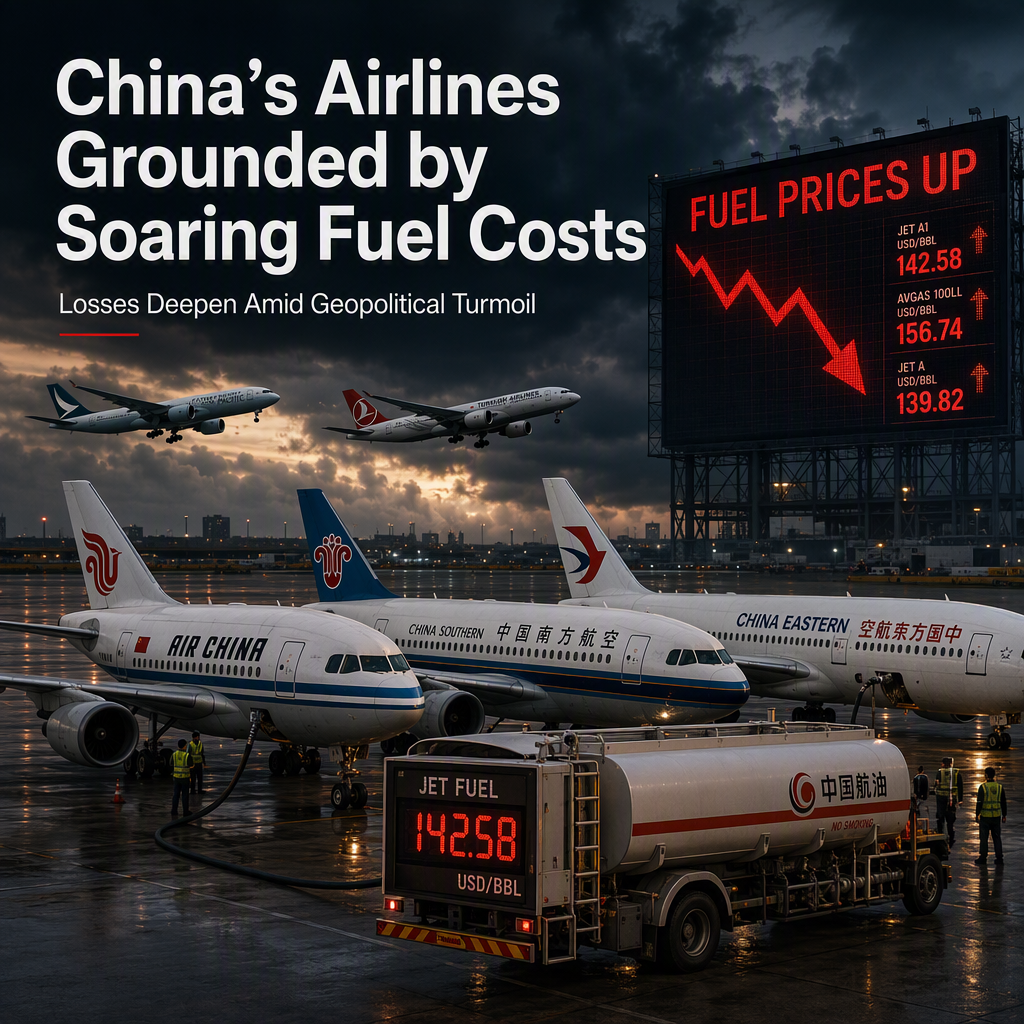
China's three largest state-owned airlines recorded the biggest losses among major listed Asian carriers in the second quarter, as a surge in jet fuel prices—triggered by disruptions from the Iran war—hit the global aviation industry, according to a Nikkei Asia analysis [1]. The combined losses for the three Chinese airlines reached up to $1.33 billion during the period, with China Southern Airlines acknowledging that there are no effective measures to manage exposure to fluctuations in domestic jet fuel prices [1].
In contrast, Cathay Pacific reported strong performance, attributed in part to effective hedging strategies that helped mitigate the impact of rising fuel costs. This highlights a significant divergence in financial outcomes across the region, with hedging capabilities and fuel sourcing playing a critical role in determining winners and losers [1]. Japanese airlines, while achieving record sales, also saw profits shrink due to elevated fuel prices, underscoring the widespread impact of energy market volatility. Turkish Airlines is responding to the shifting landscape by planning to expand its Asian operations, aiming to increase flights by 15%-20% and targeting new markets in China and Australia [1].
Industry analysts cited in the article emphasize that the post-pandemic recovery for airlines remains fragile. The Iran war has exposed the sector's vulnerability to geopolitical shocks, with airline profitability closely tied to energy market trends. Market sentiment is described as cautious, with the outlook for airline equities likely to be influenced by ongoing fuel price movements, the effectiveness of hedging strategies, and further developments in the Middle East [1].
CONCLUSION
The surge in jet fuel prices due to the Iran war has resulted in significant losses for China's major airlines, highlighting the importance of effective risk management strategies. Market sentiment remains cautious, with future airline performance expected to hinge on fuel price trends and geopolitical stability.