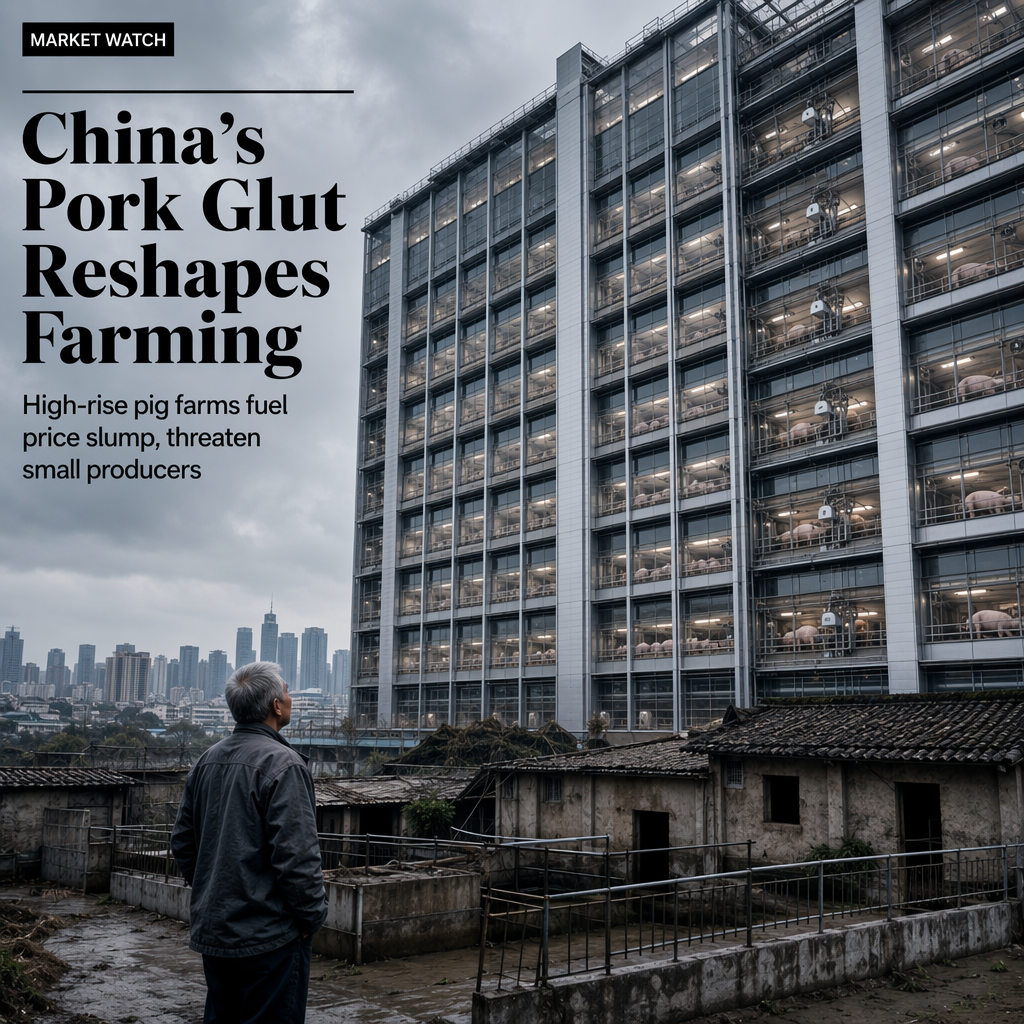
China's pork market is experiencing a significant downturn as the rapid expansion of industrial-scale, high-rise pig farms equipped with advanced automation and efficiency technologies has led to a persistent oversupply of pork in the country [1]. As a result, pork prices have fallen for 13 consecutive months, marking a sustained period of price decline [1]. This trend is further influenced by changing dietary habits and rising living standards, which have shifted consumer demand away from traditional pork consumption patterns [1].
Industry analysts cited in the article emphasize that the current oversupply is exerting severe market pressure on smaller, traditional pig farmers, who are struggling to compete with the economies of scale achieved by these modern, large-scale operations [1]. The ongoing slump in pork prices has raised concerns about the long-term viability of smaller producers and the likelihood of further consolidation within the pork industry as less competitive players may be forced out of the market [1].
Market participants warn that unless there is a significant reduction in pig production or a substantial recovery in consumer demand, the downward pressure on pork prices is expected to persist in the near term [1]. The industry is closely monitoring the evolving balance between supply adjustments and demand shifts, as well as the possibility of government intervention to stabilize the market [1].
CONCLUSION
China's pork industry is facing a prolonged period of low prices due to oversupply from high-rise, industrial pig farms and shifting consumer demand. Smaller producers are under significant pressure, and further industry consolidation appears likely unless market conditions change or government action is taken.