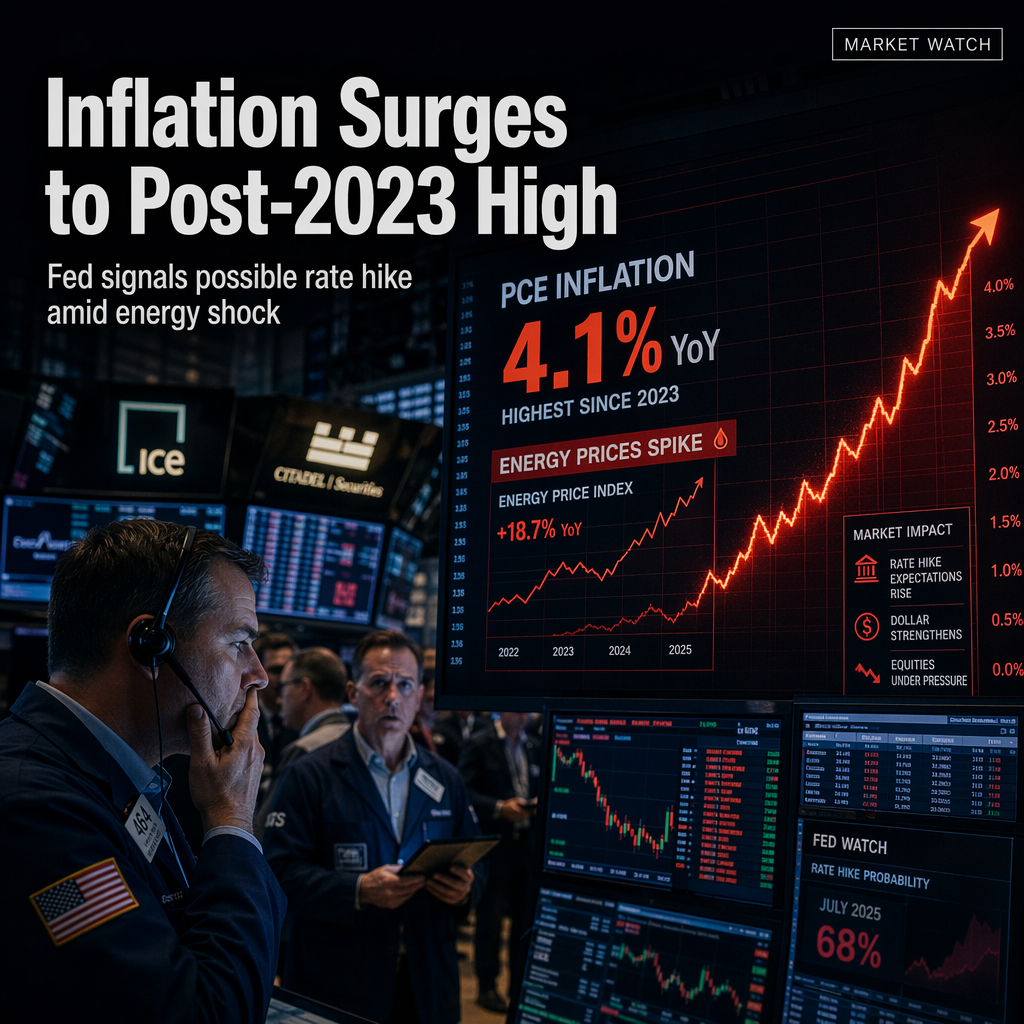
The Federal Reserve's preferred inflation gauge, the personal consumption expenditures (PCE) index, accelerated in May, reflecting persistent price pressures following an energy shock linked to the Iran war [1][2]. The Commerce Department reported that headline PCE inflation rose 0.4% on a monthly basis and 4.1% year-over-year, marking the highest annual rate since April 2023 [1][2]. The monthly figure was slightly below economist expectations of 0.5%, while the annual figure matched consensus estimates [1][2]. Core PCE, which excludes food and energy, increased 0.3% month-over-month and 3.4% year-over-year, both in line with forecasts and representing the highest core reading since October 2023 [1][2].
Goods prices climbed 2.3% annually and 0.4% monthly in May, while services prices rose 2% year-over-year and 0.5% month-over-month [1]. The personal savings rate was reported at 3% in May, unchanged from the prior month according to [1], but [2] notes the rate rose to 3% in May, suggesting a slight discrepancy in reporting.
Consumer spending was robust, with personal consumption expenditures rising 0.7% for the month, 0.1 percentage point above forecasts and outpacing the inflation rate. Personal income also increased by 0.7%, well above the 0.4% forecast [2]. The U.S. economy showed strength, as gross domestic product (GDP) grew at a seasonally adjusted annualized pace of 2.1% in the first quarter, up from the prior estimate of 1.6% and exceeding the forecast of 1.7% [2].
The inflation surge, largely driven by energy prices tied to the Iran war, has complicated the Federal Reserve's policy outlook. Fed officials, including new Chairman Kevin Warsh, have emphasized the importance of price stability and removed previously indicated rate cuts from their guidance, signaling a likelihood of a rate hike [2]. Multiple officials dissented at the April meeting due to forward guidance favoring cuts, but that language was removed in the latest statement [2]. Concerns are rising that price increases are becoming more widespread and are also being fed by tariffs [2].
CONCLUSION
May's PCE inflation data underscores persistent price pressures, with both headline and core readings at their highest levels since 2023. Strong consumer spending and GDP growth highlight economic resilience, but the elevated inflation has prompted the Fed to adopt a tougher stance, removing rate cut guidance and signaling possible hikes. The market takeaway is heightened uncertainty and vigilance as inflation remains above target.