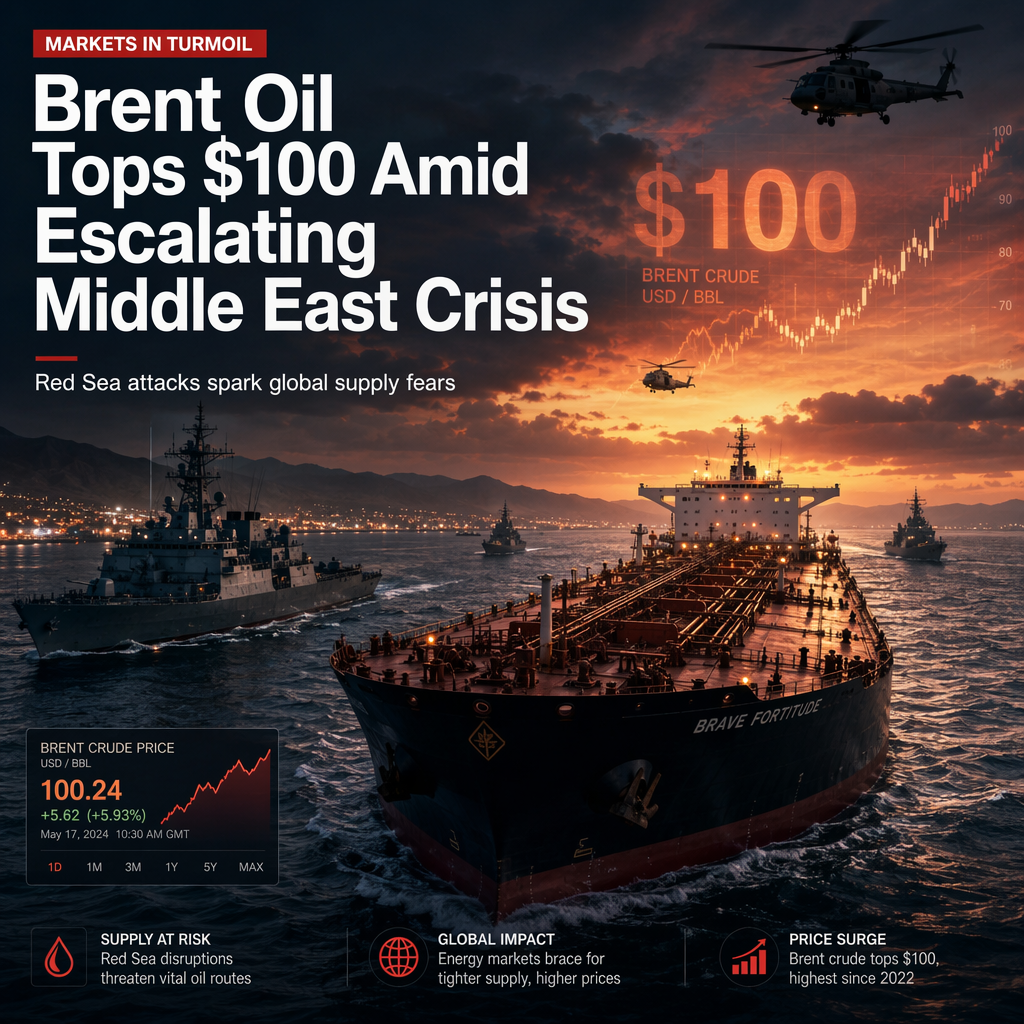
Brent crude oil prices surged above US$100 per barrel for the first time since May, driven by escalating tensions between the US and Iran, as well as Houthi attacks on Red Sea shipping routes, according to UOB Global Economics & Markets Research [1]. On July 23, US President Trump threatened a 'massive attack' on Iran and stated on social media that Iran would be held responsible for any further Houthi attacks on Red Sea ships, potentially widening US involvement in the ongoing Middle East conflict [1]. These developments caused Brent crude to jump more than 6% to US$100 a barrel, with prices opening in Asia above US$100 and trading near US$101.04 as of 7:15am SGT on July 24 [1].
Crude oil extended its gains on Thursday, with Brent settling at $100.69 per barrel, up 7% for the day and 14.2% for the week. West Texas Intermediate (WTI) also rose by 6.2% to end at $92.19 per barrel, marking a 12% weekly gain [1]. The price spike followed attacks by Iran-backed Houthi militants on two Saudi Arabian tankers in the Red Sea, opening a new front in the Middle East conflict and raising concerns about potential supply disruptions through both the Strait of Hormuz and the Red Sea corridor [1].
The report notes that the key near-term risk remains further escalation in the Middle East, which could lead to additional oil price spikes. These developments are also feeding into higher expectations for US Federal Reserve rate hikes and rising global yields [1]. In response to the attacks, some Asian oil buyers are reportedly in talks with Saudi Arabia to potentially reroute oil flows around Africa to avoid the Red Sea, according to Bloomberg reports cited by UOB [1].
CONCLUSION
Brent crude's surge above $100 reflects heightened geopolitical risks in the Middle East, with direct implications for global oil supply and financial markets. The situation remains fluid, with further escalation posing a significant risk to energy prices and broader market stability. Market participants are closely monitoring developments and considering alternative supply routes in response to the ongoing conflict.