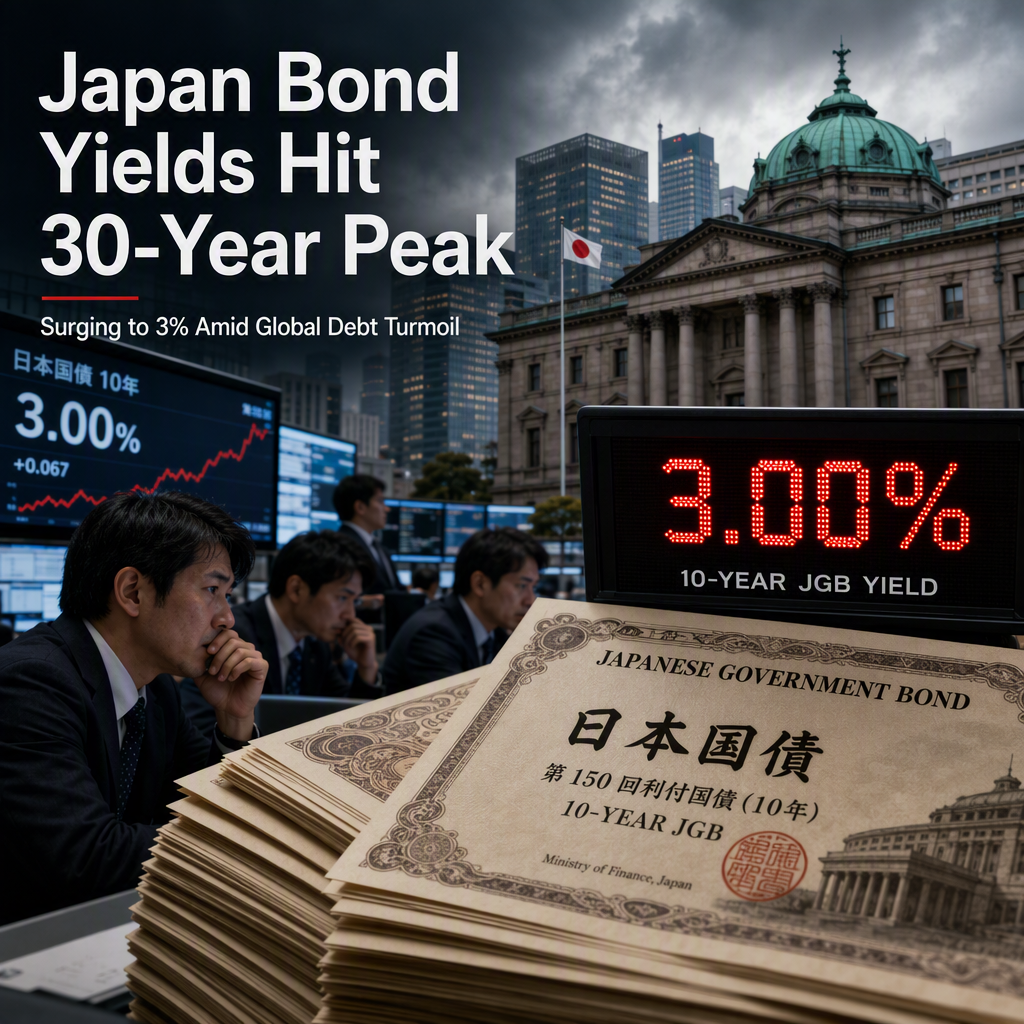
The yield on Japan's benchmark 10-year government bonds (JGBs) briefly reached 3% on Tuesday, marking the highest level in three decades as a global sell-off in sovereign debt intensified due to inflation and mounting fiscal pressures [1]. This surge in yields is attributed to oil-driven inflation fears and growing concerns over government finances, both in Japan and across Asia, which have led investors to demand higher returns to compensate for increased risk [1].
The 10-year JGB yield had been steadily rising throughout 2026, but the spike to 3% is notable as it represents a psychological barrier for bond investors, according to a Tokyo-based fixed income strategist [1]. Market participants are closely watching for any signs of intervention by the Bank of Japan or shifts in fiscal policy, as further increases in yields could prompt policy responses [1].
The selloff in Japanese bonds is part of a broader global trend, with technical analysis indicating that resistance at the 3% level could be significant. Traders are also monitoring support levels near 2.8%, with expectations of continued volatility in the market [1]. The yen has weakened alongside rising bond yields, fueling debate about potential actions from Japanese policymakers [1].
Analysts warn that persistent inflation and ongoing fiscal strains could keep upward pressure on yields in the coming months. Technical indicators suggest strong momentum in the yield's upward trend, though some overbought signals are beginning to appear [1]. Overall, the Japanese bond market is experiencing its most challenging environment in decades as global and domestic pressures converge [1].
CONCLUSION
Japan's 10-year government bond yield reaching 3% signals significant stress in the bond market, driven by inflation and fiscal concerns. Market participants are bracing for continued volatility and watching for potential policy responses as yields test historic highs. The situation underscores the challenging environment facing Japanese and global sovereign debt markets.