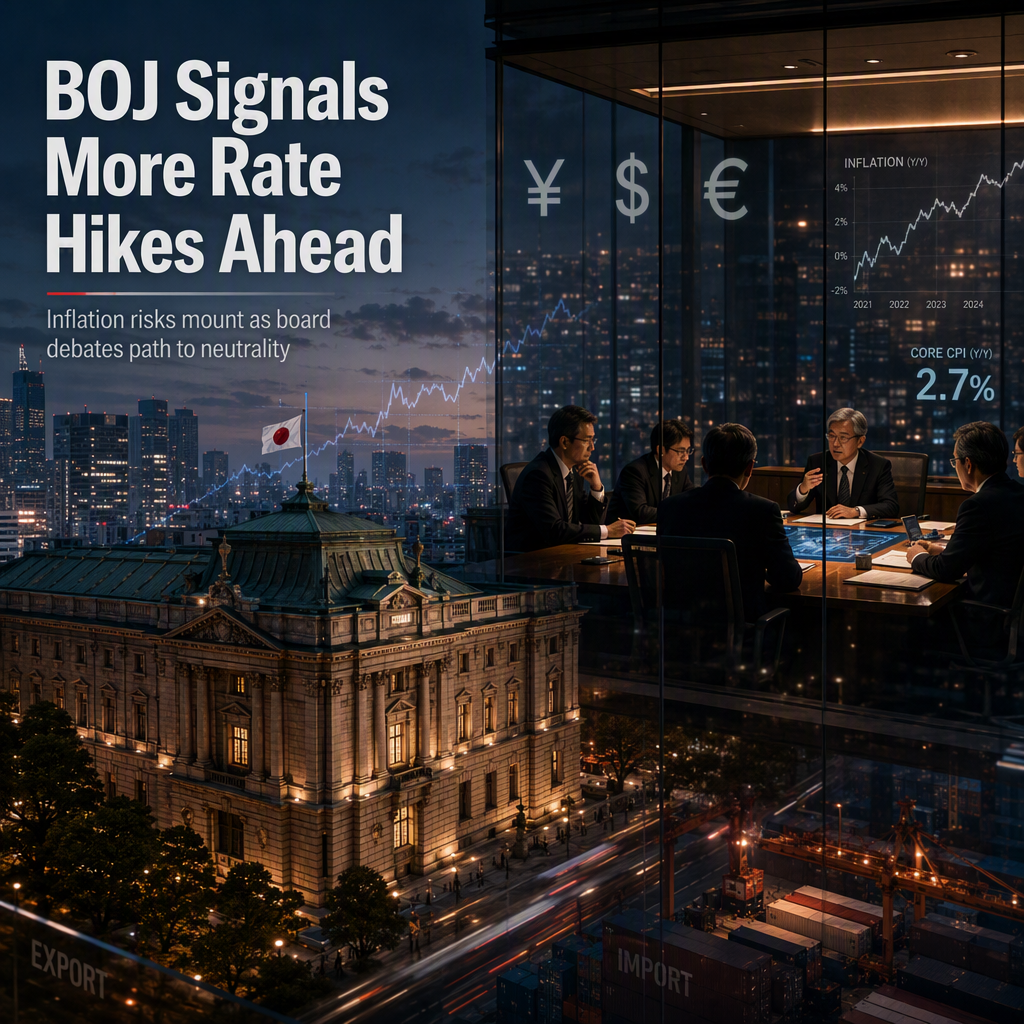
The Bank of Japan (BoJ) board members discussed their monetary policy outlook during the June meeting, with a strong focus on the risk that inflation could exceed the central bank's 2% target [1]. Most members agreed that the economy is progressing as expected, but noted persistent risks related to inflation [1]. One member highlighted that foreign exchange factors are driving import prices higher, which is particularly impacting smaller companies [1]. Another member pointed out that Japan's real interest rate remains unusually low compared to global standards and suggested it must be adjusted in light of upside inflation risks [1].
Several board members expressed that moving the BoJ’s policy rate closer to neutral would support economic and price stability over time [1]. There was consensus among members that it is suitable for the BoJ to continue raising rates, with some emphasizing the need to uphold guidance for further rate hikes if economic and price projections are met [1]. One member urged for a prompt move toward a neutral policy rate, while another advocated for increasing rates approximately once every few months [1].
Regarding asset purchases, some members clarified that the decision to pause bond tapering was made to prevent market instability, rather than in response to fiscal policy [1]. Additionally, there was discussion about the importance of gradually shrinking the BoJ's balance sheet and eventually pursuing a suitable reserve level, taking into account economic and financial developments [1].
No specific market reactions or analyst opinions were mentioned in the minutes, nor were any concrete dates or numerical targets for future rate hikes provided [1].
CONCLUSION
The BoJ board minutes indicate a firm focus on inflation risks and a general consensus toward continued rate hikes, with some members advocating for a more rapid adjustment. The central bank remains cautious about market stability and is considering gradual balance sheet reduction. While no immediate market reactions were cited, the outlook suggests a tightening bias in BoJ policy.