
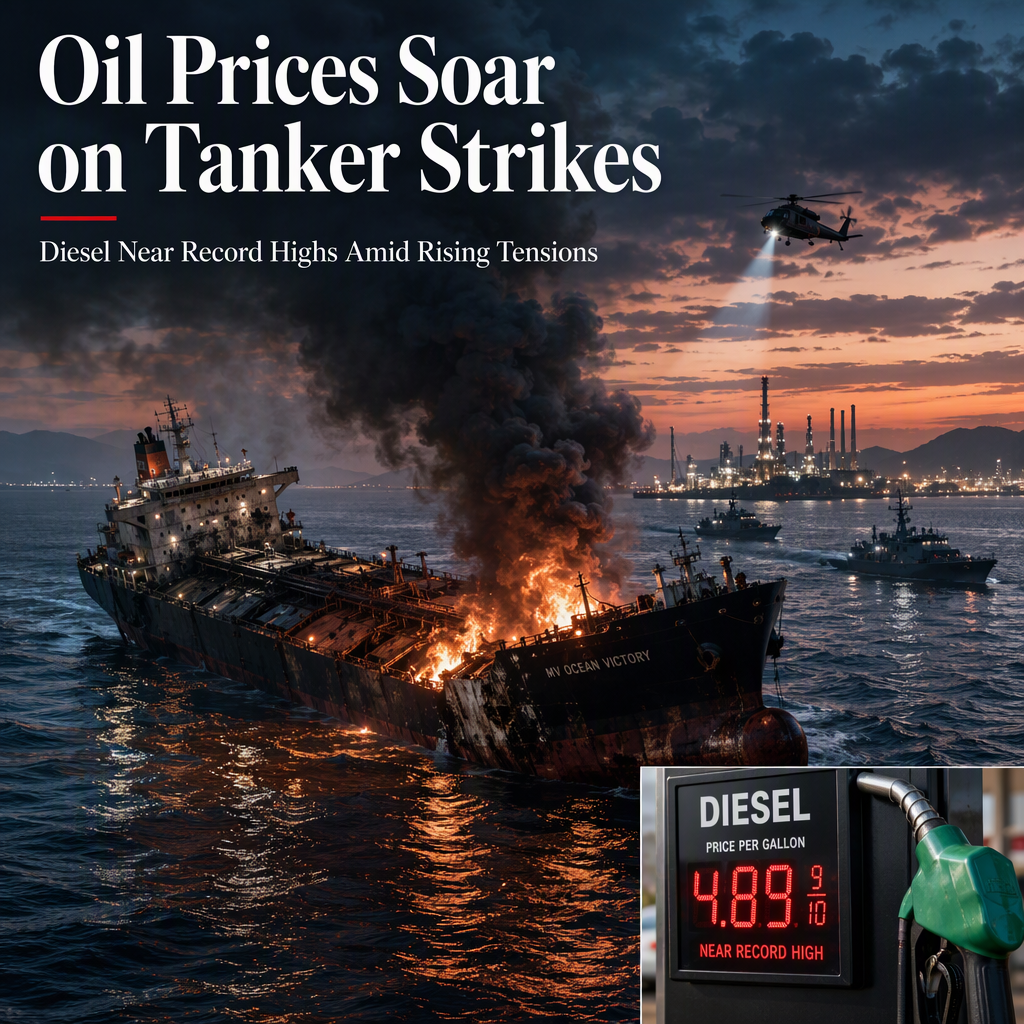
Oil prices experienced a significant surge, climbing to approximately $105 per barrel after Iran struck tankers, according to Rabobank's Senior Economist Maartje Wijffelaars [1]. This escalation was anticipated by Rabobank's energy analysts, who had warned that such an outcome could occur if Iran appeared to be losing control over the Strait of Hormuz [1]. The market also faced additional upward pressure from reports suggesting the US might strike Iran before the midterm elections and concerns about a hurricane potentially impacting US oil output [1].
However, Brent crude prices retreated from their highs following comments from President Trump, who described talks with Iran as 'productive' and stated that the US would not attack Iran before the November midterm elections [1]. Despite this pullback, oil prices remained elevated both on the day and for the week, with the latest quoted price at $103.3 per barrel [1].
Diesel prices have also surged, with gasoil rising 12% since Tuesday's dip and remaining well above the temporary decline that followed the EU and other entities' announcement of diesel stockpile releases late last week, which were intended to avert a US diesel ban [1]. As a result, pump prices for diesel have reached near-record highs [1].
The article also highlights ongoing risks to the market, including hurricane threats to US oil output and the potential for further policy-driven releases from diesel stockpiles [1].
CONCLUSION
Oil and diesel prices remain elevated amid heightened geopolitical tensions and supply risks, despite a brief pullback following US-Iran diplomatic comments. The market continues to face volatility, with diesel prices at near-record highs and ongoing concerns about supply disruptions.